School of Sport Sciences, University of Extremadura, 10003 Cáceres, Spain.
Nutrients. 2023 Jan 18;15(3):495. doi: 10.3390/nu15030495.
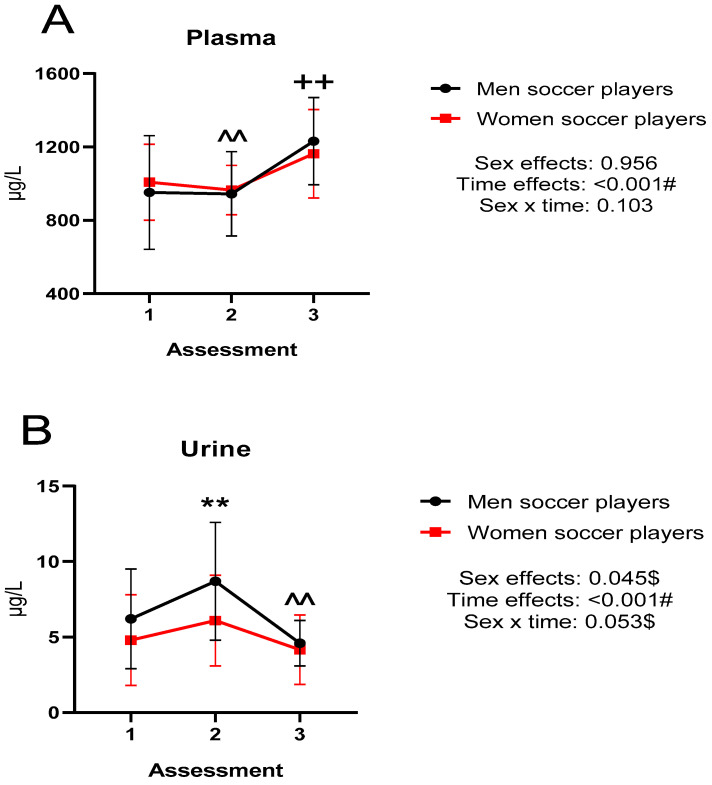
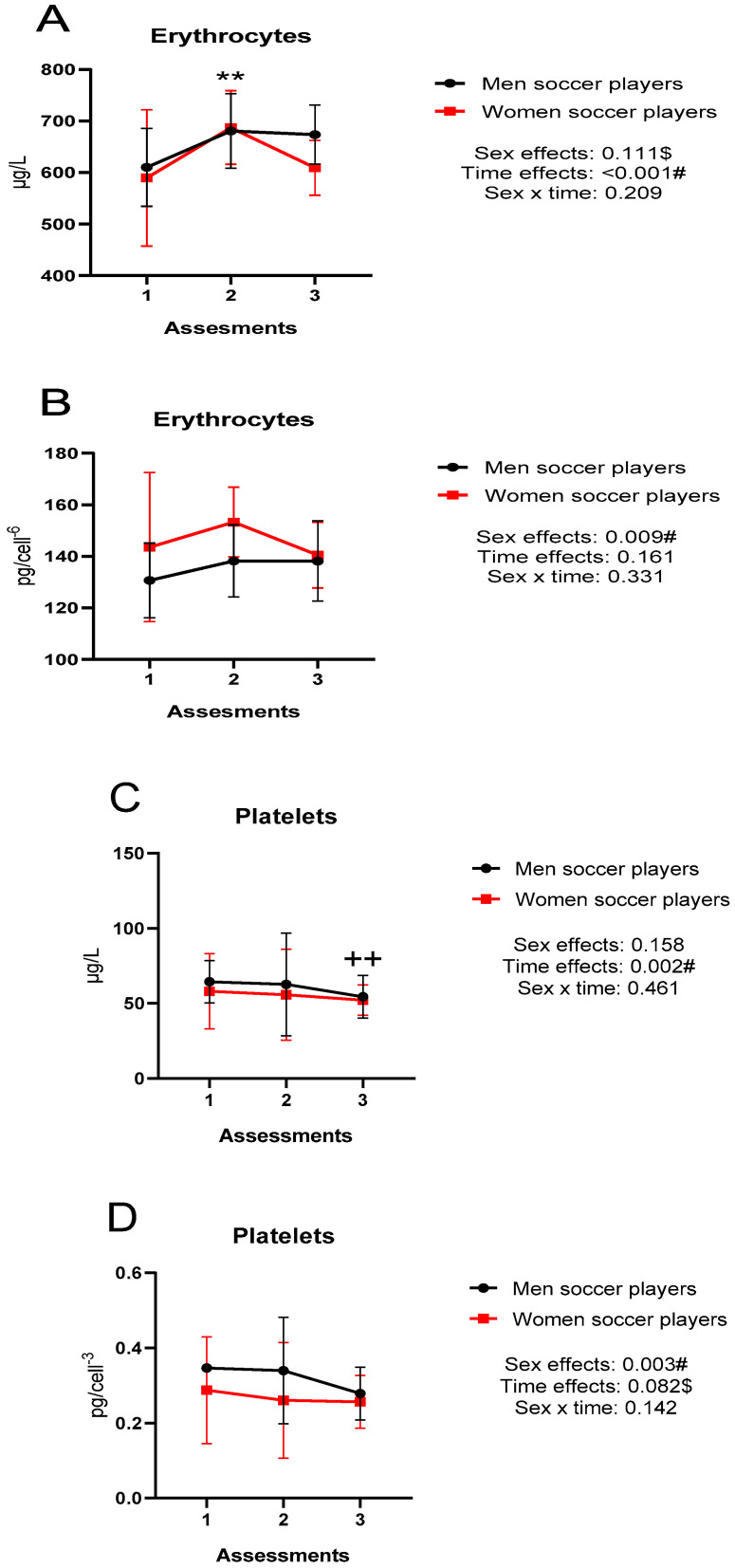
Physical training produces changes in the concentrations of trace mineral elements. Sex differences in copper (Cu) concentrations in athletes are scarce. The objectives of this study were (i) to analyze changes in intracellular (erythrocytes and platelets) and extracellular (plasma and urine) Cu concentrations during a sports season in soccer players and (ii) to analyze sex differences. A total of 46 soccer players (22 men and 24 women) participated in the study. Three assessments were performed throughout the sports season. Anthropometry, body composition, nutritional intake, physical condition, female hormones (menstrual cycle) and hematology were evaluated, as well as Cu determination (plasma, urine, erythrocytes, and platelets). Regarding longitudinal differences, there were discrepancies in plasma, urine, absolute erythrocyte, and absolute platelet Cu concentrations ( < 0.05). There were differences between sexes in Cu concentrations in urine, erythrocytes relative to cell number and in platelets relative to cell number ( < 0.05). During a sports season, there are changes in Cu concentrations in soccer players. Likewise, there could be sex differences in urinary, erythrocyte and platelet Cu concentrations.
体育锻炼会导致痕量矿物质元素浓度发生变化。运动员体内铜(Cu)浓度的性别差异很少见。本研究的目的是:(i)分析足球运动员在一个赛季中细胞内(红细胞和血小板)和细胞外(血浆和尿液)Cu 浓度的变化;(ii)分析性别差异。共有 46 名足球运动员(22 名男性和 24 名女性)参加了这项研究。在整个赛季中进行了三次评估。评估了人体测量学、身体成分、营养摄入、身体状况、女性激素(月经周期)和血液学,以及 Cu 测定(血浆、尿液、红细胞和血小板)。关于纵向差异,血浆、尿液、绝对红细胞和绝对血小板 Cu 浓度存在差异(<0.05)。尿液、红细胞相对细胞数和血小板相对细胞数的 Cu 浓度存在性别差异(<0.05)。在一个赛季中,足球运动员体内的 Cu 浓度会发生变化。同样,尿液、红细胞和血小板中的 Cu 浓度可能存在性别差异。