Lu Qiuyang, Zhang Baiyang, Sun Mingzi, Lu Lu, Chen Baian, Wong Hon Ho, Chan Cheuk Hei, Wu Tong, Huang Bolong
Department of Applied Biology and Chemical Technology, The Hong Kong Polytechnic University, Hung Hom, Kowloon, Hong Kong, China.
Chinese International School, Hong Kong, Hong Kong, China.
iScience. 2023 Mar 17;26(3):106110. doi: 10.1016/j.isci.2023.106110. Epub 2023 Feb 4.
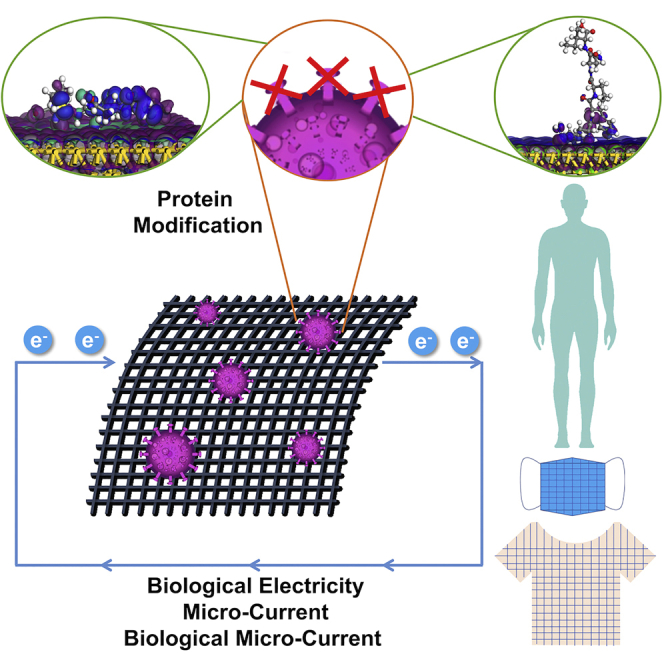
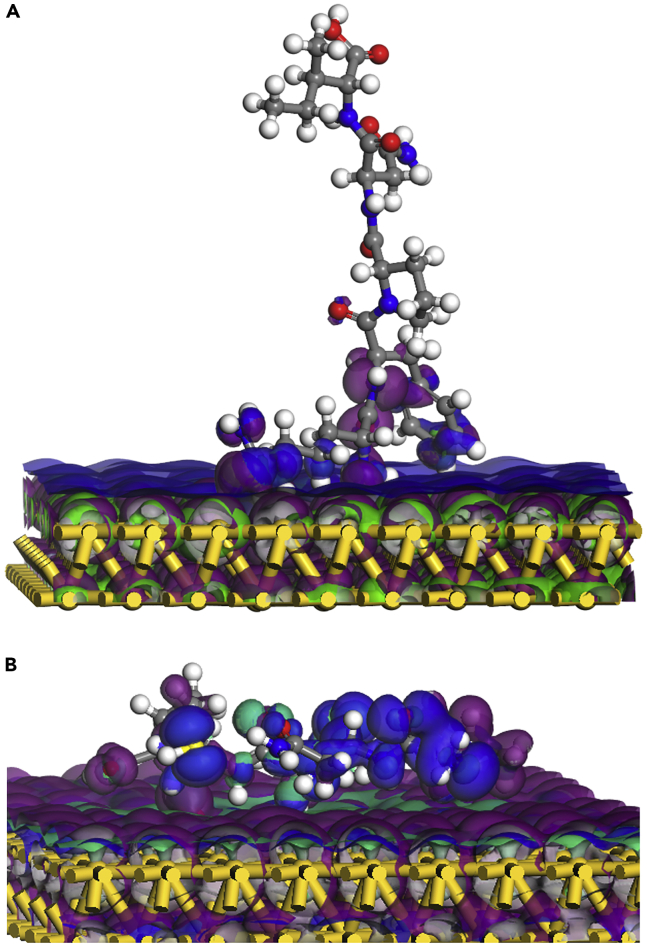
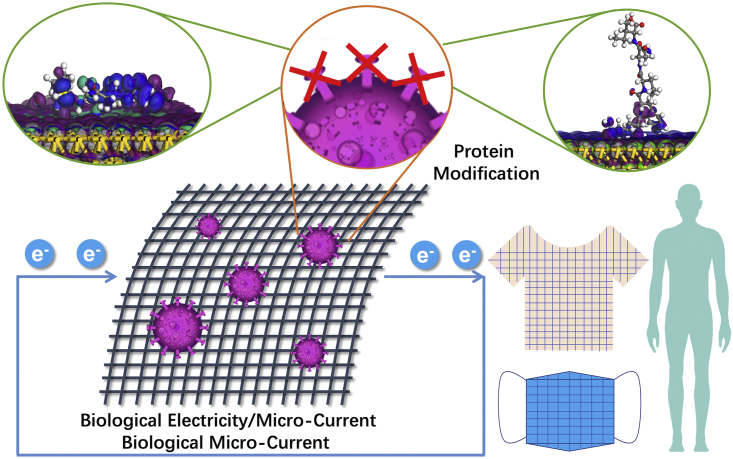
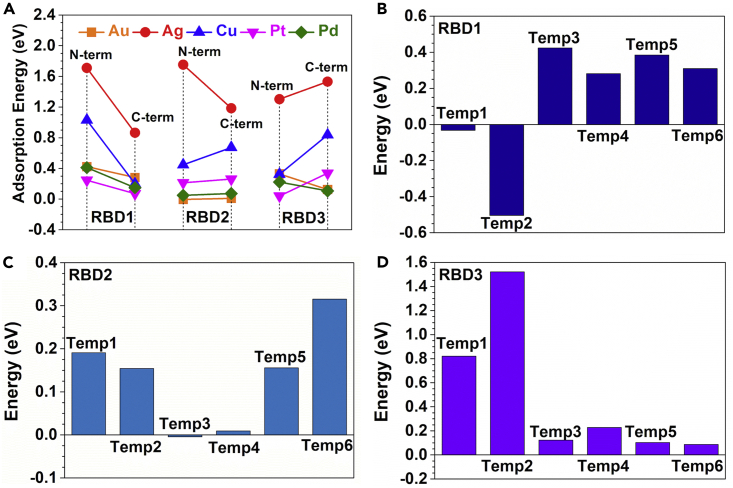
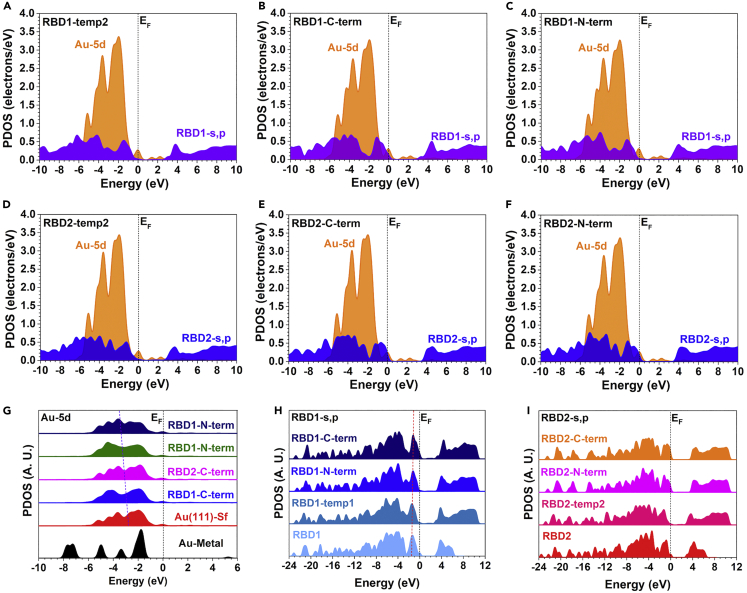
Currently, scientists have devoted great efforts to finding effective treatments to combat COVID-19 infections. Although noble metal nanoparticles are able to realize protein modifications, their interactions with the protein are still unclear from the atomic perspective. To supply a general understanding, in this work, we have carried out theoretical calculations to investigate the interaction between protein segments (RBD1, RBD2, RBD3) of SARS-Cov-2 spike protein and a series of noble metal (Au, Ag, Cu, Pd, Pt) surfaces regarding the binding strength, protein orientations, and electronic modulations. In particular, the Au surface has shown the strongest binding preferences for the protein segments, which induces electron transfer between the Au and receptor-binding domain (RBD) segments. This further leads to the polarization of segments for virus denaturation. This work has offered a direct visualization of protein interactions with noble metal surfaces from the atomic level, which will benefit anti-virus material developments in the future.
目前,科学家们已投入巨大努力寻找对抗新冠病毒感染的有效治疗方法。尽管贵金属纳米颗粒能够实现蛋白质修饰,但从原子层面来看,它们与蛋白质之间的相互作用仍不明确。为了提供一个全面的理解,在这项工作中,我们进行了理论计算,以研究新冠病毒刺突蛋白的蛋白质片段(RBD1、RBD2、RBD3)与一系列贵金属(金、银、铜、钯、铂)表面之间在结合强度、蛋白质取向和电子调制方面的相互作用。特别是,金表面对蛋白质片段表现出最强的结合偏好,这会导致金与受体结合域(RBD)片段之间发生电子转移。这进一步导致片段极化从而使病毒变性。这项工作从原子层面直接可视化了蛋白质与贵金属表面的相互作用,这将有助于未来抗病毒材料的开发。