Saeed Yasmeen
Provincial Key Laboratory for Utilization and Conservation of Food and Medicinal Resources in Northern Guangdong, 288 University Ave. Zhenjiang District, Shaoguan City, Guangdong Province, China.
Front Pharmacol. 2023 Jan 25;14:1110008. doi: 10.3389/fphar.2023.1110008. eCollection 2023.
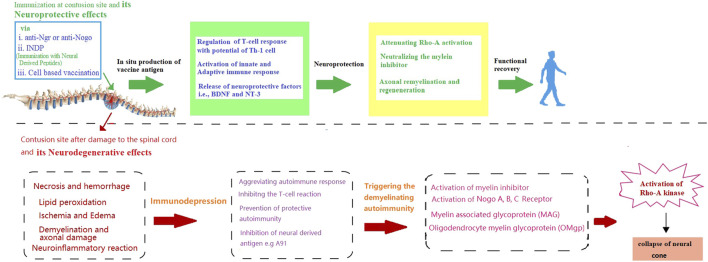
Spinal cord injury (SCI) is a debilitating disorder with no known standard and effective treatment. Despite its ability to exacerbate SCI sequel by accelerating auto-reactive immune cells, an immune response is also considered essential to the healing process. Therefore, immunotherapeutic strategies targeting spinal cord injuries may benefit from the dual nature of immune responses. An increasing body of research suggests that immunization against myelin inhibitors can promote axon remyelination after SCI. However, despite advancements in our understanding of neuroimmune responses, immunoregulation-based therapeutic strategies have yet to receive widespread acceptance. Therefore, it is a prerequisite to enhance the understanding of immune regulation to ensure the safety and efficacy of immunotherapeutic treatments. The objective of the present study was to provide an overview of previous studies regarding the advantages and limitations of immunotherapeutic strategies for functional recovery after spinal cord injury, especially in light of limiting factors related to DNA and cell-based vaccination strategies by providing a novel prospect to lay the foundation for future studies that will help devise a safe and effective treatment for spinal cord injury.
脊髓损伤(SCI)是一种致残性疾病,目前尚无已知的标准有效治疗方法。尽管免疫反应能够通过加速自身反应性免疫细胞而加重脊髓损伤后遗症,但它也被认为是愈合过程所必需的。因此,针对脊髓损伤的免疫治疗策略可能会受益于免疫反应的双重性质。越来越多的研究表明,针对髓鞘抑制剂进行免疫接种可以促进脊髓损伤后轴突的重新髓鞘化。然而,尽管我们对神经免疫反应的理解有所进步,但基于免疫调节的治疗策略尚未得到广泛认可。因此,加强对免疫调节的理解是确保免疫治疗安全性和有效性的先决条件。本研究的目的是概述先前关于脊髓损伤后功能恢复的免疫治疗策略的优缺点的研究,特别是鉴于与基于DNA和细胞的疫苗接种策略相关的限制因素,通过提供一个新的前景为未来的研究奠定基础,这些研究将有助于设计出一种安全有效的脊髓损伤治疗方法。