Guo Ruoshui, Wolff Cecilia, Prada Joaquin M, Mughini-Gras Lapo
Utrecht University, Utrecht, the Netherlands.
Norwegian Veterinary Institute (NVI), Ås, Norway.
One Health. 2023 Jun;16:100497. doi: 10.1016/j.onehlt.2023.100497. Epub 2023 Feb 3.
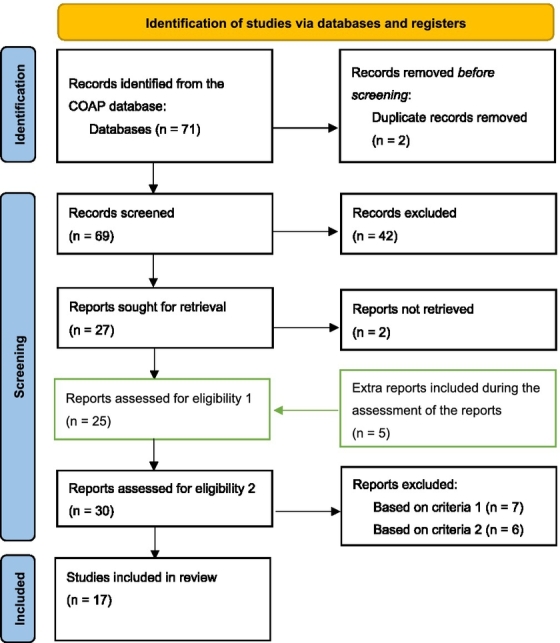
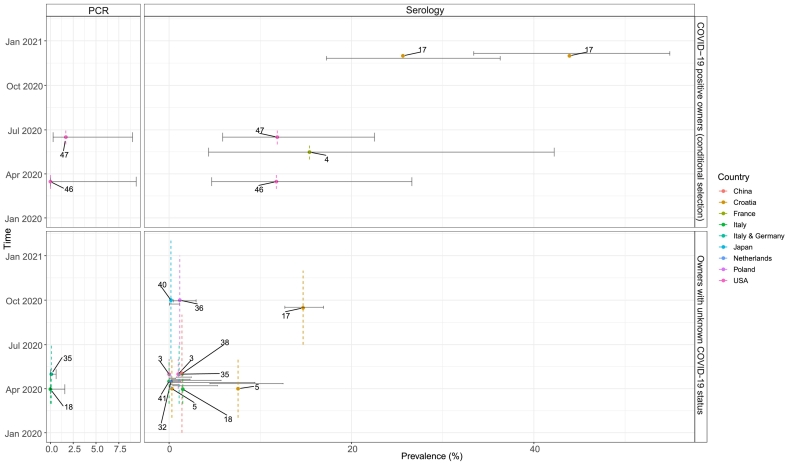
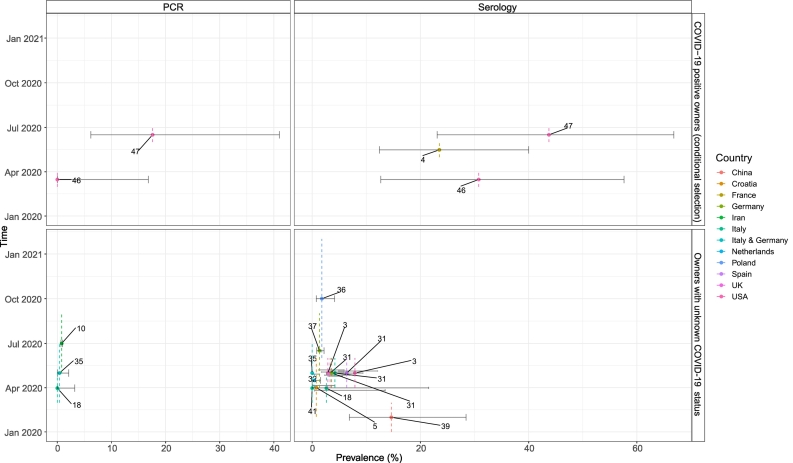
During the COVID-19 pandemic, questions were raised about whether SARS-CoV-2 can infect pets and the potential risks posed to and by their human owners. We performed a systematic review of studies on SARS-CoV-2 infection prevalence in naturally infected household dogs and cats conducted worldwide and published before January 2022. Data on SARS-CoV-2 infection prevalence, as determined by either molecular or serological methods, and accompanying information, were summarized. Screening studies targeting the general dog or cat populations were differentiated from those targeting households with known COVID-19-positive people. Studies focusing on stray, sheltered or working animals were excluded. In total, 17 studies were included in this review. Fourteen studies investigated cats, 13 investigated dogs, and 10 investigated both. Five studies reported molecular prevalence, 16 reported seroprevalence, and four reported both. All but two studies started and ended in 2020. Studies were conducted in eight European countries (Italy, France, Spain, Croatia, Germany, the Netherlands, UK, Poland), three Asian countries (Iran, Japan, China) and the USA. Both molecular and serological prevalence in the general pet population were usually below 5%, but exceeded 10% when COVID-19 positive people were known to be present in the household. A meta-analysis provided pooled seroprevalence estimates in the general pet population: 2.75% (95% Confidence Interval [CI]: 1.56-4.79%) and 0.82% (95% CI: 0.26-2.54%) for cats and dogs, respectively. This review highlighted the need for a better understanding of the possible epizootic implications of the COVID-19 pandemic, as well as the need for global standards for SARS-CoV-2 detection in pets.
在新冠疫情期间,人们提出了关于严重急性呼吸综合征冠状病毒2(SARS-CoV-2)是否能感染宠物以及对其主人构成的潜在风险等问题。我们对2022年1月之前在全球范围内发表的关于自然感染的家犬和家猫中SARS-CoV-2感染率的研究进行了系统综述。总结了通过分子或血清学方法确定的SARS-CoV-2感染率数据以及相关信息。针对一般犬猫群体的筛查研究与针对有已知新冠病毒阳性患者家庭的研究区分开来。排除了聚焦流浪动物、收容动物或工作动物的研究。本综述共纳入17项研究。14项研究调查了猫,13项研究调查了狗,10项研究同时调查了猫和狗。5项研究报告了分子感染率,16项研究报告了血清阳性率,4项研究同时报告了两者。除两项研究外,所有研究均在2020年开始和结束。研究在8个欧洲国家(意大利、法国、西班牙、克罗地亚、德国、荷兰、英国、波兰)、3个亚洲国家(伊朗、日本、中国)和美国开展。一般宠物群体中的分子和血清学感染率通常低于5%,但当家庭中有已知的新冠病毒阳性患者时,感染率超过10%。一项荟萃分析给出了一般宠物群体的合并血清阳性率估计值:猫为2.75%(95%置信区间[CI]:1.56 - 4.79%),狗为0.82%(95%CI:0.26 - 2.54%)。本综述强调了更好地理解新冠疫情可能的动物流行病影响的必要性,以及制定宠物中SARS-CoV-2检测全球标准的必要性。