Kinsky Nathaniel R, Orlin Daniel J, Ruesch Evan A, Kim Brian, Coello Siria, Diba Kamran, Ramirez Steve
Department of Anesthesiology, University of Michigan Medical School, Ann Arbor, MI 48109, USA.
Center for Systems Neuroscience, Boston University, Boston, MA 02451, USA.
bioRxiv. 2024 Dec 19:2023.02.02.526824. doi: 10.1101/2023.02.02.526824.
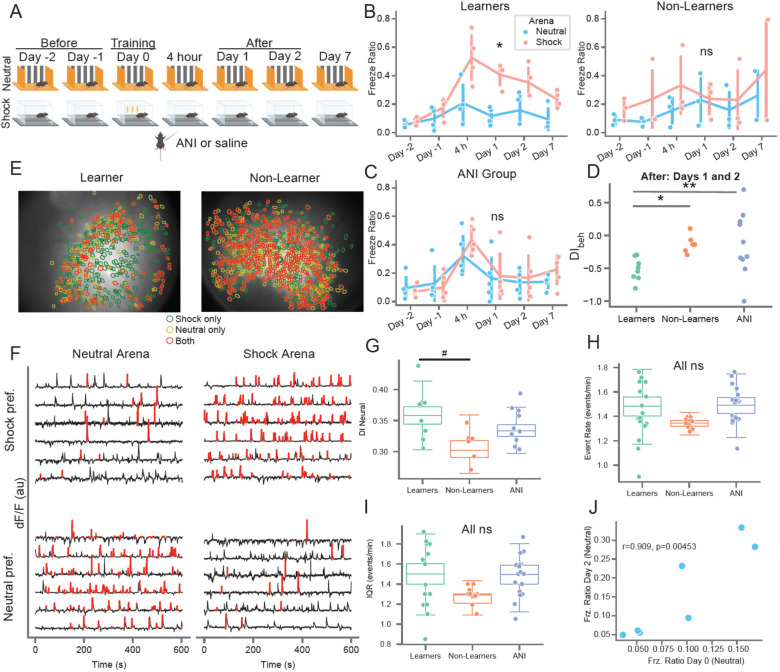
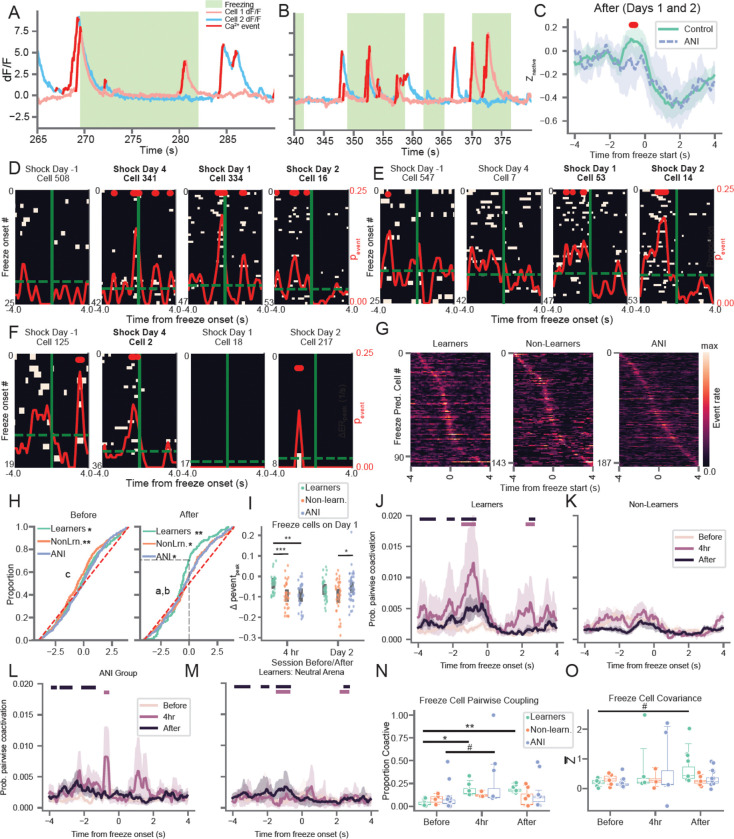
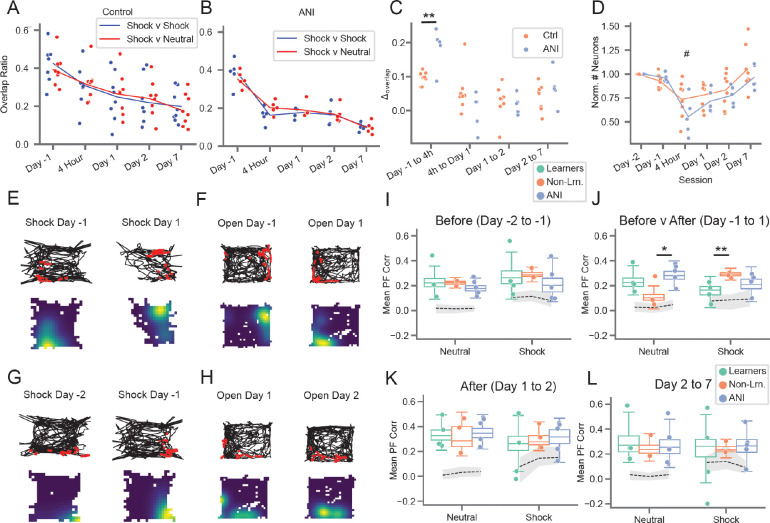
Memories involving the hippocampus can take several days to consolidate, challenging efforts to uncover the neuronal signatures underlying this process. Using calcium imaging in freely moving mice, we tracked the hippocampal dynamics underlying memory formation across a ten-day contextual fear conditioning (CFC) task. Following learning, context-specific place field remapping correlated with memory performance. To causally test whether these hippocampal dynamics support memory consolidation, we induced amnesia in a group of mice by pharmacologically blocking protein synthesis immediately following learning. We found that halting protein synthesis following learning paradoxically accelerated cell turnover and also arrested learning-related remapping, paralleling the absence of remapping observed in untreated mice that exhibited poor memory expression. Finally, coordinated neural activity that emerged following learning was dependent on intact protein synthesis and predicted memory-related freezing behavior. We conclude that context-specific place field remapping and the development of coordinated ensemble activity require protein synthesis and underlie contextual fear memory consolidation.
涉及海马体的记忆需要几天时间来巩固,这给揭示这一过程背后的神经元特征带来了挑战。通过对自由活动的小鼠进行钙成像,我们在一项为期十天的情境恐惧条件反射(CFC)任务中追踪了记忆形成过程中海马体的动态变化。学习后,特定情境的位置场重映射与记忆表现相关。为了因果性地测试这些海马体动态变化是否支持记忆巩固,我们在一组小鼠学习后立即通过药物阻断蛋白质合成来诱导失忆。我们发现,学习后停止蛋白质合成反而加速了细胞更新,并且还阻止了与学习相关的重映射,这与未处理的、记忆表现不佳的小鼠中观察到的重映射缺失情况相似。最后,学习后出现的协调神经活动依赖于完整的蛋白质合成,并预测了与记忆相关的僵住行为。我们得出结论,特定情境的位置场重映射和协调集合活动的发展需要蛋白质合成,并构成情境恐惧记忆巩固的基础。