Department of Microbiology, Icahn School of Medicine at Mount Sinai, New York, New York, USA.
Center for Vaccine Research and Pandemic Preparedness (C-VaRPP), Icahn School of Medicine at Mount Sinai, New York, New York, USA.
J Virol. 2023 Mar 30;97(3):e0166422. doi: 10.1128/jvi.01664-22. Epub 2023 Feb 13.
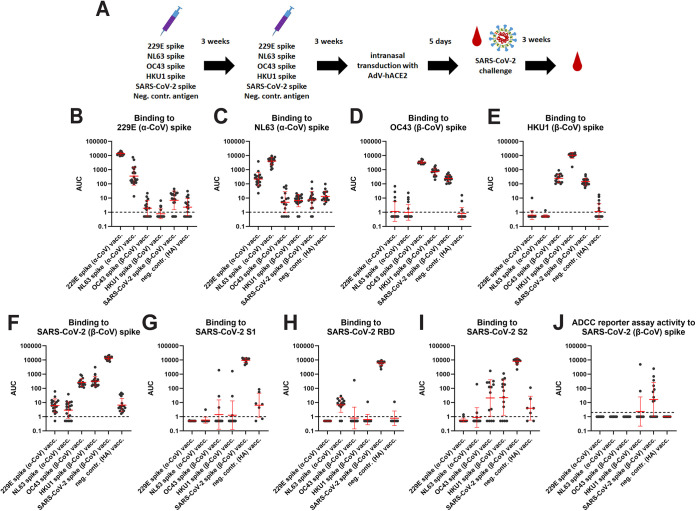
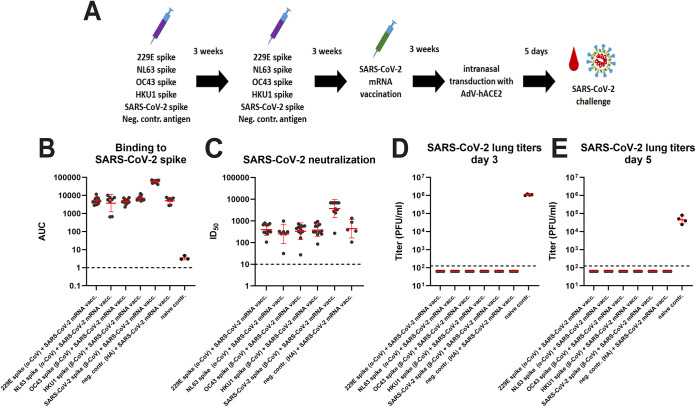
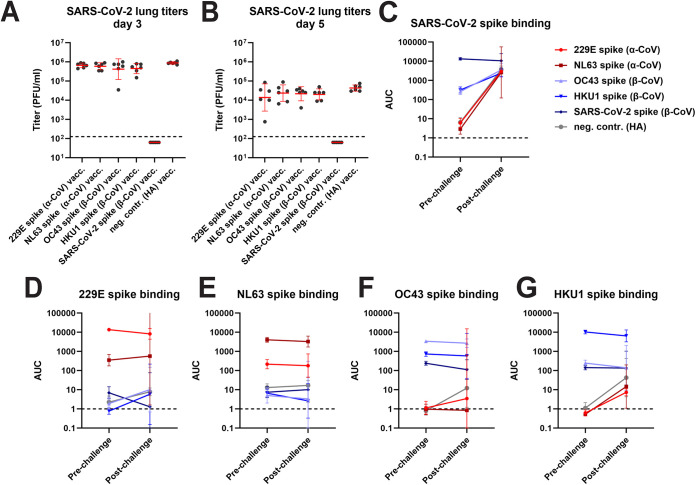
Seasonal coronaviruses have been circulating widely in the human population for many years. With increasing age, humans are more likely to have been exposed to these viruses and to have developed immunity against them. It has been hypothesized that this immunity to seasonal coronaviruses may provide partial protection against infection with severe acute respiratory syndrome coronavirus 2 (SARS-CoV-2) and it has also been shown that coronavirus disease 2019 (COVID-19) vaccination induces a back-boosting effects against the spike proteins of seasonal betacoronaviruses. In this study, we tested if immunity to the seasonal coronavirus spikes from OC43, HKU1, 229E, or NL63 would confer protection against SARS-CoV-2 challenge in a mouse model, and whether pre-existing immunity against these spikes would weaken the protection afforded by mRNA COVID-19 vaccination. We found that mice vaccinated with the seasonal coronavirus spike proteins had no increased protection compared to the negative controls. While a negligible back-boosting effect against betacoronavirus spike proteins was observed after SARS-CoV-2 infection, there was no negative original antigenic sin-like effect on the immune response and protection induced by SARS-CoV-2 mRNA vaccination in animals with pre-existing immunity to seasonal coronavirus spike proteins. The impact that immunity against seasonal coronaviruses has on both susceptibility to SARS-CoV-2 infection as well as on COVID-19 vaccination is unclear. This study provides insights into both questions in a mouse model of SARS-CoV-2.
季节性冠状病毒在人类中已经广泛传播多年。随着年龄的增长,人类更有可能接触到这些病毒,并产生针对它们的免疫力。人们假设,这种对季节性冠状病毒的免疫力可能对感染严重急性呼吸综合征冠状病毒 2(SARS-CoV-2)提供部分保护,并且已经表明,新冠肺炎 2019(COVID-19)疫苗接种会对季节性贝塔冠状病毒的刺突蛋白产生增强效应。在这项研究中,我们测试了季节性冠状病毒 OC43、HKU1、229E 或 NL63 的刺突蛋白是否会在小鼠模型中对 SARS-CoV-2 攻击提供保护,以及针对这些刺突蛋白的预先存在的免疫力是否会削弱 mRNA COVID-19 疫苗接种提供的保护。我们发现,接种季节性冠状病毒刺突蛋白的小鼠与阴性对照相比没有增加的保护。虽然在 SARS-CoV-2 感染后观察到对贝塔冠状病毒刺突蛋白的轻微增强效应,但在具有季节性冠状病毒刺突蛋白预先存在免疫力的动物中,对 SARS-CoV-2 mRNA 疫苗接种诱导的免疫反应和保护没有产生负面的原始抗原性相似效应。针对季节性冠状病毒的免疫力对 SARS-CoV-2 感染易感性以及 COVID-19 疫苗接种的影响尚不清楚。本研究在 SARS-CoV-2 的小鼠模型中为这两个问题提供了一些见解。