De Francesco Maria Antonia, Bertelli Anna, Corbellini Silvia, Scaltriti Erika, Risso Francesco, Allegri Roberto, Tiecco Giorgio, Castelli Francesco, Caruso Arnaldo
Institute of Microbiology, Department of Molecular and Translational Medicine, University of Brescia, ASST Spedali Civili, Brescia, Italy.
Risk Analysis and Genomic Epidemiology Unit, Istituto Zooprofilattico Sperimentale della Lombardia e dell'Emilia Romagna, Parma, Italy.
Microbiol Spectr. 2023 Feb 14;11(2):e0327422. doi: 10.1128/spectrum.03274-22.
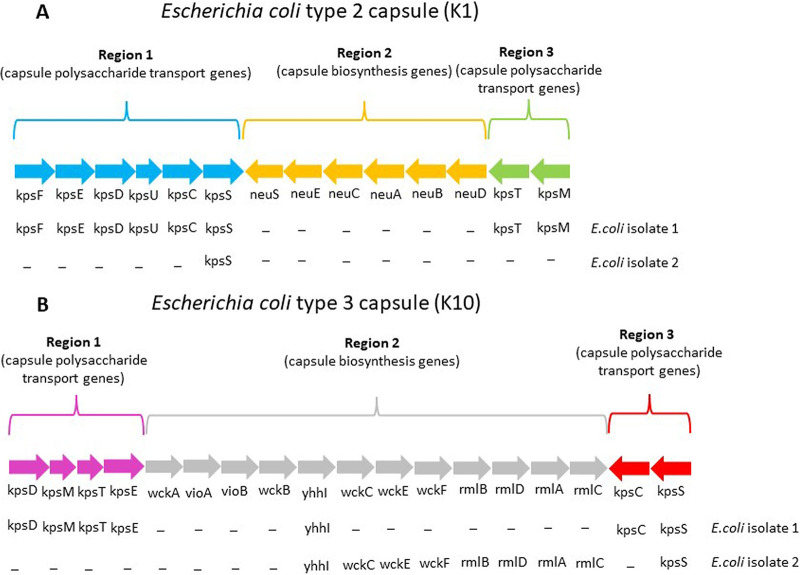
Two Escherichia coli strains, respectively responsible for neonatal and adult meningitis, were isolated and their phenotypic antibiotic susceptibility and genomic features characterized by whole-genome sequencing (WGS). Multiplex real-time PCR targeting the principal microorganisms involved in meningitis etiology failed to identify either isolate. Afterwards, matrix-assisted laser desorption ionization-time of flight (MALDI-TOF) mass spectrometry was used to identify the isolates as E. coli strains. Genomic analysis showed that they belonged to sequence types 131 and 69 (ST131 and ST69). Neither of the isolates harbored the K1 capsular antigen or belonged to other capsular serotypes, but they shared different virulence factors, including genes, responsible for invasion of brain endothelial cells. The extraintestinal pathogenic Escherichia coli group is characterized by the presence of uropathogenic E. coli (UPEC), sepsis-associated E. coli (SEPEC), and neonatal meningitis E. coli (NMEC). All of these members exhibit many virulence factors, such as lipopolysaccharides, toxins, iron acquisition factors, invasins, fimbriae, and capsules. Urinary infections are the most common infections caused by this group, followed by globally increasing numbers of both community- and nosocomially acquired bloodstream infections, associated with considerable patient morbidity and mortality. Some lineages tend to become dominant; in addition to enhanced fitness, this epidemiological success stems from increased virulence, antibiotic resistance, gut colonization, and greater host-to-host transmission. Our results underline the importance of continuous surveillance of these new emerging lineages and the need to develop new meningitis molecular assay panels able to identify them.
分离出两株分别导致新生儿和成人脑膜炎的大肠杆菌菌株,并通过全基因组测序(WGS)对其表型抗生素敏感性和基因组特征进行了表征。针对脑膜炎病因中主要微生物的多重实时PCR未能鉴定出任何一株分离菌。之后,使用基质辅助激光解吸电离飞行时间(MALDI-TOF)质谱法将分离菌鉴定为大肠杆菌菌株。基因组分析表明它们属于序列类型131和69(ST131和ST69)。两株分离菌均未携带K1荚膜抗原或属于其他荚膜血清型,但它们共享不同的毒力因子,包括负责侵袭脑内皮细胞的基因。肠外致病性大肠杆菌组的特征是存在尿路致病性大肠杆菌(UPEC)、败血症相关大肠杆菌(SEPEC)和新生儿脑膜炎大肠杆菌(NMEC)。所有这些成员都表现出许多毒力因子,如脂多糖、毒素、铁摄取因子、侵袭素、菌毛和荚膜。尿路感染是该组引起的最常见感染,其次是社区获得性和医院获得性血流感染的全球数量不断增加,与相当多的患者发病率和死亡率相关。一些谱系倾向于占主导地位;除了适应性增强外,这种流行病学上的成功源于毒力增加、抗生素耐药性、肠道定植和更强的宿主间传播。我们的结果强调了持续监测这些新兴谱系的重要性,以及开发能够识别它们的新型脑膜炎分子检测面板的必要性。