Lee Kong Chian School of Medicine, Nanyang Technological University Singapore, 11 Mandalay Road, Singapore, 308232, Singapore.
School of Social Sciences, Nanyang Technological University Singapore, Singapore, Singapore.
Int J Behav Med. 2024 Feb;31(1):19-30. doi: 10.1007/s12529-023-10154-5. Epub 2023 Feb 14.
Delineating the compound psychological effect of the pandemic on cancer care, and the interdependency across cancer patient-caregiver dyads have yet to be explored. This study examines the levels of psychological impact of COVID-19 on patient-caregiver dyads anxiety, and the interdependent associations between their COVID-19 and cancer concerns, and risk perceptions.
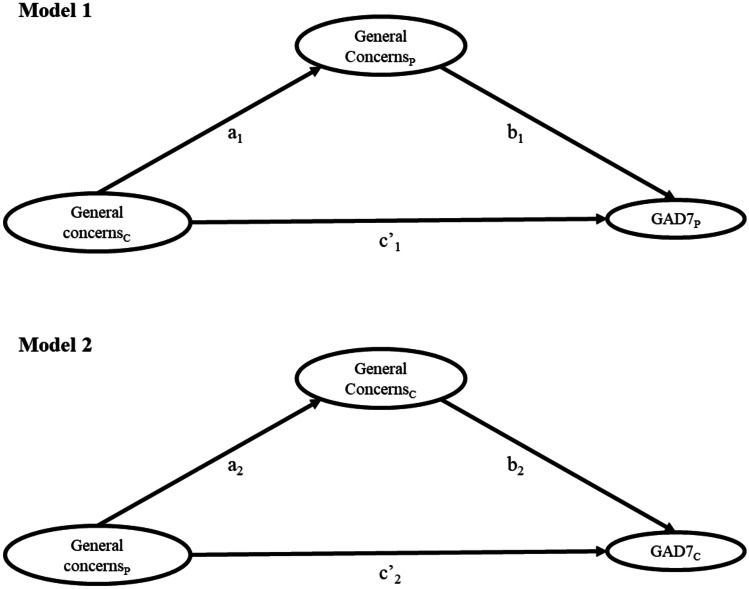
There were 352 patients and caregivers (patient-caregiver dyads, N = 176) included in this study (43.2% spousal dyads). Generalized Anxiety Disorder-7 and questionnaires regarding risk perception, perceived confidence in healthcare system, COVID-19, and cancer-related concerns were administered. Actor-Partner Interdependence Model (APIM) analyses were used to determine the interdependent effects. Indirect effects were tested using mediation pathway analyses.
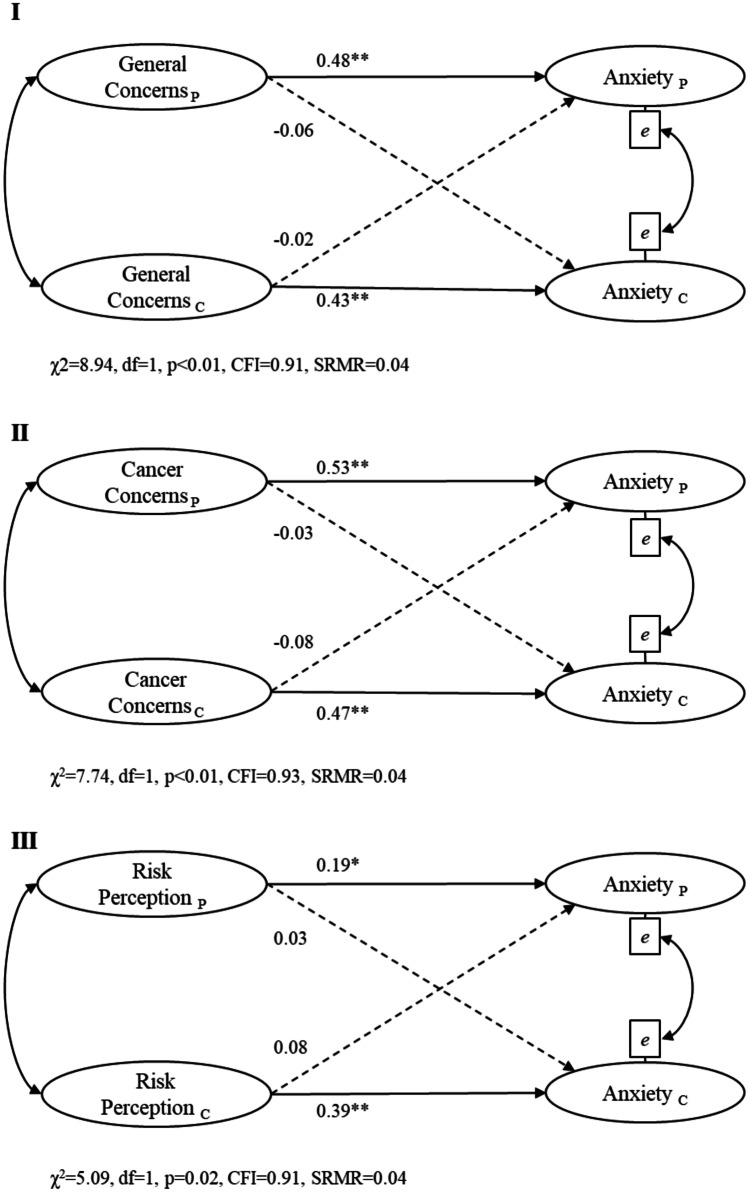
Patients reported significantly higher levels of risk perceptions and anxiety than their caregivers (p < 0.01). Anxiety rates (GAD-7 ≥ 10) were also significantly higher (26.7% vs 18.2%, p < 0.01). Dyads' anxiety, "general COVID-19 concerns," "cancer-related concerns," and risk perceptions were correlated (ps < 0.01). APIM showed only actor effects of general COVID-19 concerns, cancer-related COVID-19 concerns, and risk perceptions on anxiety (βs = 0.19-0.53, ps < 0.01). No partner effects were observed. Similar results were found in the composite APIM. Indirect effects of the patient/caregiver's variables on their partner's anxiety were observed in the mediation analyses.
Concerns about COVID-19 and cancer care could be indirectly associated in patient-caregiver dyads and need to be proactively addressed. As pandemic evolves into endemicity, engagement with patients and caregivers should strive to be sensitive to their differential needs and messages should be tailored to the informational needs of each.
目前尚未探索大流行对癌症护理的复合心理影响,以及癌症患者-照顾者对之间的相互依存关系。本研究考察了 COVID-19 对患者-照顾者对焦虑的心理影响程度,以及他们对 COVID-19 和癌症的担忧,以及风险认知之间的相互关联。
本研究共纳入 352 名患者和照顾者(患者-照顾者对,N=176)(43.2%为配偶对)。评估了广泛性焦虑障碍 7 项量表(Generalized Anxiety Disorder-7)和有关风险认知、对医疗保健系统的信心、COVID-19 以及癌症相关问题的问卷。采用 Actor-Partner Interdependence Model(APIM)分析来确定相互依存的影响。使用中介路径分析来测试间接影响。
与照顾者相比,患者报告的风险认知和焦虑水平显著更高(p<0.01)。焦虑发生率(GAD-7≥10)也明显更高(26.7%比 18.2%,p<0.01)。对 dyads 的焦虑、“一般 COVID-19 问题”、“癌症相关 COVID-19 问题”和风险认知呈正相关(p<0.01)。APIM 仅显示一般 COVID-19 问题、癌症相关 COVID-19 问题和风险认知对焦虑的作用(β=0.19-0.53,p<0.01)。未观察到配偶效应。在复合 APIM 中也发现了类似的结果。在中介分析中观察到患者/照顾者变量对其伴侣焦虑的间接影响。
在患者-照顾者对中,COVID-19 和癌症护理的担忧可能间接相关,需要积极解决。随着大流行演变为地方病,与患者和照顾者的接触应努力关注他们的不同需求,并根据每个患者的信息需求定制信息。