Department of Internal Medicine II, Medical University of Innsbruck, Innsbruck, Austria.
Department of Radiology, Medical University of Innsbruck, Innsbruck, Austria.
Sci Rep. 2023 Feb 14;13(1):2599. doi: 10.1038/s41598-023-29654-1.
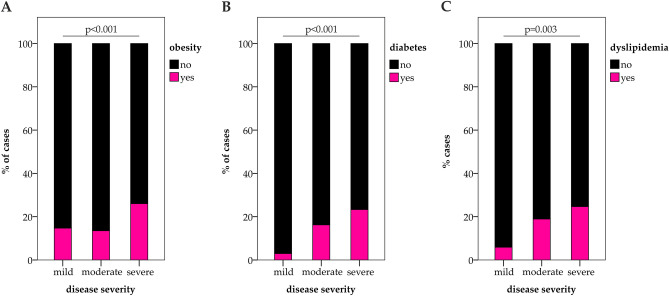
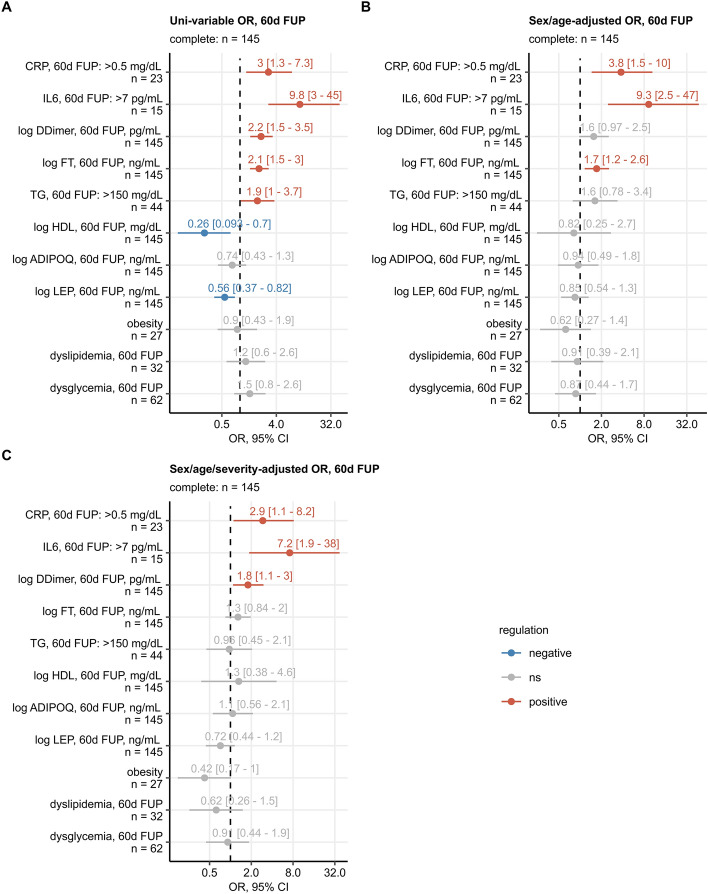
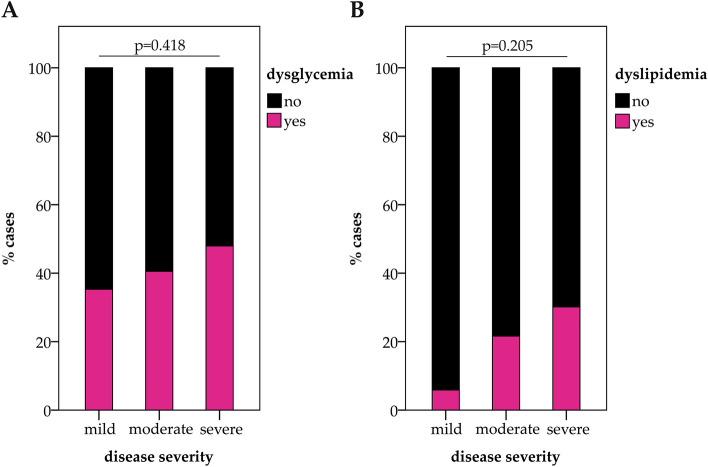
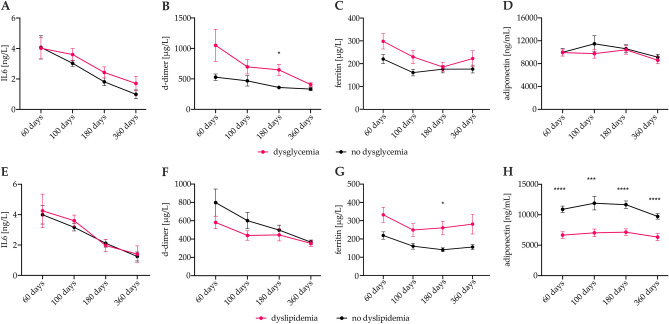
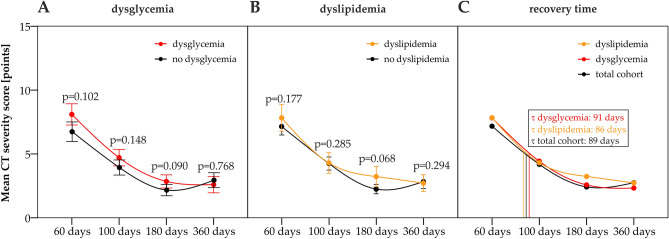
The severity of coronavirus disease 2019 (COVID-19) is related to the presence of comorbidities including metabolic diseases. We herein present data from the longitudinal prospective CovILD trial, and investigate the recovery from COVID-19 in individuals with dysglycemia and dyslipidemia. A total of 145 COVID-19 patients were prospectively followed and a comprehensive clinical, laboratory and imaging assessment was performed at 60, 100, 180, and 360 days after the onset of COVID-19. The severity of acute COVID-19 and outcome at early post-acute follow-up were significantly related to the presence of dysglycemia and dyslipidemia. Still, at long-term follow-up, metabolic disorders were not associated with an adverse pulmonary outcome, as reflected by a good recovery of structural lung abnormalities in both, patients with and without metabolic diseases. To conclude, dyslipidemia and dysglycemia are associated with a more severe course of acute COVID-19 as well as delayed early recovery but do not impair long-term pulmonary recovery.
2019 年冠状病毒病(COVID-19)的严重程度与包括代谢疾病在内的合并症的存在有关。我们在此展示了来自纵向前瞻性 CovILD 试验的数据,并研究了伴发糖脂代谢紊乱的 COVID-19 患者的康复情况。共前瞻性随访了 145 例 COVID-19 患者,并在 COVID-19 发病后 60、100、180 和 360 天进行了全面的临床、实验室和影像学评估。急性 COVID-19 的严重程度和早期急性后随访的结果与糖脂代谢紊乱的存在显著相关。然而,在长期随访中,代谢紊乱与不良的肺部结局无关,这反映了伴有和不伴有代谢疾病的患者的结构性肺部异常均有良好的恢复。总之,血脂异常和糖代谢紊乱与急性 COVID-19 更严重的病程以及早期恢复延迟有关,但不影响长期肺部恢复。