Sonnweber Thomas, Grubwieser Philipp, Sahanic Sabina, Böhm Anna Katharina, Pizzini Alex, Luger Anna, Schwabl Christoph, Koppelstätter Sabine, Kurz Katharina, Puchner Bernhard, Sperner-Unterweger Barbara, Hüfner Katharina, Wöll Ewald, Nairz Manfred, Widmann Gerlig, Tancevski Ivan, Löffler-Ragg Judith, Weiss Günter
Department of Internal Medicine II, Medical University of Innsbruck, 6020 Innsbruck, Austria.
Department of Radiology, Medical University of Innsbruck, 6020 Innsbruck, Austria.
Metabolites. 2022 Jun 14;12(6):546. doi: 10.3390/metabo12060546.
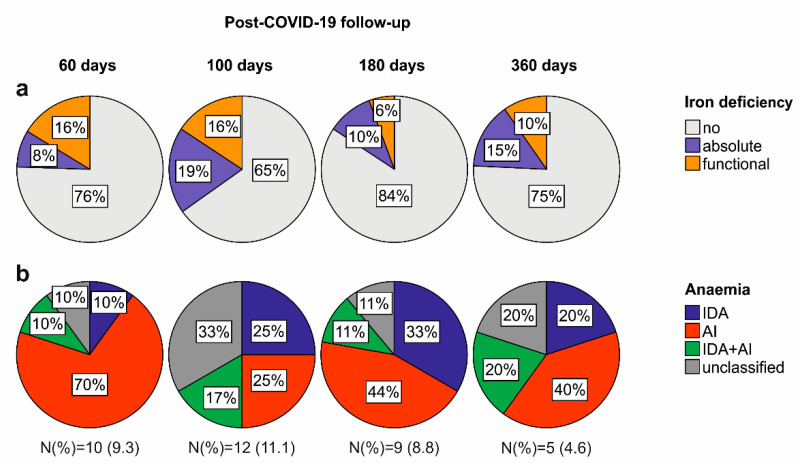
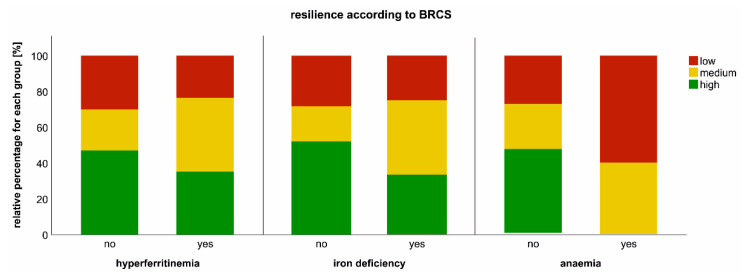
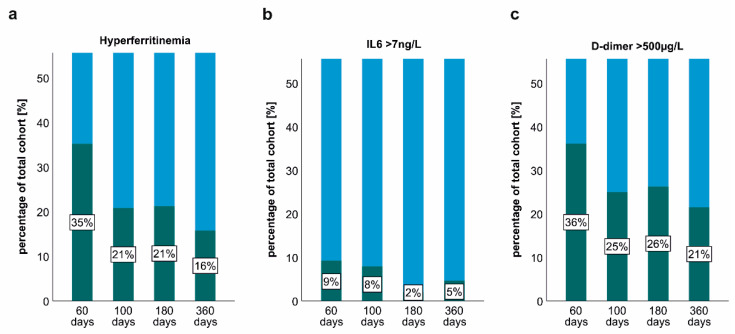
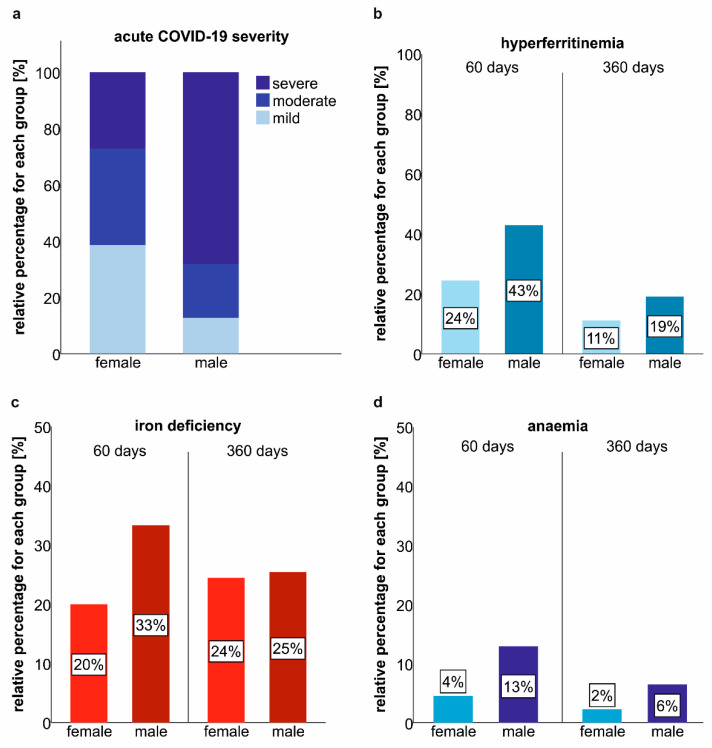
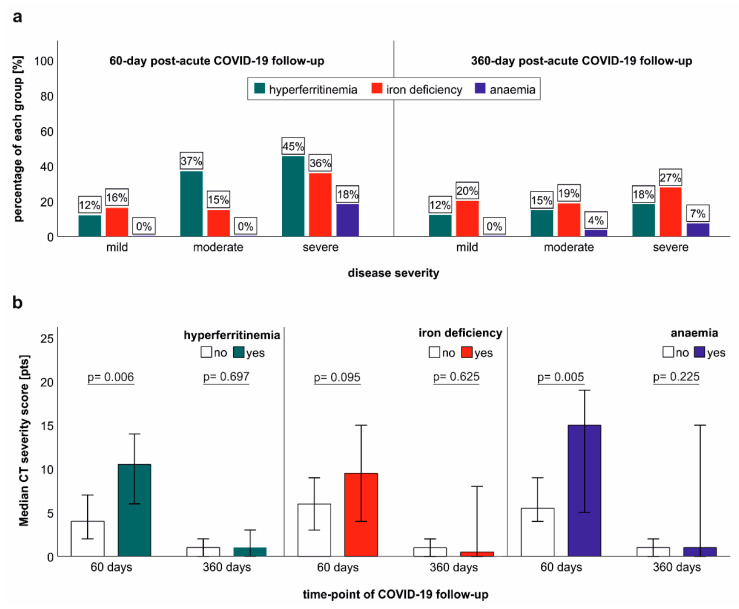
Coronavirus disease 2019 (COVID-19) is frequently associated with iron dyshomeostasis. The latter is related to acute disease severity and COVID-19 convalescence. We herein describe iron dyshomeostasis at COVID-19 follow-up and its association with long-term pulmonary and symptomatic recovery. The prospective, multicentre, observational cohort study "Development of Interstitial Lung Disease (ILD) in Patients With Severe SARS-CoV-2 Infection (CovILD)" encompasses serial extensive clinical, laboratory, functional and imaging evaluations at 60, 100, 180 and 360 days after COVID-19 onset. We included 108 individuals with mild-to-critical acute COVID-19, whereas 75% presented with severe acute disease. At 60 days post-COVID-19 follow-up, hyperferritinaemia (35% of patients), iron deficiency (24% of the cohort) and anaemia (9% of the patients) were frequently found. Anaemia of inflammation (AI) was the predominant feature at early post-acute follow-up, whereas the anaemia phenotype shifted towards iron deficiency anaemia (IDA) and combinations of IDA and AI until the 360 days follow-up. The prevalence of anaemia significantly decreased over time, but iron dyshomeostasis remained a frequent finding throughout the study. Neither iron dyshomeostasis nor anaemia were related to persisting structural lung impairment, but both were associated with impaired stress resilience at long-term COVID-19 follow-up. To conclude, iron dyshomeostasis and anaemia are frequent findings after COVID-19 and may contribute to its long-term symptomatic outcome.
2019冠状病毒病(COVID-19)常与铁稳态失衡相关。后者与急性疾病严重程度及COVID-19康复有关。我们在此描述COVID-19随访时的铁稳态失衡及其与长期肺部恢复和症状缓解的关联。前瞻性、多中心、观察性队列研究“重症严重急性呼吸综合征冠状病毒2型(SARS-CoV-2)感染患者间质性肺疾病(ILD)的发展(CovILD)”涵盖了COVID-19发病后60、100、180和360天进行的一系列广泛的临床、实验室、功能和影像学评估。我们纳入了108例轻至重症急性COVID-19患者,其中75%表现为重症急性疾病。在COVID-19随访60天时,经常发现高铁蛋白血症(35%的患者)、缺铁(队列的24%)和贫血(9%的患者)。炎症性贫血(AI)是急性后期随访早期的主要特征,而贫血表型在360天随访前逐渐转变为缺铁性贫血(IDA)以及IDA与AI的组合。贫血患病率随时间显著下降,但在整个研究过程中铁稳态失衡仍然常见。铁稳态失衡和贫血均与持续的肺部结构损伤无关,但两者均与COVID-19长期随访时的应激恢复能力受损有关。总之,铁稳态失衡和贫血是COVID-19后的常见表现,可能影响其长期症状转归。