Graduate Institute of Medical Sciences, National Defense Medical Centergrid.260565.2, Taipei, Taiwan.
Institute of Preventive Medicine, National Defense Medical Centergrid.260565.2, Taipei, Taiwan.
Microbiol Spectr. 2022 Feb 23;10(1):e0236221. doi: 10.1128/spectrum.02362-21.
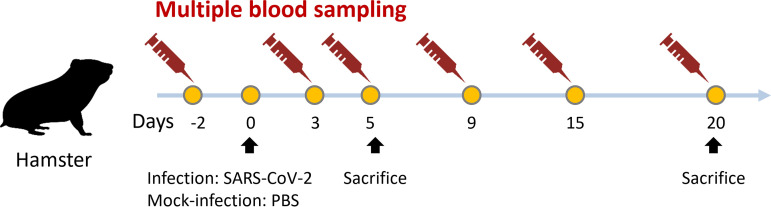
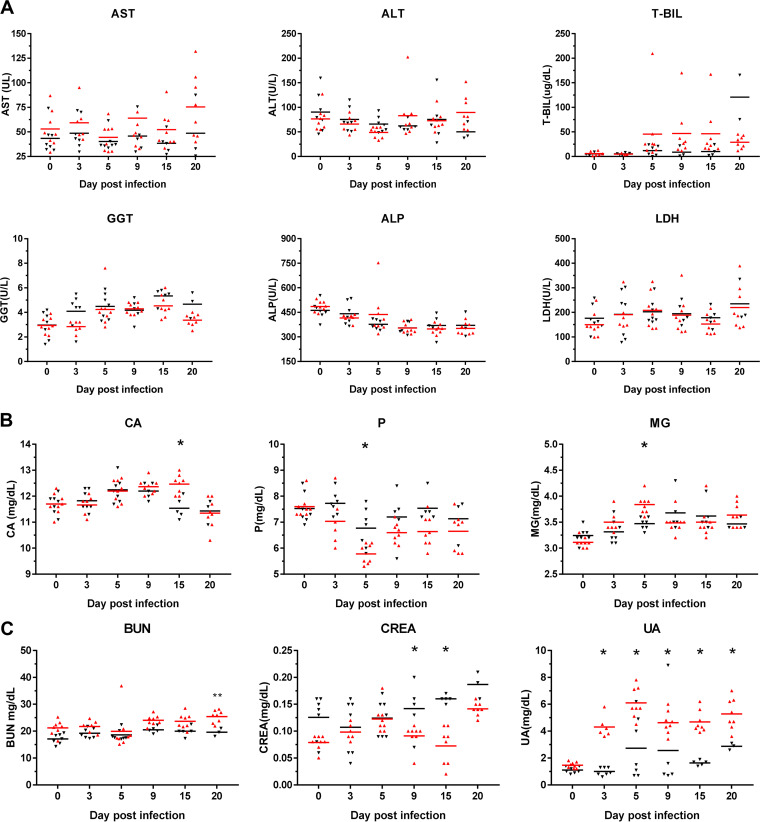
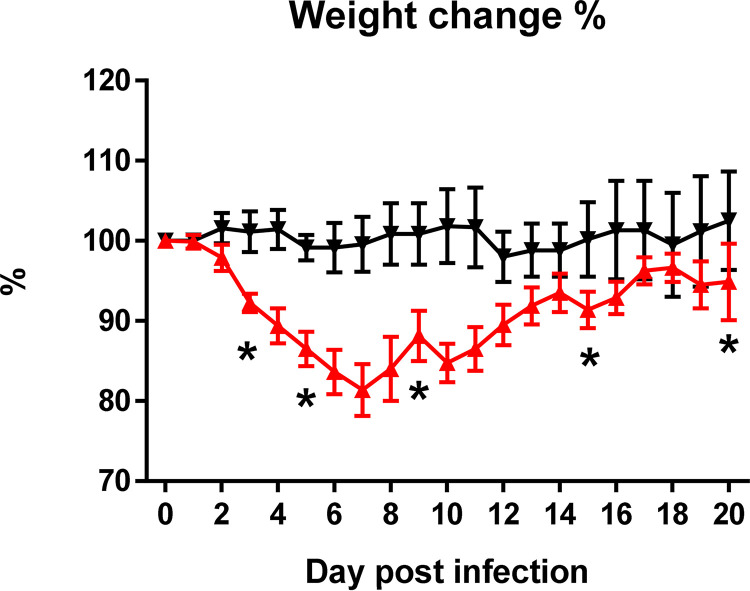
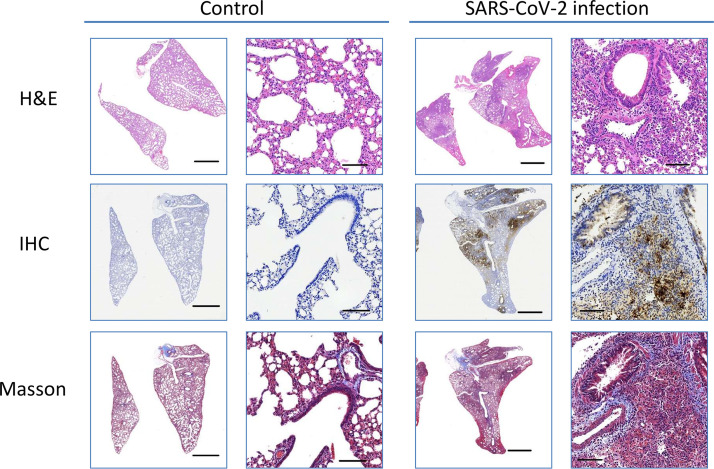
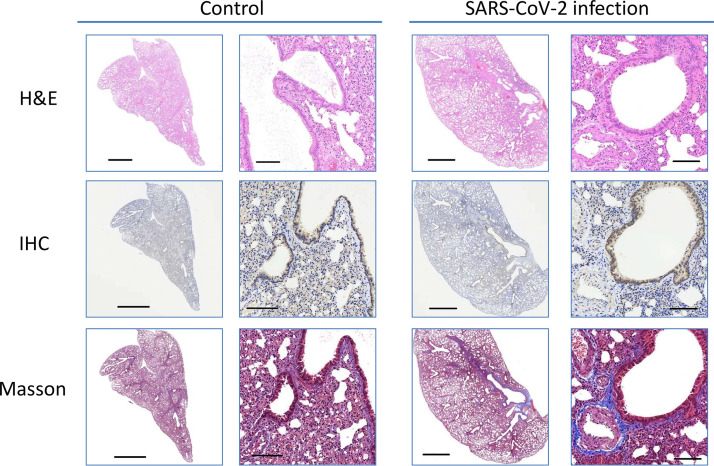
Severe acute respiratory syndrome coronavirus 2 (SARS-CoV-2) is a novel coronavirus that causes coronavirus disease 2019 (COVID-19). However, the long-term health consequences of COVID-19 are not fully understood. We aimed to determine the long-term lung pathology and blood chemistry changes in Syrian hamsters infected with SARS-CoV-2. Syrian hamsters (Mesocricetus auratus) were inoculated with 10 PFU of SARS-CoV-2, and changes post-infection (pi) were observed for 20 days. On days 5 and 20 pi, the lungs were harvested and processed for pathology and viral load count. Multiple blood samples were collected every 3 to 5 days to observe dynamic changes in blood chemistry. Infected hamsters showed consistent weight loss until day 7 pi At day 5 pi, histopathology of the lungs showed moderate to severe inflammation and the virus could be detected. These results indicate that SARS-CoV-2 has an acute onset and recovery course in the hamster infection model. During the acute onset, blood triglyceride levels increased significantly at day 3 pi During the recovery course, uric acid and low-density lipoprotein levels increased significantly, but the total protein and albumin levels decreased. Together, our study suggests that SARS-CoV-2 infection in hamsters not only causes lung damage but also causes long-term changes in blood biochemistry during the recovery process. COVID-19 is now considered a multiorgan disease with a wide range of manifestations. There are increasing reports of persistent and long-term effects after acute COVID-19, but the long-term health consequences of COVID-19 are not fully understood. This study reported for the first time the use of blood samples collected continuously in a SARS-CoV-2-infected hamster model, which provides more information about the dynamic changes in blood biochemistry during the acute and recovery phases of SARS-CoV-2 infection. Our study suggests that SARS-CoV-2 infection in hamsters not only causes lung damage but also causes long-term changes in blood biochemistry during the recovery process. The study may be used by several researchers and clinicians, especially those who are studying potential treatments for patients with post-acute COVID-19 syndrome.
严重急性呼吸综合征冠状病毒 2(SARS-CoV-2)是一种新型冠状病毒,可引起 2019 年冠状病毒病(COVID-19)。然而,COVID-19 的长期健康后果尚不完全清楚。我们旨在确定感染 SARS-CoV-2 的叙利亚仓鼠的长期肺部病理学和血液化学变化。将叙利亚仓鼠(Mesocricetus auratus)接种 10 PFU 的 SARS-CoV-2,并在感染后(pi)观察 20 天。在第 5 天和第 20 天 pi 时,收获肺部并进行病理学和病毒载量计数。每隔 3 到 5 天采集多个血液样本,以观察血液化学的动态变化。感染的仓鼠在 pi 第 7 天之前表现出持续的体重减轻。在 pi 第 5 天,肺部的组织病理学显示中度至重度炎症,并且可以检测到病毒。这些结果表明,SARS-CoV-2 在仓鼠感染模型中具有急性发作和恢复过程。在急性发作期间,pi 第 3 天血液甘油三酯水平显着升高。在恢复过程中,尿酸和低密度脂蛋白水平显着升高,但总蛋白和白蛋白水平下降。总之,我们的研究表明,SARS-CoV-2 感染不仅会导致肺部损伤,还会在恢复过程中导致血液生化的长期变化。 COVID-19 现在被认为是一种多器官疾病,具有广泛的表现。有越来越多的报告称,急性 COVID-19 后存在持续和长期的影响,但 COVID-19 的长期健康后果尚不完全清楚。本研究首次报告了在 SARS-CoV-2 感染的仓鼠模型中连续采集血液样本,这为 SARS-CoV-2 感染的急性和恢复阶段血液生化的动态变化提供了更多信息。我们的研究表明,SARS-CoV-2 感染不仅会导致肺部损伤,还会在恢复过程中导致血液生化的长期变化。这项研究可能被几位研究人员和临床医生使用,特别是那些正在研究针对急性 COVID-19 后综合征患者的潜在治疗方法的人。