Laboratory of Receptor Biology and Gene Expression, Center for Cancer Research, National Cancer Institute, National Institutes of Health, Bethesda, United States.
Elife. 2023 Feb 15;12:e81861. doi: 10.7554/eLife.81861.
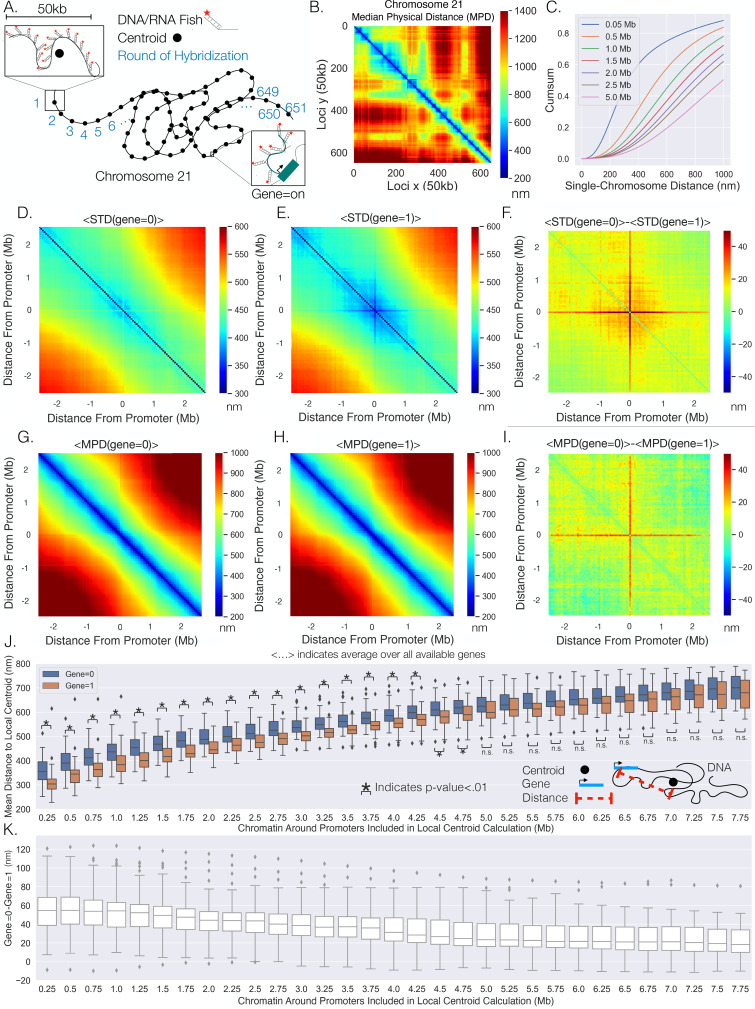
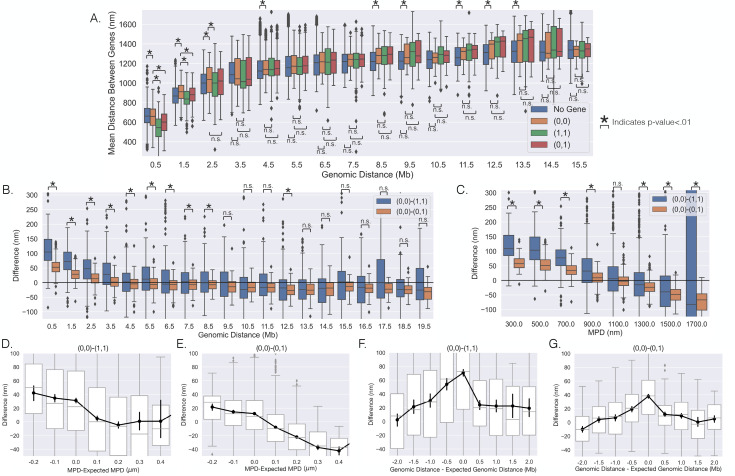
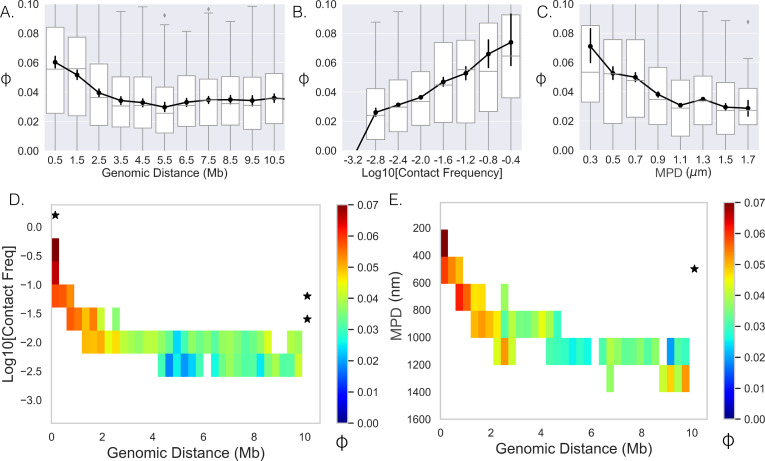
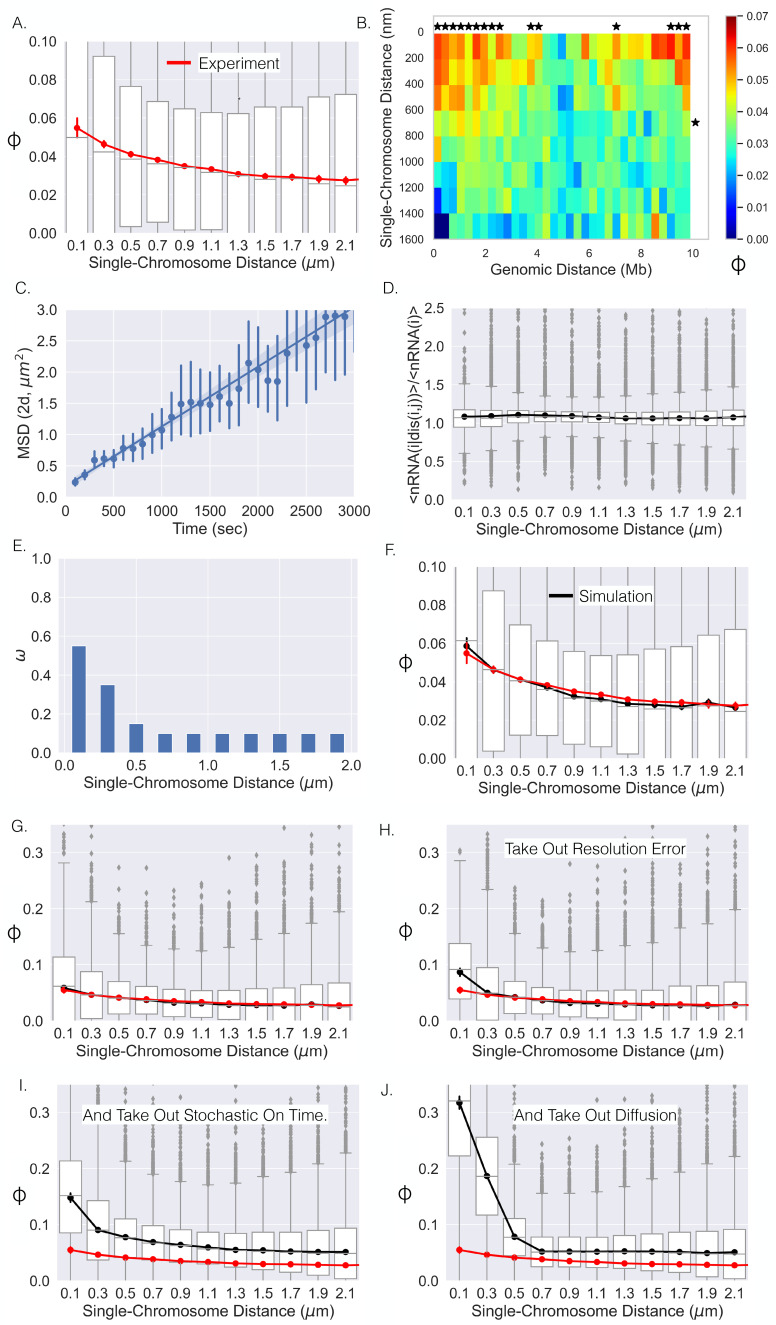
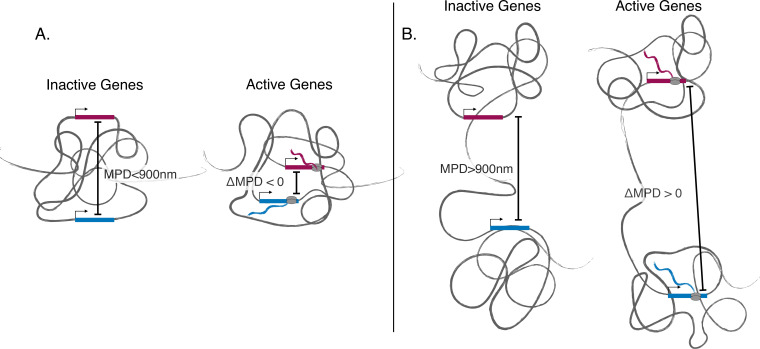
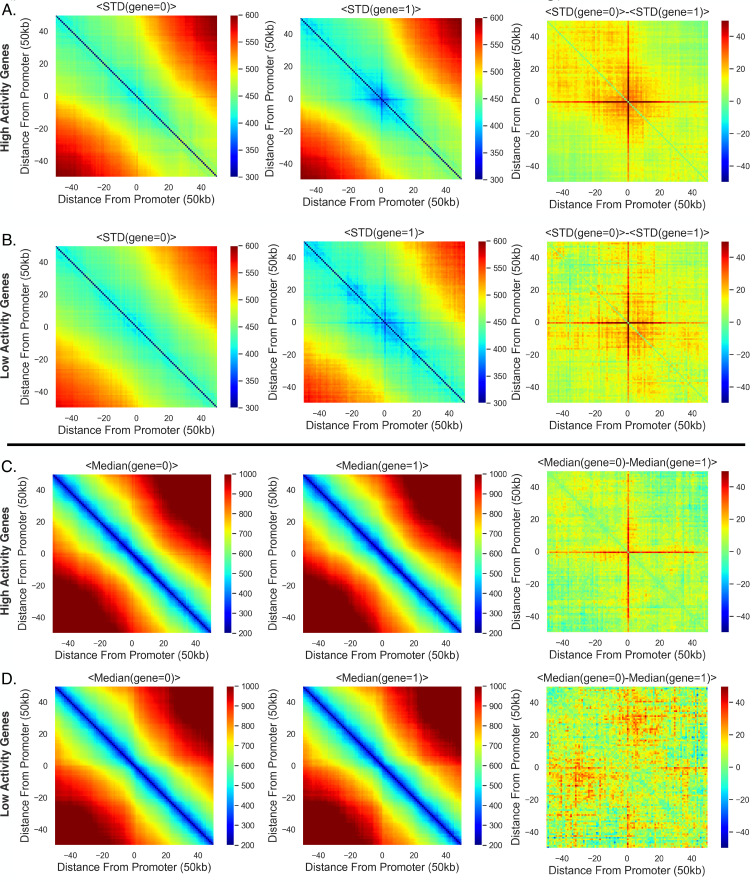
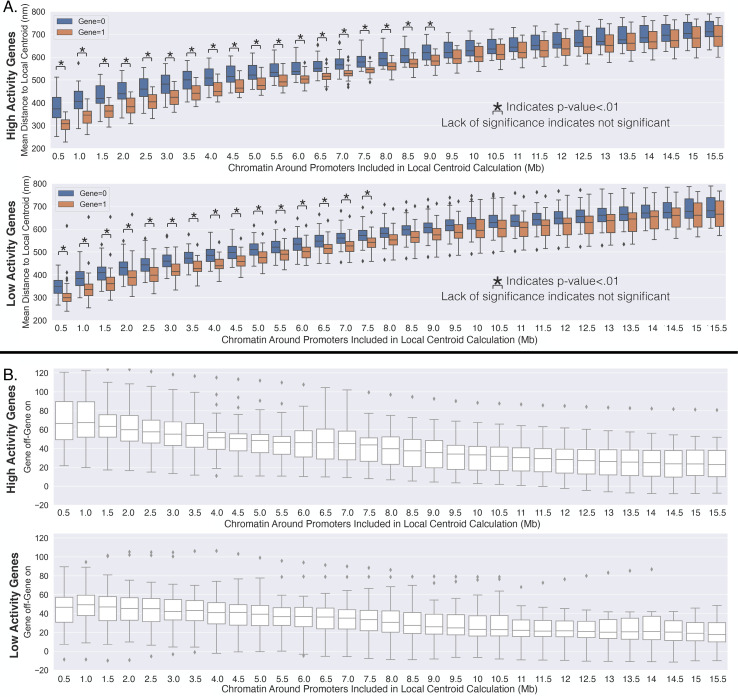
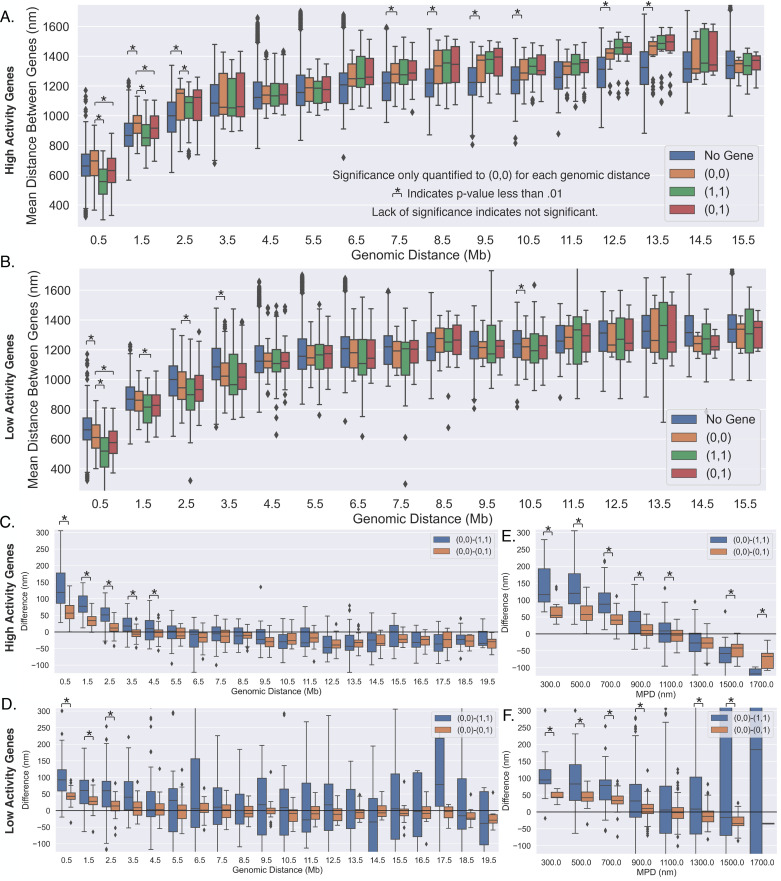
The role of the spatial organization of chromosomes in directing transcription remains an outstanding question in gene regulation. Here, we analyze two recent single-cell imaging methodologies applied across hundreds of genes to systematically analyze the contribution of chromosome conformation to transcriptional regulation. Those methodologies are (1) single-cell chromatin tracing with super-resolution imaging in fixed cells; and (2) high-throughput labeling and imaging of nascent RNA in living cells. Specifically, we determine the contribution of physical distance to the coordination of transcriptional bursts. We find that individual genes adopt a constrained conformation and reposition toward the centroid of the surrounding chromatin upon activation. Leveraging the variability in distance inherent in single-cell imaging, we show that physical distance - but not genomic distance - between genes on individual chromosomes is the major factor driving co-bursting. By combining this analysis with live-cell imaging, we arrive at a corrected transcriptional correlation of [Formula: see text] for genes separated by < 400 nm. We propose that this surprisingly large correlation represents a physical property of human chromosomes and establishes a benchmark for future experimental studies.
染色体的空间组织在指导转录中的作用仍然是基因调控中一个悬而未决的问题。在这里,我们分析了两种最近的单细胞成像方法,这些方法应用于数百个基因,系统地分析了染色体构象对转录调控的贡献。这些方法是:(1)固定细胞中超分辨率成像的单细胞染色质追踪;(2)活细胞中新生 RNA 的高通量标记和成像。具体来说,我们确定了物理距离对转录爆发协调的贡献。我们发现,单个基因在激活时会采用一种受约束的构象,并向周围染色质的质心重新定位。利用单细胞成像固有的距离可变性,我们表明,单个染色体上基因之间的物理距离 - 而不是基因组距离 - 是驱动共同爆发的主要因素。通过将这种分析与活细胞成像相结合,我们得到了一个经过修正的转录相关性[公式:见文本],对于分离距离小于 400nm 的基因。我们提出,这种惊人的大相关性代表了人类染色体的一种物理特性,并为未来的实验研究建立了一个基准。