Department of Agriculture, Land Reform and Rural Development, Tshwane, 0001, South Africa.
Department of Environmental Sciences, College of Agriculture and Environmental Sciences, University of South Africa, Tshwane, 0002, South Africa.
Sci Rep. 2023 Feb 15;13(1):2742. doi: 10.1038/s41598-023-29914-0.
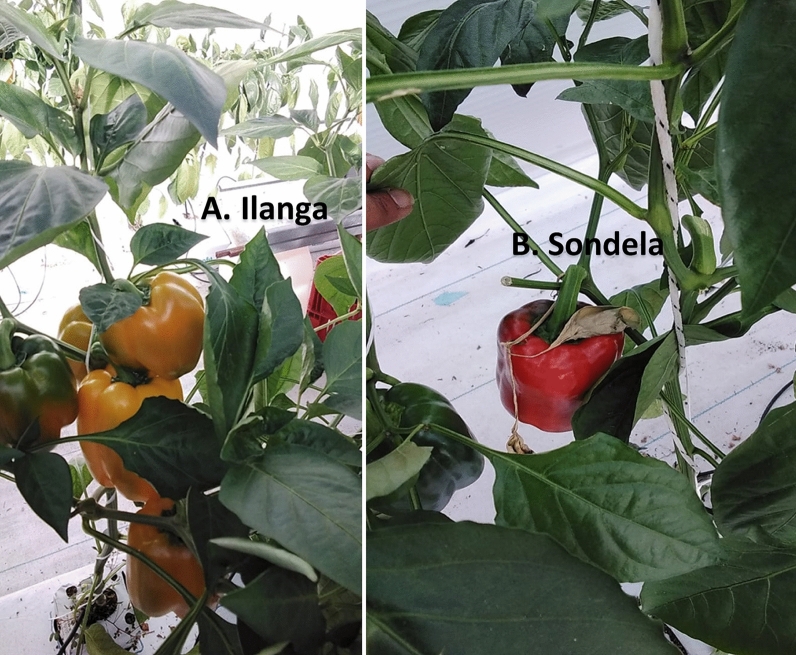
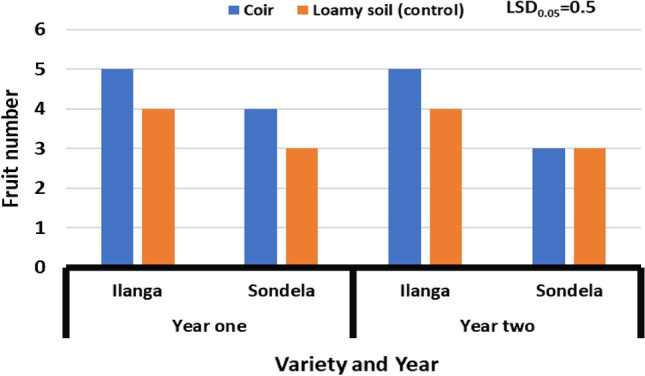
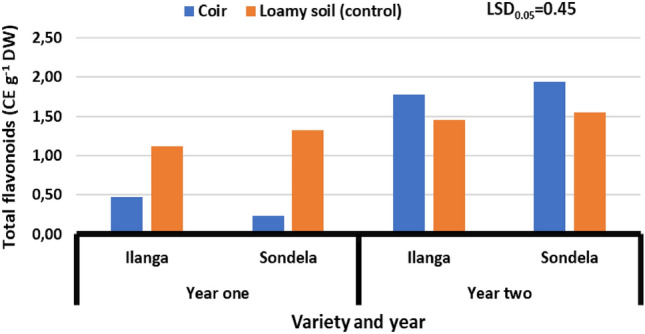
The industry standard for estimating the quantity of horticultural produce harvested is crop yield. Producing sufficient amounts of high-quality biochemical ingredients crops can therefore aid in resolving concerns with food security and nutrition. Most producers prefer the use of organic substrate over natural soils when growing crops such as peppers in greenhouses, to ensure that there is a sufficient supply of food all year round. The objective of the study was to determine the effect of coconut coir substrate on the yield and biochemical constituents of peppers varieties grown under greenhouse environment. For two successive seasons [2021 and 2022], two sweet pepper types (Sondela and Ilanga) were cultivated on fertigated coconut coir and loamy soil (control). Fruit number, together with their dry weight and some biochemical constituents, were examined. To evaluate the impact of coconut coir substrate on the growth, yield, and biochemical constituents of different pepper cultivars grown in a greenhouse, dry plant materials and freeze-dried fruit samples were analyzed. Results showed that the coconut coir and variety (Ilanga) treatment combination produced more fruits than other treatments. Biochemical constituents such as vitamins, total phenols, total flavonoids, copper, iron and Zinc were in fruits grown under coir substrate when compared to loamy soil (control). Therefore, farmers are encouraged to grow sweet peppers varieties under coconut coir substrate for better yield, nutritional quality and profit maximisation.
评估园艺产品收获量的行业标准是作物产量。因此,生产足够数量的高质量生化成分作物可以帮助解决粮食安全和营养问题。大多数种植者在温室中种植辣椒等作物时更喜欢使用有机基质而不是天然土壤,以确保全年都有充足的食物供应。本研究的目的是确定椰子纤维基质对温室环境下种植的辣椒品种产量和生化成分的影响。在连续两个季节(2021 年和 2022 年)中,在施肥的椰子纤维和壤土(对照)上种植了两种甜椒品种(Sondela 和 Ilanga)。检查了果实数量及其干重和一些生化成分。为了评估椰子纤维基质对温室中不同辣椒品种生长、产量和生化成分的影响,对干燥植物材料和冻干果实样品进行了分析。结果表明,椰子纤维和品种(Ilanga)处理组合比其他处理组合产生了更多的果实。与壤土(对照)相比,在椰子纤维基质下生长的果实中的维生素、总酚、总类黄酮、铜、铁和锌等生化成分更多。因此,鼓励农民在椰子纤维基质下种植甜椒品种,以获得更高的产量、更好的营养价值和更高的利润。