School of Integrated Chinese and Western Medicine, Anhui University of Chinese Medicine, Hefei 230012, Anhui, China.
School of Medical Informatics Engineering, Anhui University of Chinese Medicine, Hefei, China.
Aging (Albany NY). 2023 Feb 10;15(4):1004-1024. doi: 10.18632/aging.204516.
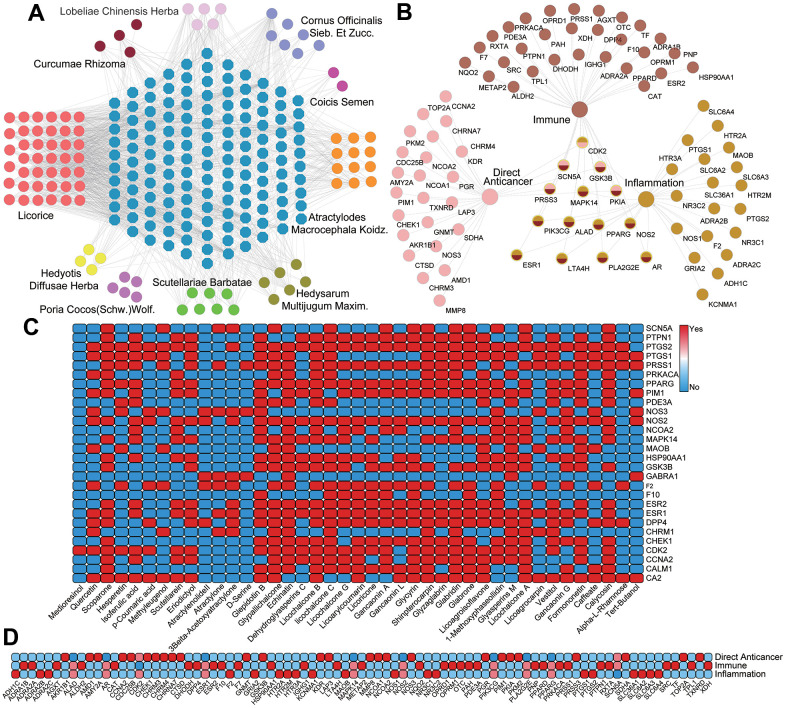
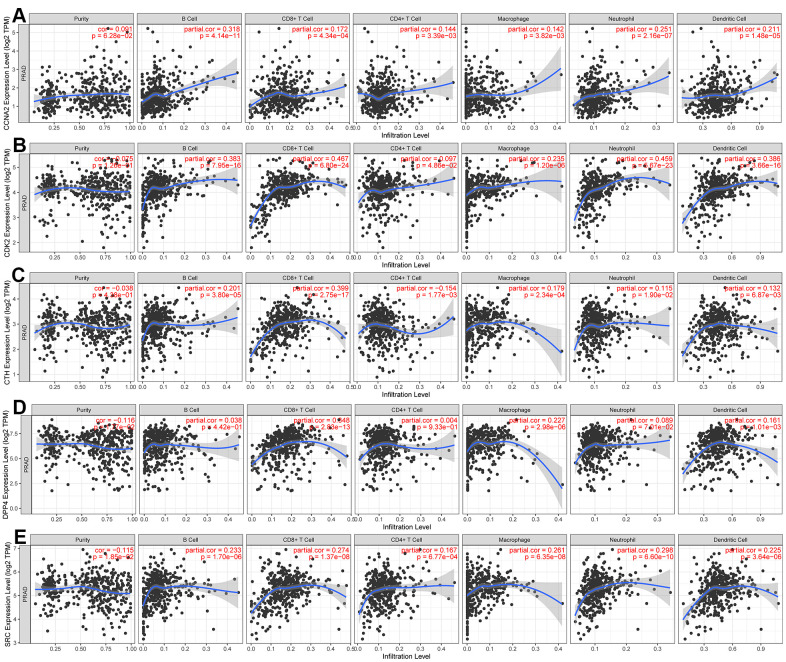
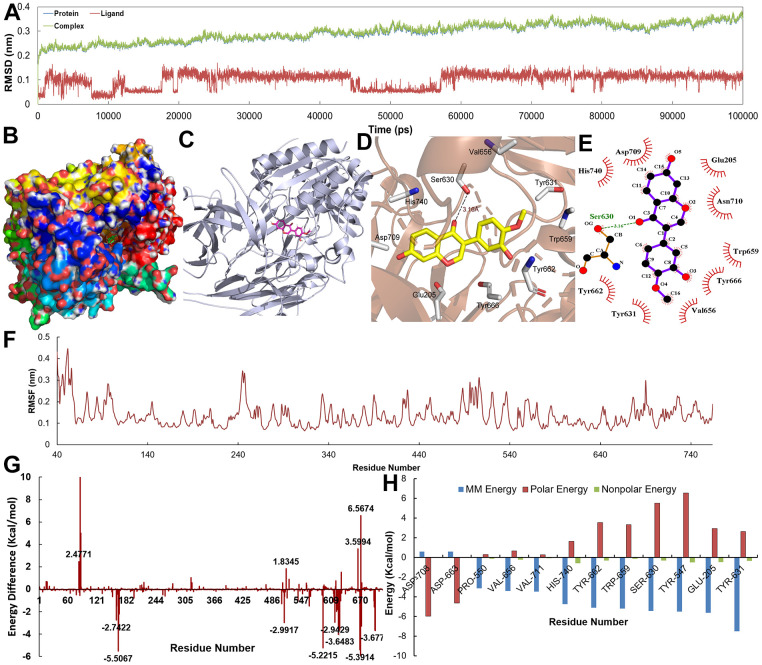
Due to various unpleasant side effects and general ineffectiveness of current treatments for prostate cancer (PCa), more and more people with PCa try to look for complementary and alternative medicine such as herbal medicine. However, since herbal medicine has multi-components, multi-targets and multi-pathways features, its underlying molecular mechanism of action is not yet known and still needs to be systematically explored. Presently, a comprehensive approach consisting of bibliometric analysis, pharmacokinetic assessment, target prediction and network construction is firstly performed to obtain PCa-related herbal medicines and their corresponding candidate compounds and potential targets. Subsequently, a total of 20 overlapping genes between DEGs in PCa patients and the target genes of the PCa-related herbs, as well as five hub genes, i.e., CCNA2, CDK2, CTH, DPP4 and SRC were determined employing bioinformatics analysis. Further, the roles of these hub genes in PCa were also investigated through survival analysis and tumour immunity analysis. Moreover, to validate the reliability of the C-T interactions and to further explore the binding modes between ingredients and their targets, the molecular dynamics (MD) simulations were carried out. Finally, based on the modularization of the biological network, four signaling pathways, i.e., PI3K-Akt, MAPK, p53 and cell cycle were integrated to further analyze the therapeutic mechanism of PCa-related herbal medicine. All the results show the mechanism of action of herbal medicines on treating PCa from the molecular to systematic levels, providing a reference for the treatment of complex diseases using TCM.
由于当前治疗前列腺癌(PCa)的方法存在各种不良反应和普遍无效的问题,越来越多的 PCa 患者试图寻求补充和替代医学,如草药医学。然而,由于草药具有多成分、多靶点和多途径的特点,其潜在的分子作用机制尚不清楚,仍需要系统地探索。目前,采用文献计量分析、药代动力学评估、靶标预测和网络构建的综合方法,首先获得与 PCa 相关的草药及其相应的候选化合物和潜在靶标。随后,通过生物信息学分析,确定了 PCa 患者的差异表达基因(DEGs)与 PCa 相关草药的靶基因之间的 20 个重叠基因,以及五个枢纽基因,即 CCNA2、CDK2、CTH、DPP4 和 SRC。此外,还通过生存分析和肿瘤免疫分析研究了这些枢纽基因在 PCa 中的作用。此外,为了验证 C-T 相互作用的可靠性,并进一步探索成分与其靶标的结合模式,进行了分子动力学(MD)模拟。最后,基于生物网络的模块化,整合了四个信号通路,即 PI3K-Akt、MAPK、p53 和细胞周期,进一步分析了与 PCa 相关的草药的治疗机制。所有结果均从分子到系统水平展示了草药治疗 PCa 的作用机制,为使用中药治疗复杂疾病提供了参考。