From the Faculty of Health Sciences, University of Buea, Buea, Cameroon (Dr. Ahmed Nour, Dr. Azemafac, Dr. Mbeboh, Dr. Embolo, and Dr. Chichom-Mefire); the Center for Global Surgical Studies, Department of Surgery, University of California, San Francisco, San Francisco, CA (Dr. Ahmed Nour, Dr. Tiee, Motwani, Dr. Azemafac, Dr. Mbeboh, Dr. Embolo, Dr. Dickson, and Dr. Christie); the Department of Orthopaedic Surgery and Rehabilitation, Loyola University Medical Center, Maywood, IL (Tiee); and the Program for the Advancement of Surgical Equity, Department of Surgery, University of California, Los Angeles, Los Angeles, CA (Dr. Oke, Dr. Dicker, and Dr. Juillard).
J Am Acad Orthop Surg Glob Res Rev. 2023 Feb 16;7(2). doi: 10.5435/JAAOSGlobal-D-22-00148. eCollection 2023 Feb 1.
Extremity injuries are a leading cause of morbidity in low- and middle-income countries (LMICs), often resulting in marked short-term and long-term disabilities. Most of the existing knowledge on these injuries originates from hospital-based studies; however, poor access to health care in LMICs limits these data because of inherent selection bias. This subanalysis of a larger population-level cross-sectional study in the Southwest Region of Cameroon aims to determine patterns of limb injury, treatment-seeking behaviors, and predictors of disability.
Households were surveyed in 2017 on injuries and subsequent disability sustained over the previous 12 months using a three-stage cluster sampling framework. Subgroups were compared using the chi square, Fisher exact, analysis of variance, Wald, and Wilcoxon rank-sum tests. Logarithmic models were used to identify predictors of disability.
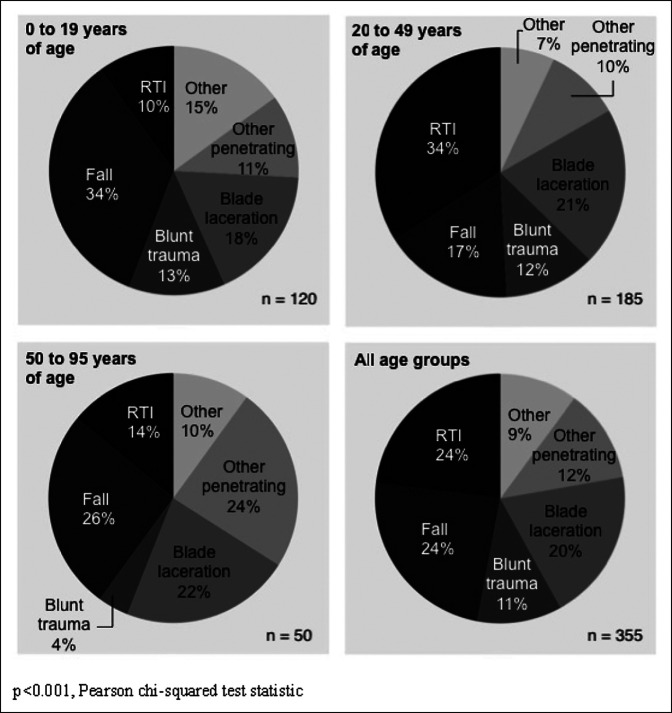
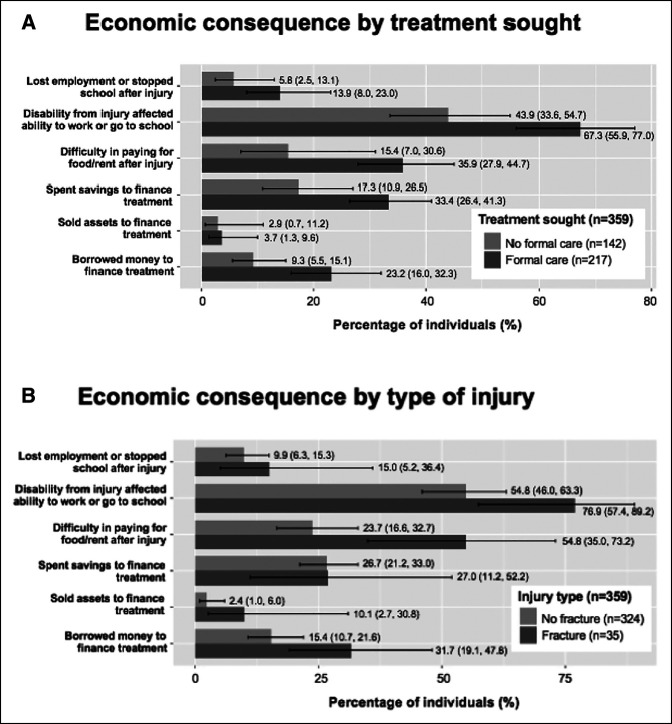
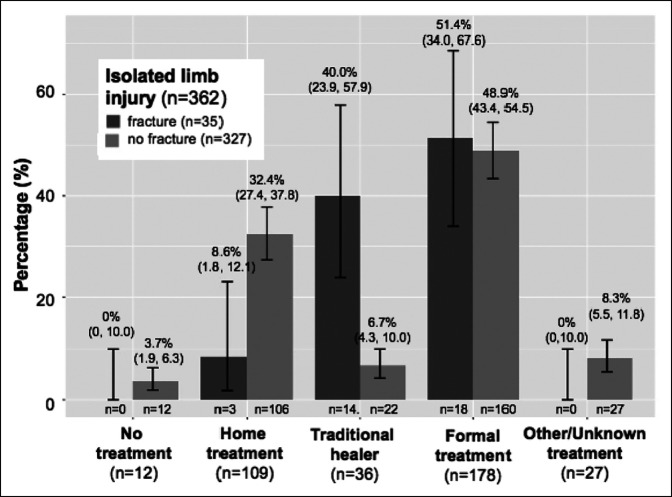
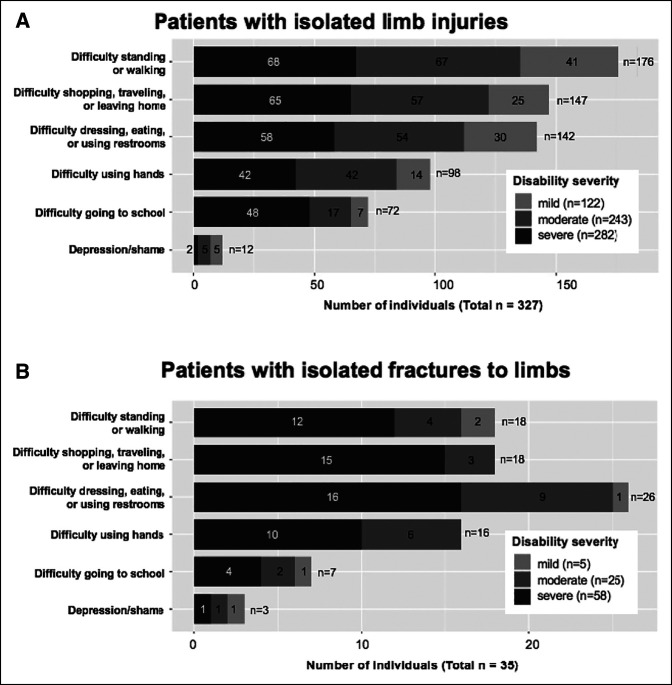
Of 8,065 subjects, 335 persons (4.2%) sustained 363 isolated limb injuries. Over half of the isolated limb injuries (55.7%) were open wounds while 9.6% were fractures. Isolated limb injuries most commonly occurred in younger men and resulted from falls (24.3%) and road traffic injuries (23.5%). High rates of disability were reported, with 39% reporting difficulty with activities of daily living. Compared with individuals with other types of limb injuries, those with fractures were six times more likely to seek a traditional healer first for care (40% versus 6.7%), 5.3 times (95% CI, 1.21 to 23.42) more likely to have any level of disability after adjustment for injury mechanism, and 2.3 times more likely to have difficulty paying for food or rent (54.8% versus 23.7%).
Most traumatic injuries sustained in LMICs involve limb injuries and often result in high levels of disability that affect individuals during their most productive years. Improved access to care and injury control measures, such as road safety training and improvements to transportation and trauma response infrastructure, are needed to reduce these injuries.
在中低收入国家(LMICs),四肢损伤是发病率的主要原因,常导致明显的短期和长期残疾。这些损伤的大部分现有知识来源于基于医院的研究;然而,由于 LMICs 中医疗保健获取不足,由于固有选择偏差,这些数据受到限制。本研究对喀麦隆西南部地区一项更大的人群横断面研究进行了子分析,旨在确定肢体损伤模式、寻求治疗行为以及残疾的预测因素。
2017 年,采用三阶段聚类抽样框架对家庭进行了关于过去 12 个月内受伤及其随后残疾的调查。使用卡方检验、Fisher 确切检验、方差分析、Wald 检验和 Wilcoxon 秩和检验比较亚组。使用对数模型确定残疾的预测因素。
在 8065 名受试者中,335 人(4.2%)发生 363 例孤立肢体损伤。超过一半的孤立肢体损伤(55.7%)为开放性伤口,9.6%为骨折。孤立肢体损伤最常见于年轻男性,由跌倒(24.3%)和道路交通伤害(23.5%)引起。报告的残疾率很高,39%的人报告日常生活活动困难。与其他类型的肢体损伤患者相比,骨折患者首先寻求传统治疗师治疗的可能性高 6 倍(40%比 6.7%),调整损伤机制后,任何程度残疾的可能性高 5.3 倍(95%CI,1.21 至 23.42),更有可能难以支付食物或租金(54.8%比 23.7%)。
在 LMICs 中,大多数创伤性损伤涉及肢体损伤,常导致高水平的残疾,影响个人在最具生产力的年龄。需要改善医疗保健获取和伤害控制措施,如道路安全培训以及改善交通和创伤反应基础设施,以减少这些伤害。