Shi Yulan, Yang Sizhong, Zhao Zhixing, An Lizhe
Extreme Stress Resistance and Biotechnology Laboratory, Northwest Institute of Eco-Environment and Resources, Chinese Academy of Sciences, Lanzhou, 730000, China.
State Key Laboratory of Frozen Soils Engineering, Northwest Institute of Eco-Environment and Resources, Chinese Academy of Sciences, Lanzhou, 730000, China.
Sci Rep. 2023 Feb 16;13(1):2799. doi: 10.1038/s41598-023-29910-4.
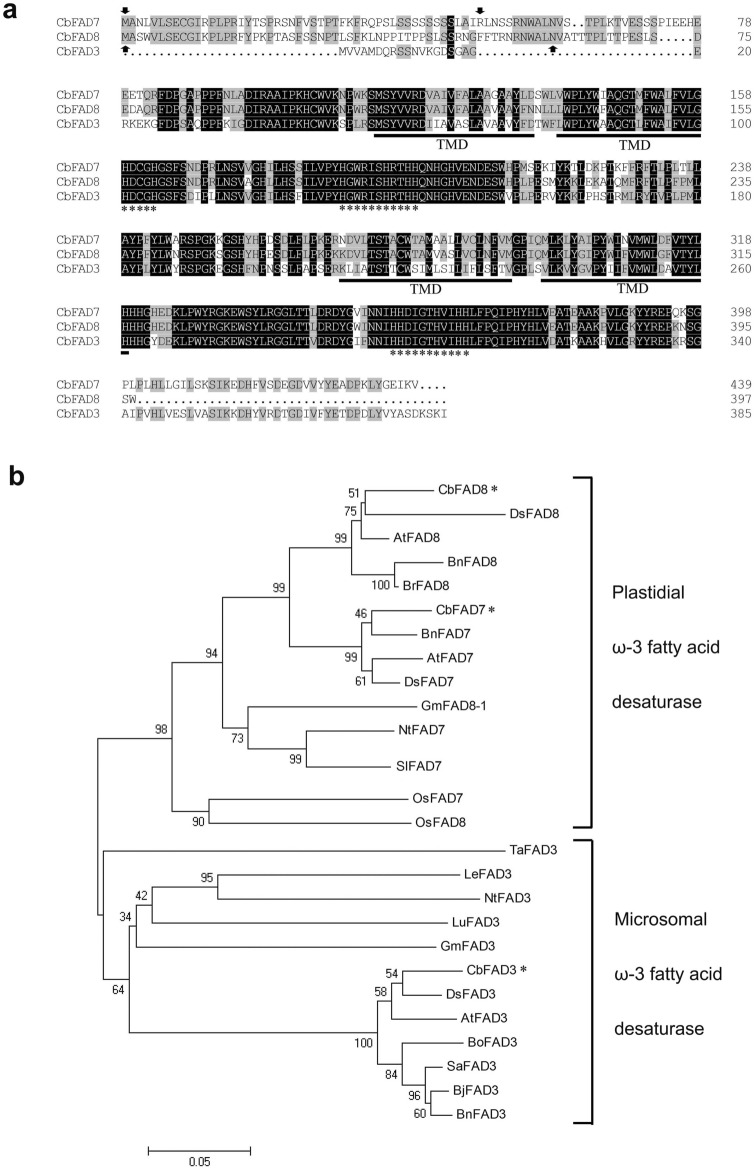
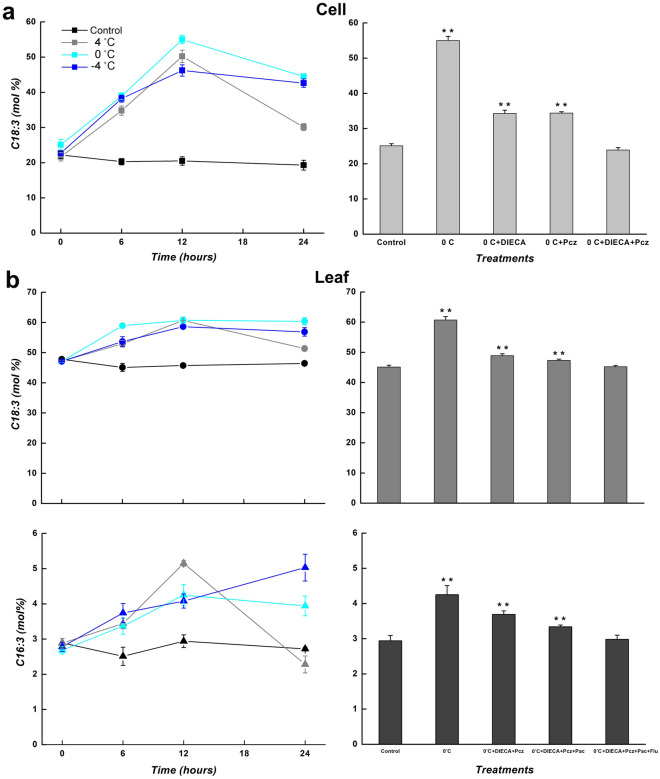
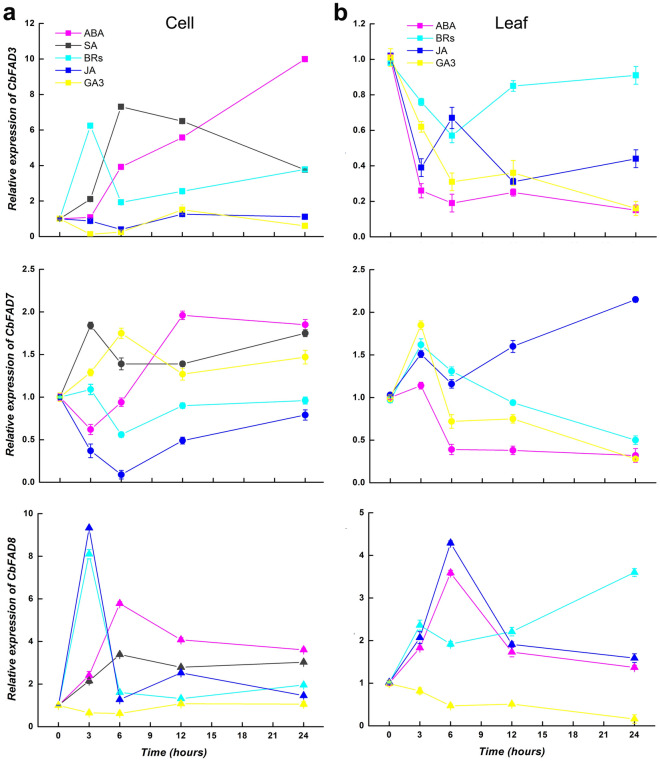
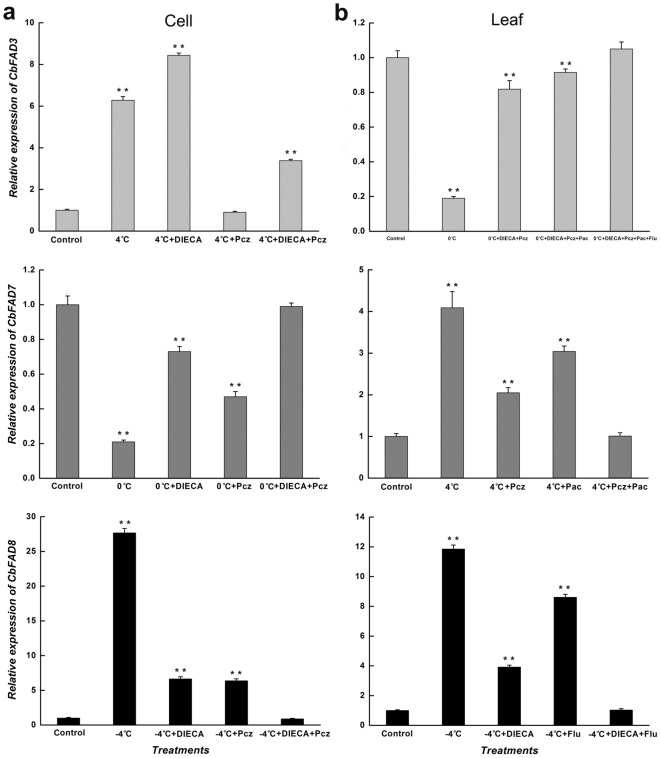
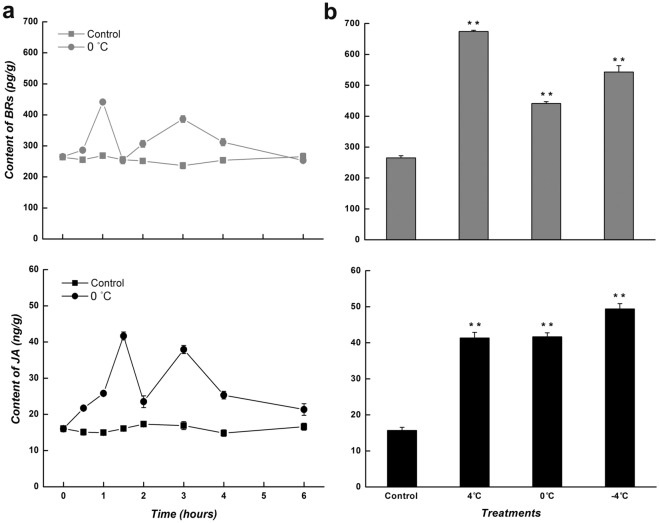
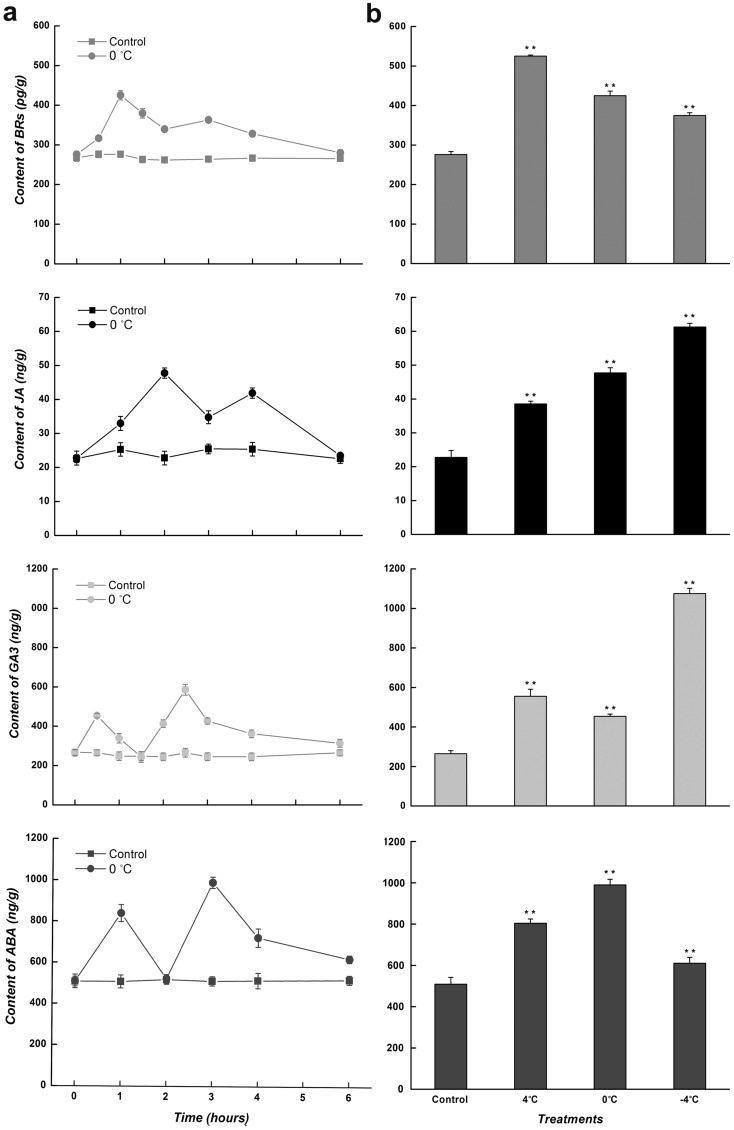
To explore the contributions of ω-3 fatty acid desaturases (FADs) to cold stress response in a special cryophyte, Chorispora bungeana, two plastidial ω-3 desaturase genes (CbFAD7, CbFAD8) were cloned and verified in an Arabidopsis fad7fad8 mutant, before being compared with the microsomal ω-3 desaturase gene (CbFAD3). Though these genes were expressed in all tested tissues of C. bungeana, CbFAD7 and CbFAD8 have the highest expression in leaves, while CbFAD3 was mostly expressed in suspension-cultured cells. Low temperatures resulted in significant increases in trienoic fatty acids (TAs), corresponding to the cooperation of CbFAD3 and CbFAD8 in cultured cells, and the coordination of CbFAD7 and CbFAD8 in leaves. Furthermore, the cold induction of CbFAD8 in the two systems were increased with decreasing temperature and independently contributed to TAs accumulation at subfreezing temperature. A series of experiments revealed that jasmonie acid and brassinosteroids participated in the cold-responsive expression of ω-3 CbFAD genes in both C. bungeana cells and leaves, while the phytohormone regulation in leaves was complex with the participation of abscisic acid and gibberellin. These results point to the hormone-regulated non-redundant contributions of ω-3 CbFADs to maintain appropriate level of TAs under low temperatures, which help C. bungeana survive in cold environments.
为了探究ω-3脂肪酸去饱和酶(FADs)在特殊低温植物地肤中的冷胁迫响应作用,克隆了两个质体ω-3去饱和酶基因(CbFAD7、CbFAD8),并在拟南芥fad7fad8突变体中进行验证,之后与微粒体ω-3去饱和酶基因(CbFAD3)进行比较。尽管这些基因在地肤的所有测试组织中均有表达,但CbFAD7和CbFAD8在叶片中的表达量最高,而CbFAD3主要在悬浮培养细胞中表达。低温导致三烯脂肪酸(TAs)显著增加,这与CbFAD3和CbFAD8在培养细胞中的协同作用以及CbFAD7和CbFAD8在叶片中的协调作用相对应。此外,在两个系统中,CbFAD8的冷诱导随着温度降低而增加,并在亚冰点温度下独立促进TAs积累。一系列实验表明,茉莉酸和油菜素内酯参与了地肤细胞和叶片中ω-3 CbFAD基因的冷响应表达,而叶片中的植物激素调控较为复杂,脱落酸和赤霉素也参与其中。这些结果表明,ω-3 CbFADs在激素调节下发挥非冗余作用,以在低温下维持适当水平的TAs,从而帮助地肤在寒冷环境中生存。