Dumelle Michael, Kincaid Tom, Olsen Anthony R, Weber Marc
United States Environmental Protection Agency.
J Stat Softw. 2023 Jan 18;105(3):1-29. doi: 10.18637/jss.v105.i03.
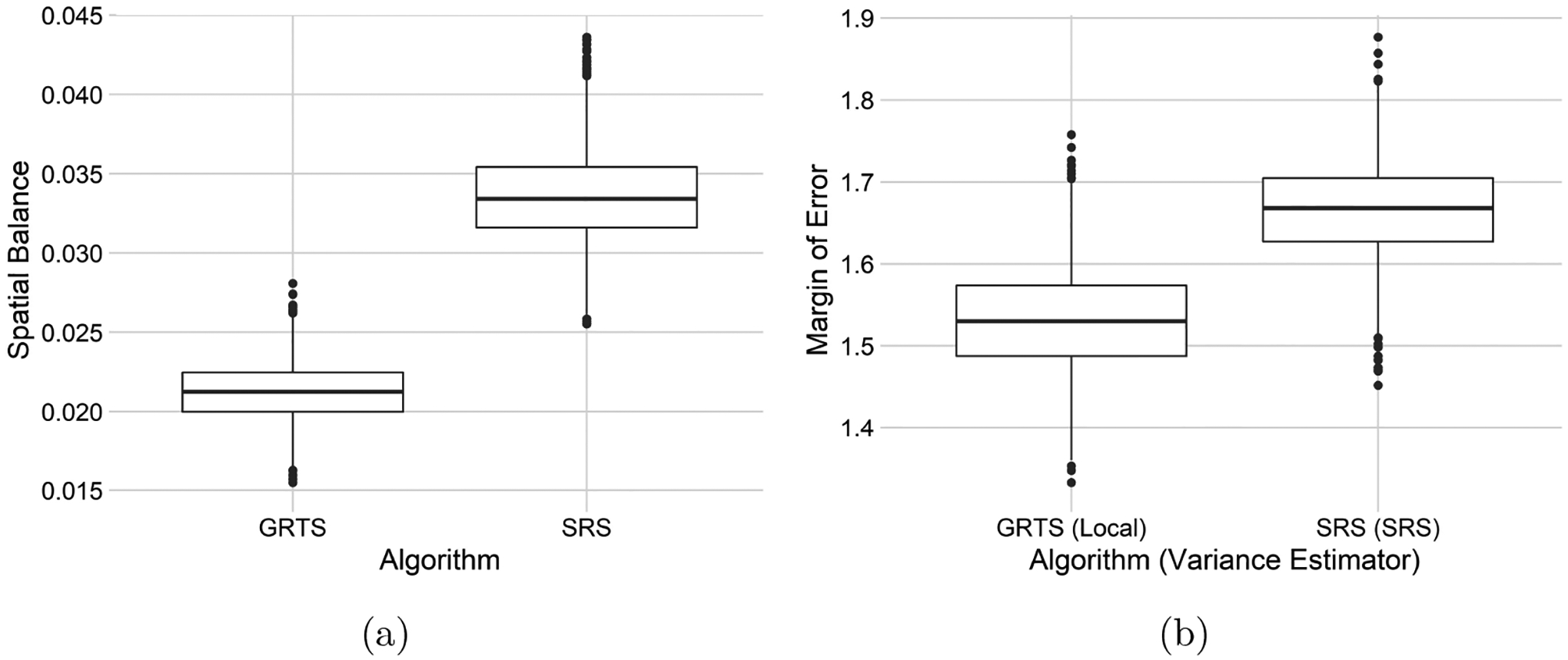
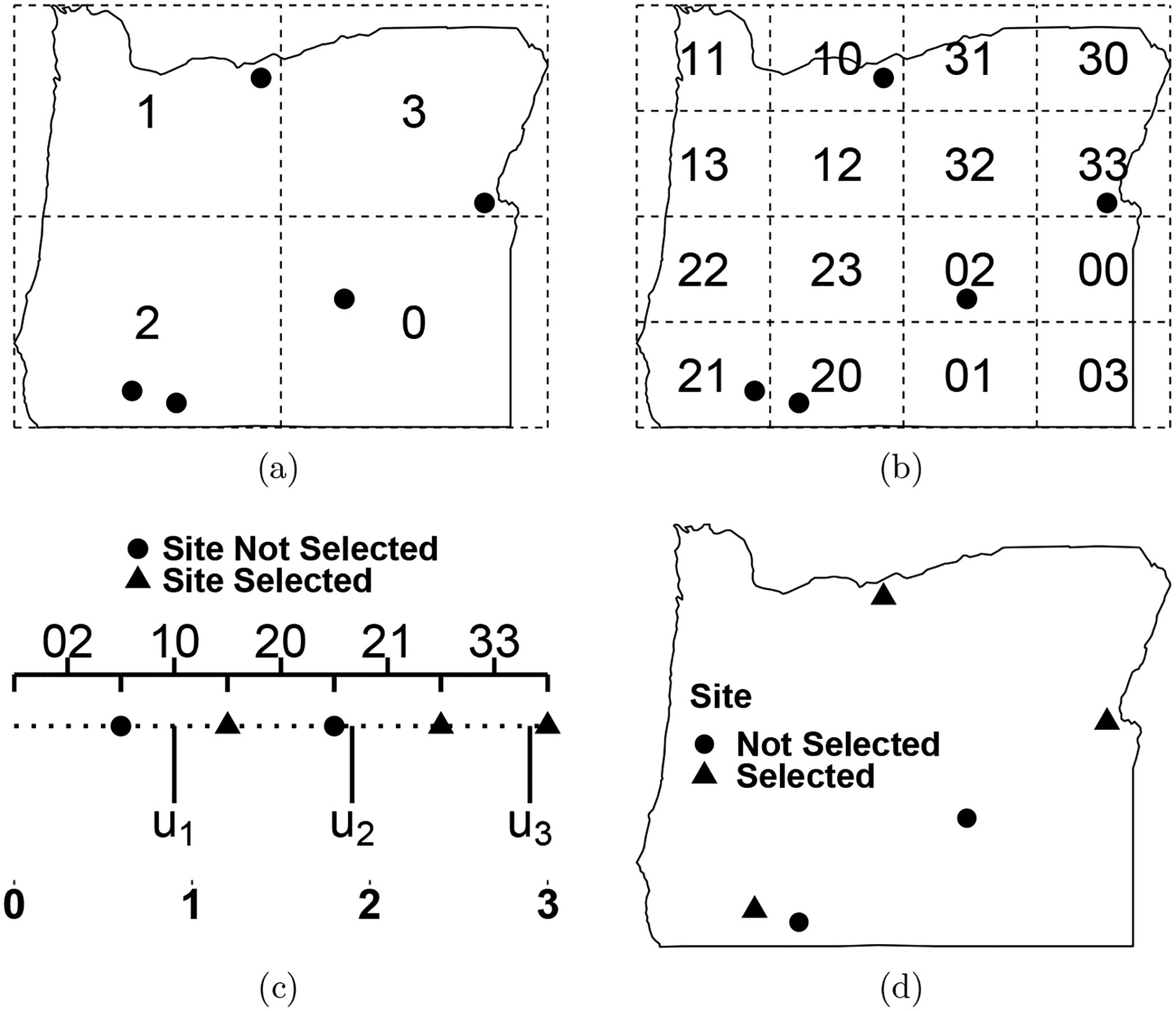
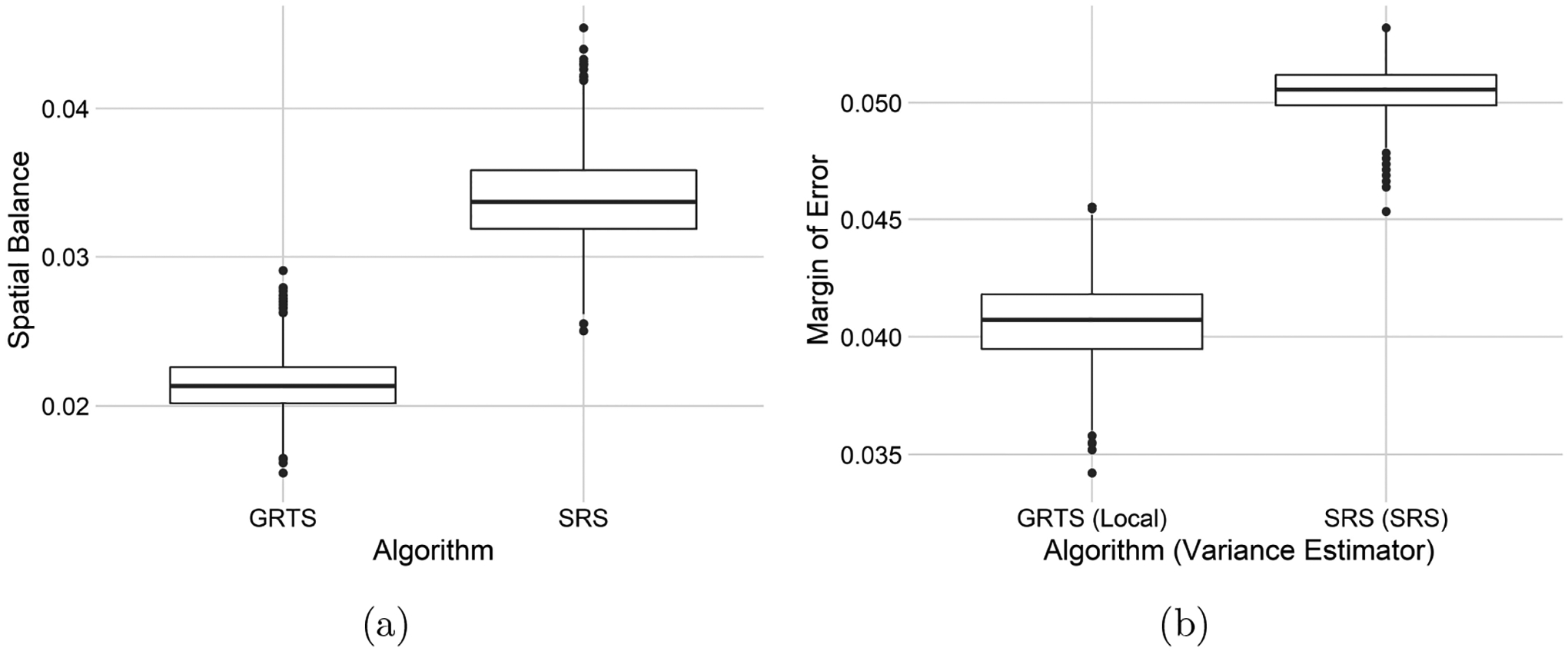
is an R package for design-based statistical inference, with a focus on spatial data. provides the generalized random-tessellation stratified (GRTS) algorithm to select spatially balanced samples via the grts() function. The grts() function flexibly accommodates several sampling design features, including stratification, varying inclusion probabilities, legacy (or historical) sites, minimum distances between sites, and two options for replacement sites. also provides a suite of data analysis options, including categorical variable analysis (cat_analysis()), continuous variable analysis cont_analysis()), relative risk analysis (relrisk_analysis()), attributable risk analysis (attrisk_analysis()), difference in risk analysis (diffrisk_analysis()), change analysis (change_analysis()), and trend analysis (trend_analysis()). In this manuscript, we first provide background for the GRTS algorithm and the analysis approaches and then show how to implement them in . We find that the spatially balanced GRTS algorithm yields more precise parameter estimates than simple random sampling, which ignores spatial information.
是一个用于基于设计的统计推断的R包,重点关注空间数据。它提供了广义随机镶嵌分层(GRTS)算法,通过grts()函数来选择空间平衡样本。grts()函数灵活地适应多种抽样设计特征,包括分层、不同的包含概率、遗留(或历史)站点、站点之间的最小距离以及替换站点的两种选项。它还提供了一套数据分析选项,包括分类变量分析(cat_analysis())、连续变量分析(cont_analysis())、相对风险分析(relrisk_analysis())、归因风险分析(attrisk_analysis())、风险差异分析(diffrisk_analysis())、变化分析(change_analysis())和趋势分析(trend_analysis())。在本手稿中,我们首先提供GRTS算法和分析方法的背景,然后展示如何在中实现它们。我们发现,与忽略空间信息的简单随机抽样相比,空间平衡的GRTS算法能产生更精确的参数估计。