Bezwada Divya, Lesner Nicholas P, Brooks Bailey, Vu Hieu S, Wu Zheng, Cai Ling, Kasitinon Stacy, Kelekar Sherwin, Cai Feng, Aurora Arin B, Patrick McKenzie, Leach Ashley, Ghandour Rashed, Zhang Yuanyuan, Do Duyen, Sudderth Jessica, Dumesnil Dennis, House Sara, Rosales Tracy, Poole Alan M, Lotan Yair, Woldu Solomon, Bagrodia Aditya, Meng Xiaosong, Cadeddu Jeffrey A, Mishra Prashant, Pedrosa Ivan, Kapur Payal, Courtney Kevin D, Malloy Craig R, Margulis Vitaly, DeBerardinis Ralph J
Children's Medical Center Research Institute.
Quantitative Biomedical Research Center.
bioRxiv. 2023 Feb 7:2023.02.06.527285. doi: 10.1101/2023.02.06.527285.
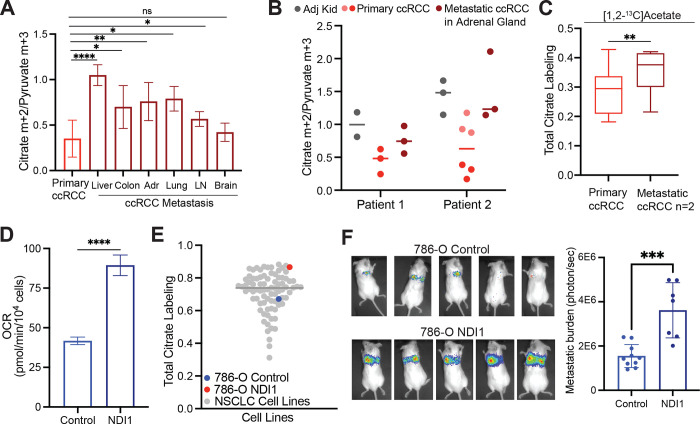
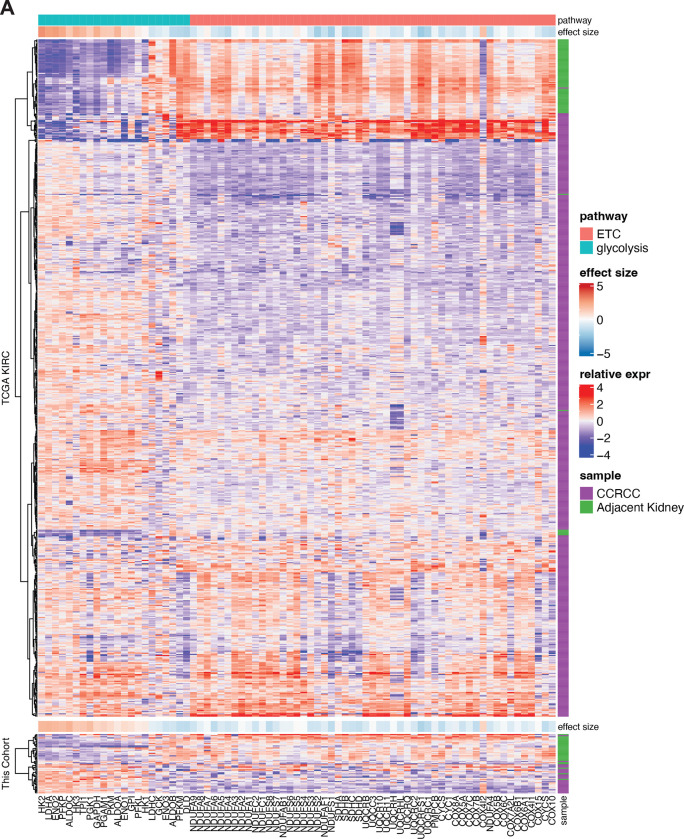
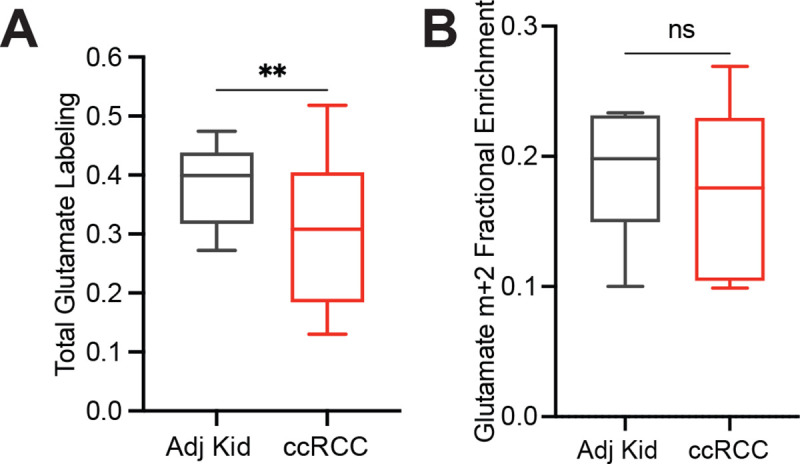
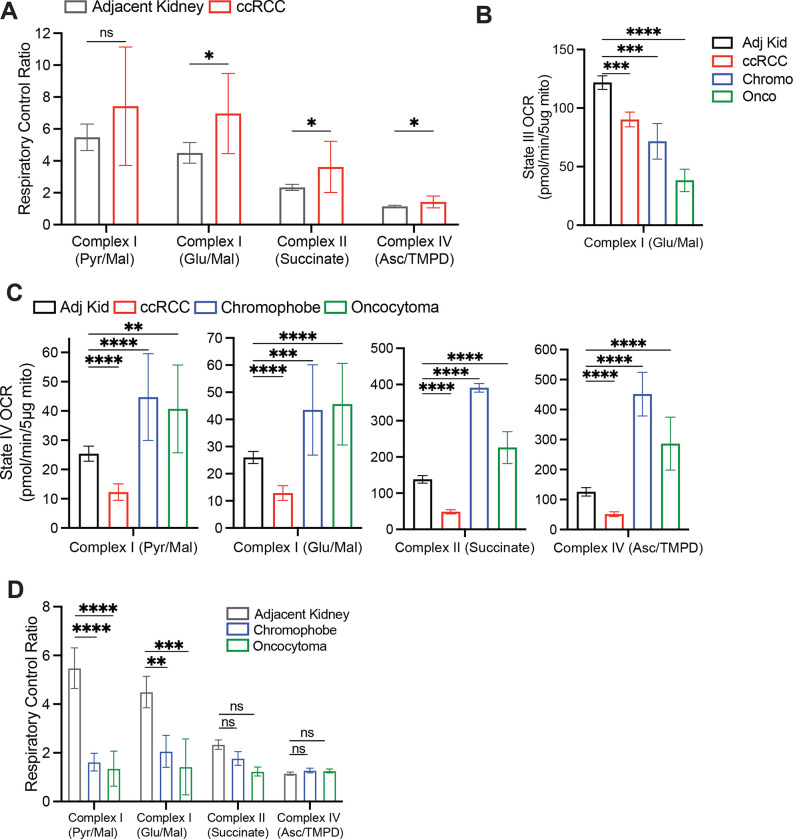
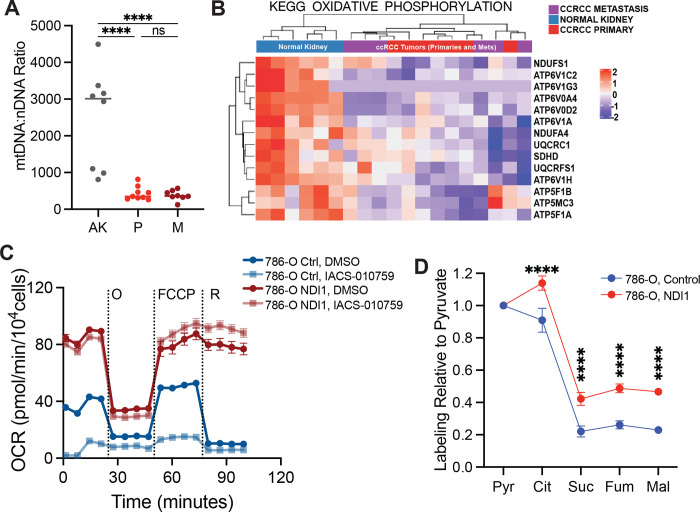
Most kidney cancers display evidence of metabolic dysfunction but how this relates to cancer progression in humans is unknown. We used a multidisciplinary approach to infuse C-labeled nutrients during surgical tumour resection in over 70 patients with kidney cancer. Labeling from [U-C]glucose varies across cancer subtypes, indicating that the kidney environment alone cannot account for all metabolic reprogramming in these tumours. Compared to the adjacent kidney, clear cell renal cell carcinomas (ccRCC) display suppressed labelling of tricarboxylic acid (TCA) cycle intermediates in vivo and in organotypic slices cultured ex vivo, indicating that suppressed labeling is tissue intrinsic. Infusions of [1,2-C]acetate and [U-C]glutamine in patients, coupled with respiratory flux of mitochondria isolated from kidney and tumour tissue, reveal primary defects in mitochondrial function in human ccRCC. However, ccRCC metastases unexpectedly have enhanced labeling of TCA cycle intermediates compared to primary ccRCCs, indicating a divergent metabolic program during ccRCC metastasis in patients. In mice, stimulating respiration in ccRCC cells is sufficient to promote metastatic colonization. Altogether, these findings indicate that metabolic properties evolve during human kidney cancer progression, and suggest that mitochondrial respiration may be limiting for ccRCC metastasis but not for ccRCC growth at the site of origin.
大多数肾癌显示出代谢功能障碍的迹象,但这与人类癌症进展之间的关系尚不清楚。我们采用多学科方法,在70多名肾癌患者进行手术肿瘤切除期间注入碳标记的营养物质。[U-¹³C]葡萄糖的标记在不同癌症亚型中有所不同,这表明仅肾脏环境无法解释这些肿瘤中的所有代谢重编程。与相邻肾脏相比,透明细胞肾细胞癌(ccRCC)在体内和体外培养的器官型切片中显示三羧酸(TCA)循环中间体的标记受到抑制,这表明标记抑制是组织固有的。给患者输注[1,2-¹³C]乙酸盐和[U-¹³C]谷氨酰胺,再结合从肾脏和肿瘤组织分离的线粒体的呼吸通量,揭示了人类ccRCC中线粒体功能的原发性缺陷。然而,与原发性ccRCC相比,ccRCC转移灶中TCA循环中间体的标记意外增强,这表明在患者ccRCC转移过程中存在不同的代谢程序。在小鼠中,刺激ccRCC细胞的呼吸足以促进转移定植。总之,这些发现表明,在人类肾癌进展过程中代谢特性会发生演变,并表明线粒体呼吸可能限制ccRCC转移,但不限制ccRCC在原发部位的生长。