Choi Isabella, Mestroni Gemma, Hunt Caroline, Glozier Nick
Central Clinical School, Faculty of Medicine and Health, The University of Sydney, Camperdown, Australia.
Australian Research Council Centre of Excellence for Children and Families Over the Life Course, Sydney, Australia.
JMIR Form Res. 2023 Feb 17;7:e35659. doi: 10.2196/35659.
The mental health of international students is a growing concern for education providers, students, and their families. Chinese international students have low rates of help seeking owing to language, stigma, and mental health literacy barriers. Web-based help-seeking interventions may improve the rate of help seeking among Chinese international students.
This study aimed to describe the development of a mental well-being web app providing personalized feedback and tailored psychoeducation and resources to support help seeking among international university students whose first language is Chinese and test the web application's uptake and engagement.
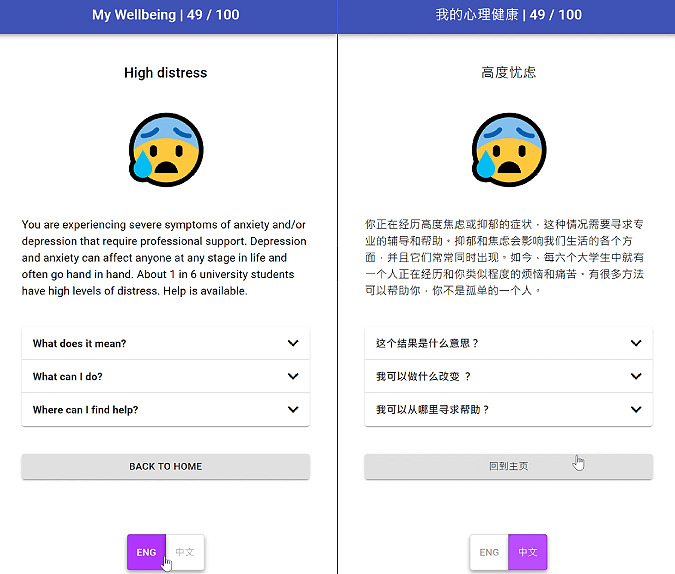
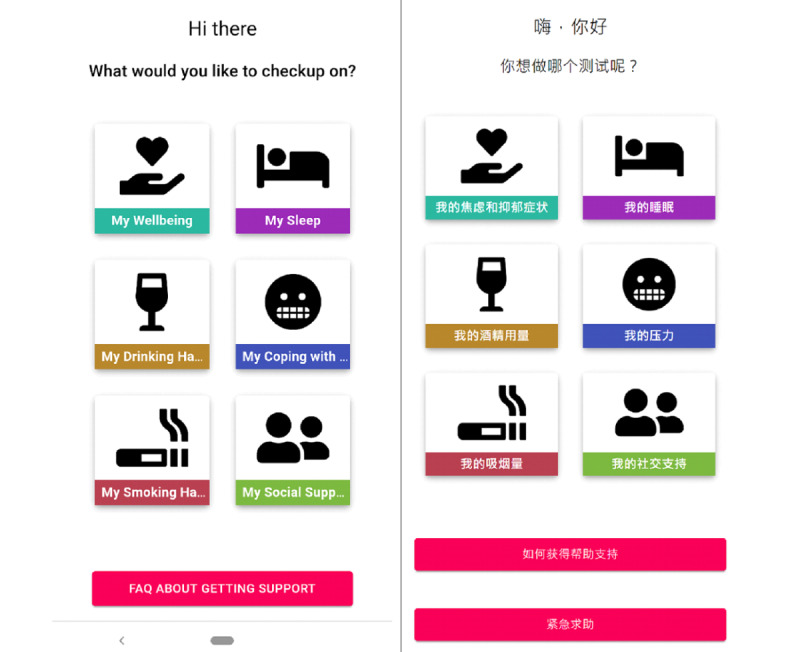
The bilingual MindYourHead web application contains 6 in-app assessments for various areas of mental health, and users are provided with personalized feedback on symptom severity, psychoeducation tailored to the person's symptoms and information about relevant interventions, and tailored links to external resources and mental health services. A feasibility study was conducted within a school at the University of Sydney to examine the uptake and engagement of the web application among Chinese international students and any demographic characteristics or help-seeking attitudes or intentions that were associated with its engagement.
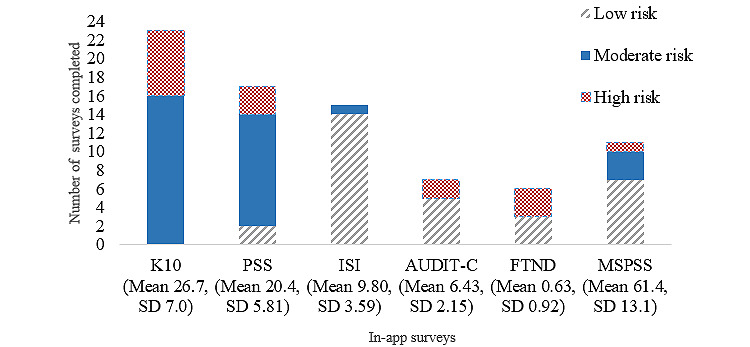
A total of 130 Chinese international students signed up on the web application. There was an uptake of 13.4% (122/908) in the schools' Chinese student enrollment. Most participants (76/130, 58.5%) preferred to use the web application in Chinese and used informal but not formal help for their mental health. There was considerable attrition owing to a design issue, and only 46 students gained access to the full content of the web application. Of these, 67% (31/46) of participants completed 1 or more of the in-app mental well-being assessments. The most commonly engaged in-app assessments were distress (23/31, 74%), stress (17/31, 55%), and sleep (15/31, 48%), with the majority scoring within the moderate- or high-risk level of the score range. In total, 10% (9/81) of the completed in-app assessments led to clicks to external resources or services. No demographic or help-seeking intentions or attitudes were associated with web-application engagement.
There were promising levels of demand, uptake, and engagement with the MindYourHead web application. The web application appears to attract students who wished to access mental health information in their native language, those who had poor mental health in the past but relied on informal support, and those who were at moderate or high risk of poor mental well-being. Further research is required to explore ways to improve uptake and engagement and to test the efficacy of the web application on Chinese international students' mental health literacy, stigma, and help seeking.
国际学生的心理健康问题日益受到教育机构、学生及其家庭的关注。由于语言、耻辱感和心理健康素养障碍,中国国际学生寻求帮助的比例较低。基于网络的求助干预措施可能会提高中国国际学生寻求帮助的比例。
本研究旨在描述一款心理健康网络应用程序的开发过程,该应用程序为以中文为母语的国际大学生提供个性化反馈、量身定制的心理教育和资源,以支持他们寻求帮助,并测试该网络应用程序的使用情况和参与度。
双语的“关注你的头脑”网络应用程序包含6项针对心理健康各个领域的应用内评估,为用户提供关于症状严重程度的个性化反馈、根据个人症状量身定制的心理教育以及有关相关干预措施的信息,以及指向外部资源和心理健康服务的定制链接。在悉尼大学的一所学校内进行了一项可行性研究,以检查该网络应用程序在中国国际学生中的使用情况和参与度,以及与参与度相关的任何人口统计学特征、求助态度或意图。
共有130名中国国际学生在该网络应用程序上注册。该校中国学生注册人数的使用率为13.4%(122/908)。大多数参与者(76/130,58.5%)更喜欢使用中文版本的网络应用程序,并且在心理健康方面寻求的是非正式而非正式的帮助。由于设计问题,出现了相当数量的流失,只有46名学生能够访问该网络应用程序的全部内容。其中,67%(31/46)的参与者完成了1项或多项应用内心理健康评估。最常参与的应用内评估是痛苦(23/31,74%)、压力(17/31,55%)和睡眠(15/31,48%),大多数人的得分在评分范围的中高风险水平。总共10%(9/81)完成的应用内评估导致点击了外部资源或服务。没有人口统计学特征、求助意图或态度与网络应用程序的参与度相关。
“关注你的头脑”网络应用程序在需求、使用和参与度方面有良好的表现。该网络应用程序似乎吸引了那些希望以母语获取心理健康信息的学生、过去心理健康状况不佳但依赖非正式支持的学生,以及心理健康状况处于中高风险的学生。需要进一步研究探索提高使用和参与度的方法,并测试该网络应用程序对中国国际学生心理健康素养、耻辱感和求助行为的效果。