Penn/CHOP Friedreich's Ataxia Center of Excellence, Philadelphia, Pennsylvania 19104, United States.
Center of Excellence in Environmental Toxicology, Department of Systems Pharmacology and Translational Therapeutics, Perelman School of Medicine, University of Pennsylvania, Philadelphia, Pennsylvania 19104, United States.
Anal Chem. 2023 Feb 28;95(8):4251-4260. doi: 10.1021/acs.analchem.3c00091. Epub 2023 Feb 17.
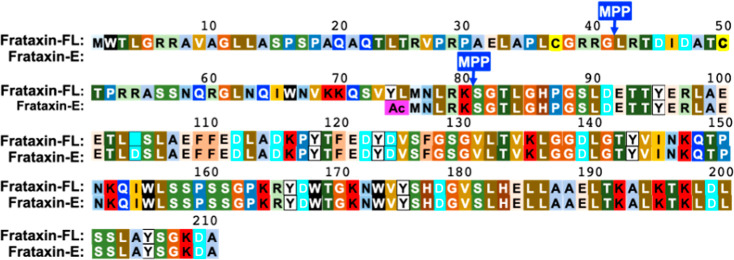
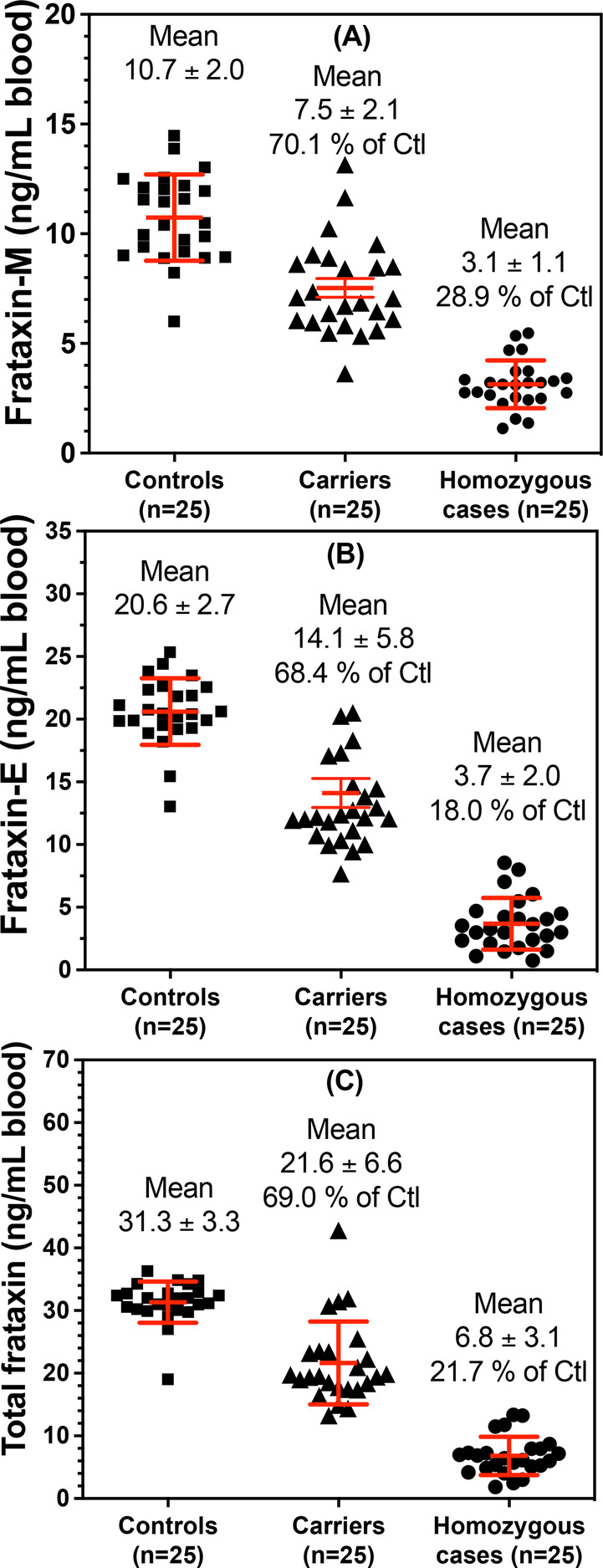
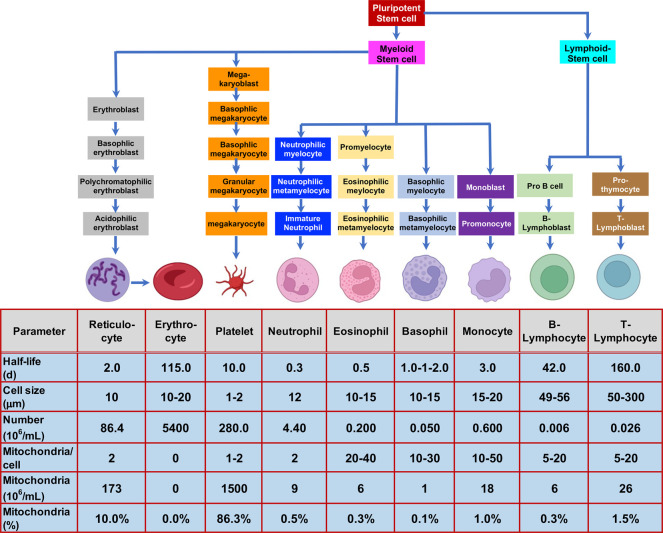
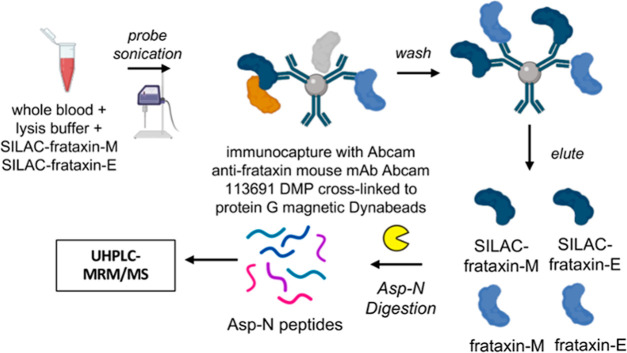
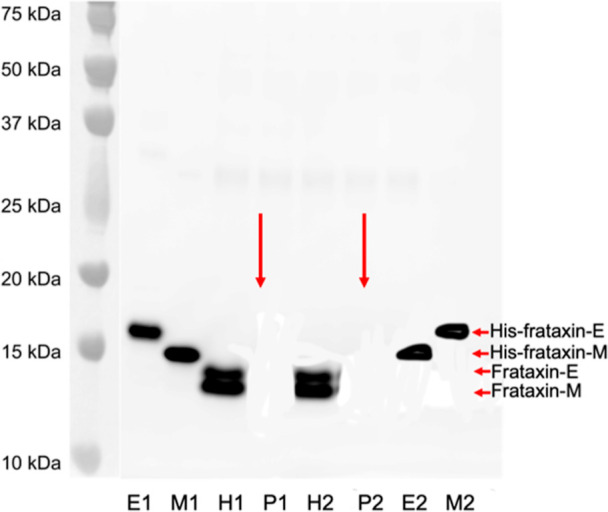
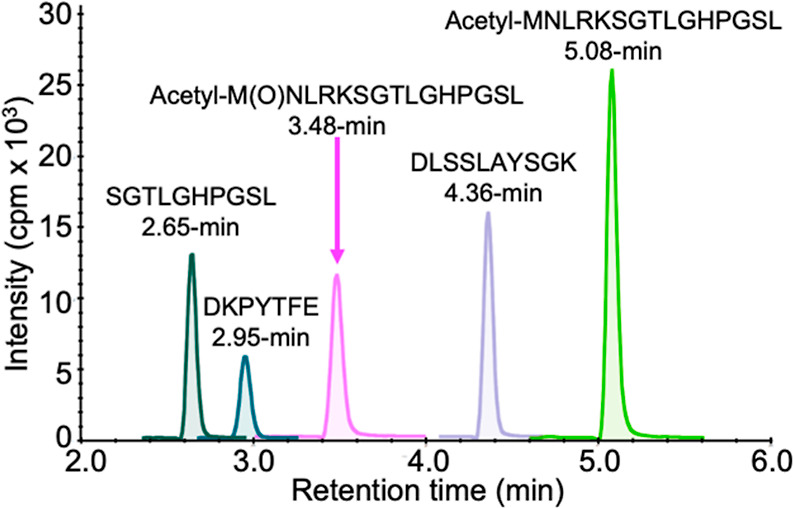
Friedreich's ataxia (FRDA) is caused primarily by expanded GAA repeats in intron 1 of both alleles of the gene, which causes transcriptional silencing and reduced expression of frataxin mRNA and protein. FRDA is characterized by slowly progressive ataxia and cardiomyopathy. Symptoms generally appear during adolescence, and patients slowly progress to wheelchair dependency usually in the late teens or early twenties with death on average in the 4th decade. There are two known mature proteoforms of frataxin. Mitochondrial frataxin (frataxin-M) is a 130-amino acid protein with a molecular weight of 14,268 Da, and there is an alternatively spliced N-terminally acetylated 135-amino acid form (frataxin-E) with a molecular weight of 14,953 Da found in erythrocytes. There is reduced expression of frataxin in the heart and brain, but frataxin is not secreted into the systemic circulation, so it cannot be analyzed in serum or plasma. Blood is a readily accessible biofluid that contains numerous different cell types that express frataxin. We have found that pig blood can serve as an excellent surrogate matrix to validate an assay for frataxin proteoforms because pig frataxin is lost during the immunoprecipitation step used to isolate human frataxin. Frataxin-M is expressed in blood cells that contain mitochondria, whereas extra-mitochondrial frataxin-E is found in erythrocytes. This means that the analysis of frataxin in whole blood provides information on the concentration of both proteoforms without having to isolate the individual cell types. In the current study, we observed that the distributions of frataxin levels for a sample of 25 healthy controls and 50 FRDA patients were completely separated from each other, suggesting 100% specificity and 100% sensitivity for distinguishing healthy controls from FRDA cases, a very unusual finding for a biomarker assay. Additionally, frataxin levels were significantly correlated with the GAA repeat length and age of onset with higher correlations for extra-mitochondrial frataxin-E than those for mitochondrial frataxin-M. These findings auger well for using frataxin levels measured by the validated stable isotope dilution ultrahigh-performance liquid chromatography-multiple reaction monitoring/mass spectrometry assay to monitor therapeutic interventions and the natural history of FRDA. Our study also illustrates the utility of using whole blood for protein disease biomarker discovery and validation.
弗里德赖希共济失调症(FRDA)主要由两个基因等位基因的内含子 1 中 GAA 重复扩增引起,导致转录沉默和 frataxin mRNA 和蛋白表达减少。FRDA 的特征是进行性共济失调和心肌病。症状通常在青春期出现,患者通常在十几岁或二十出头时逐渐进展为轮椅依赖,平均在 40 岁左右死亡。有两种已知的成熟的 frataxin 蛋白形式。线粒体 frataxin(frataxin-M)是一种 130 个氨基酸的蛋白质,分子量为 14268Da,在红细胞中发现有一个 N 端乙酰化的 135 个氨基酸形式(frataxin-E),分子量为 14953Da。心脏和大脑中 frataxin 的表达减少,但 frataxin 不会分泌到全身循环中,因此不能在血清或血浆中分析。血液是一种容易获得的生物液体,其中包含许多表达 frataxin 的不同细胞类型。我们发现猪血液可以作为验证 frataxin 蛋白形式分析的极好替代基质,因为在用于分离人 frataxin 的免疫沉淀步骤中,猪 frataxin 会丢失。Frataxin-M 表达在含有线粒体的血细胞中,而 extra-mitochondrial frataxin-E 则存在于红细胞中。这意味着对全血中 frataxin 的分析提供了两种蛋白形式浓度的信息,而无需分离单个细胞类型。在当前的研究中,我们观察到 25 名健康对照者和 50 名 FRDA 患者的样本中 frataxin 水平的分布完全分开,这表明 100%特异性和 100%敏感性可区分健康对照者和 FRDA 病例,这对于生物标志物分析来说是非常不寻常的发现。此外,frataxin 水平与 GAA 重复长度和发病年龄显著相关,extra-mitochondrial frataxin-E 与线粒体 frataxin-M 的相关性更高。这些发现预示着使用经过验证的稳定同位素稀释超高效液相色谱-多重反应监测/质谱联用分析测定的 frataxin 水平来监测治疗干预和 FRDA 的自然史非常有前景。我们的研究还说明了使用全血进行蛋白质疾病生物标志物发现和验证的实用性。