Collective Health at René Rachou Institute - Fiocruz Minas, Belo Horizonte, Minas Gerais, Brazil.
Social Anthropology at Federal University of Rio Grande do Sul (UFRGS), Porto Alegre, Brazil.
Global Health. 2023 Feb 18;19(1):10. doi: 10.1186/s12992-023-00911-2.
Based on a feminist approach, we analyzed the experiences of workplace bullying suffered by women front-line healthcare professionals dealing with the Covid-19 pandemic. We start from studies that show that women make up 70% of the global health workforce, 85% in the area of nursing, and 90% in the case of social care workers. An unequivocal need thus exists to address gender issues regarding the composition of the labor force in the health area. The pandemic has aggravated recurring problems involving healthcare professionals at the various caregiving levels, such as mental harassment (bullying) and its effects on mental health.
Data were gathered from an online survey of a convenience (non-probability) sample composed of 1,430 volunteer respondents, all women that work in the public health system in Brazil. The analyses and discussions involved the responses to a questionnaire containing 12 closed-ended questions and one open-ended question.
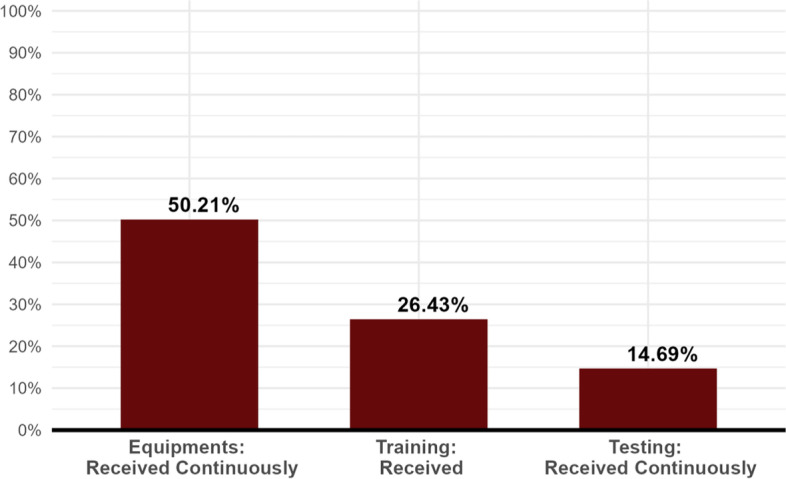
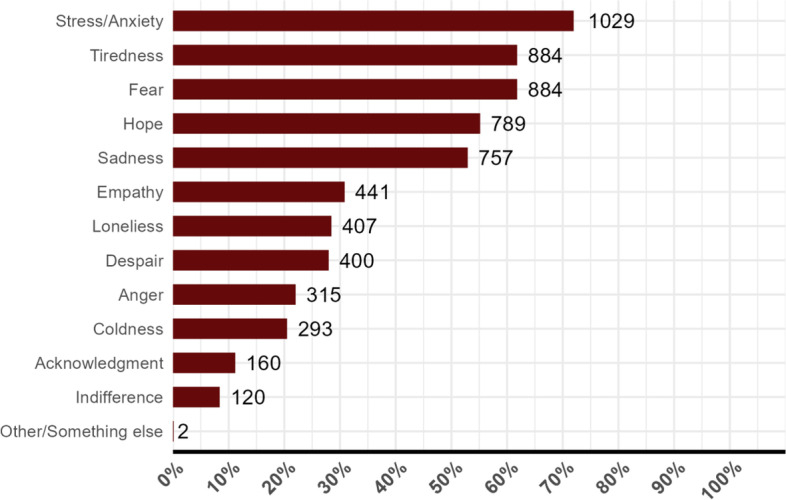
The results revealed a context of workplace bullying aggravated by precarious material, institutional and organizational conditions in the area of health services against the backdrop of the Covid-19 pandemic in Brazil. This context has variously led to aggression, isolation, heavy workloads, and invasion of privacy, humiliation, persecution and fear as it was possible to see, mainly, in the answers to the study's open-ended question. This situation degrades both work relations and the integrity of the healthcare professionals who work on the front line to treat Covid-19 cases.
We conclude that bullying is a psychosocial phenomenon that heightens the oppression and subordination still experienced by women in the contemporary context, but with new hues in a scenario of frontline response to Covid-19.
基于女性主义方法,我们分析了在应对新冠疫情期间,从事一线医疗保健工作的女性所遭受的职场欺凌经历。我们从研究中得知,女性占全球卫生劳动力的 70%,在护理领域占 85%,在社会护理工作者中占 90%。因此,明确需要解决卫生领域劳动力构成中的性别问题。这场大流行加剧了医疗保健专业人员在各个护理级别上反复出现的问题,例如精神骚扰(欺凌)及其对心理健康的影响。
数据来自于一项在线调查,调查对象是由 1430 名自愿受访者组成的便利性(非概率)样本,这些受访者均为在巴西公共卫生系统工作的女性。分析和讨论涉及对包含 12 个封闭式问题和一个开放式问题的问卷的回复。
研究结果揭示了一个背景,即在巴西新冠疫情期间,医疗服务领域中由于物质、机构和组织条件不稳定而加剧了职场欺凌现象。这种情况导致了各种形式的攻击、孤立、繁重的工作量以及侵犯隐私、羞辱、迫害和恐惧,这主要可以从对研究开放式问题的回答中看出。这种情况降低了工作关系和一线医护人员的职业操守,而他们正是治疗新冠病例的关键力量。
我们的结论是,欺凌是一种社会心理现象,它加剧了女性在当代背景下所经历的压迫和从属地位,但在应对新冠疫情的前线场景中出现了新的色调。