Pediatric Pulmonology, Allergology and Cystic Fibrosis, Children's Hospital, University Medical Center of the Johannes Gutenberg-University Mainz, Germany; Langenbeckstraße 1, 55131, Mainz, Germany.
Pediatric Immunology and Infectiology, Children's Hospital, University Medical Center of the Johannes Gutenberg-University Mainz, Germany; Langenbeckstraße 1, 55131, Mainz, Germany.
BMC Microbiol. 2023 Feb 21;23(1):44. doi: 10.1186/s12866-023-02788-y.
Impaired respiratory and intestinal microbiome composition is linked to cystic fibrosis lung disease severity. In people with cystic fibrosis (pwCF), regular exercise is recommended to delay disease progression and preserve a stable lung function. An optimal nutritional status is vital for best clinical outcomes. Our study investigated whether regular and monitored exercise and nutritional support promotes CF microbiome health.
A personalized nutrition and exercise program promoted nutritional intake and physical fitness in 18 pwCF for 12 months. Throughout the study, patients performed strength and endurance training monitored by a sports scientist via an internet platform. After three months, food supplementation with Lactobacillus rhamnosus LGG was introduced. Nutritional status and physical fitness were assessed before the study started, after three and nine months. Sputum and stool were collected, and microbial composition was analyzed by 16S rRNA gene sequencing.
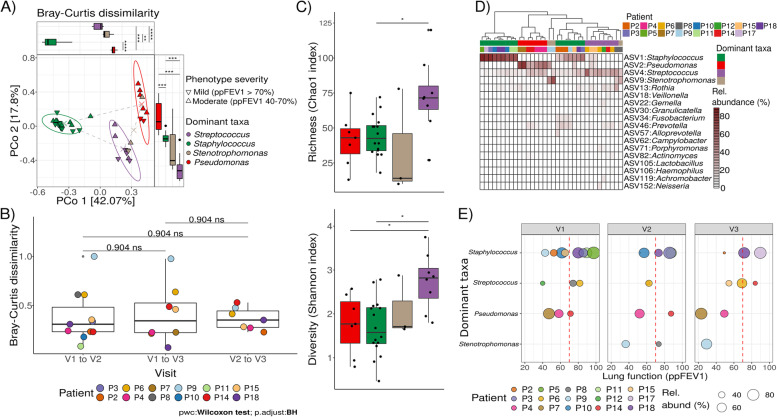
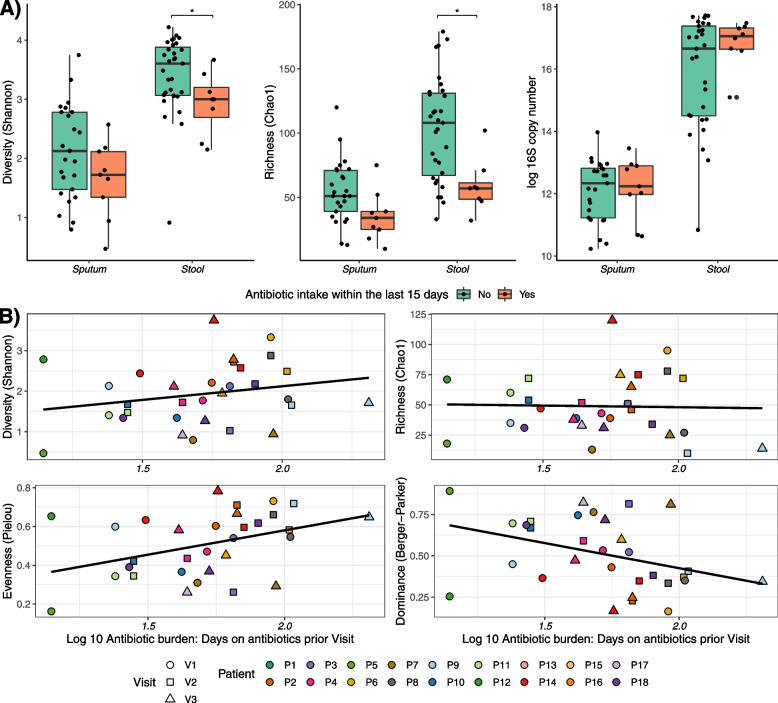
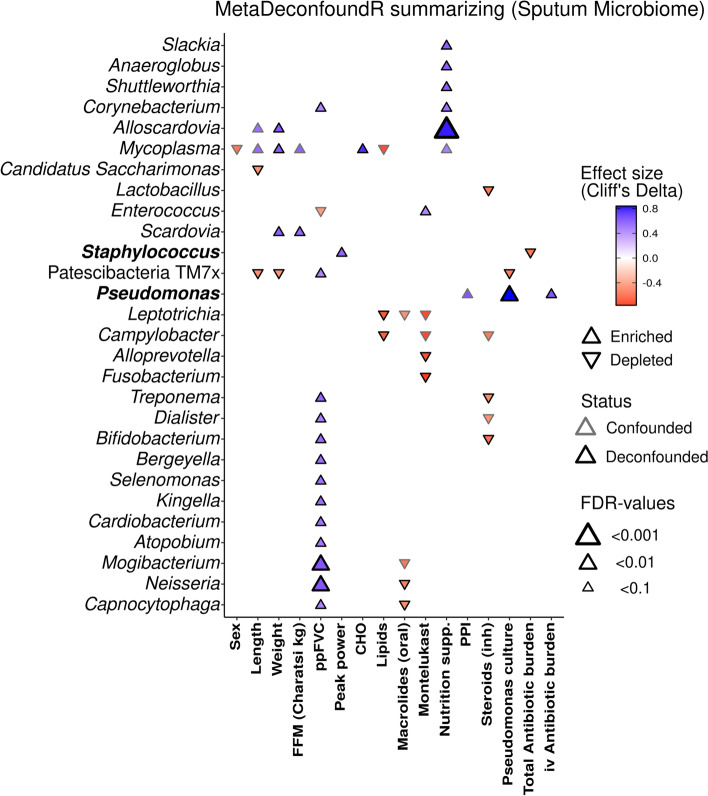
Sputum and stool microbiome composition remained stable and highly specific to each patient during the study period. Disease-associated pathogens dominated sputum composition. Lung disease severity and recent antibiotic treatment had the highest impact on taxonomic composition in stool and sputum microbiome. Strikingly, the long-term antibiotic treatment burden had only a minor influence.
Despite the exercise and nutritional intervention, respiratory and intestinal microbiomes proved to be resilient. Dominant pathogens drove the composition and functionality of the microbiome. Further studies are required to understand which therapy could destabilize the dominant disease-associated microbial composition of pwCF.
呼吸和肠道微生物群落组成受损与囊性纤维化肺病严重程度有关。对于囊性纤维化患者(pwCF),建议定期运动以延缓疾病进展并保持稳定的肺功能。最佳的营养状况对于获得最佳临床结果至关重要。我们的研究调查了定期监测的运动和营养支持是否能促进 CF 微生物群落的健康。
个性化的营养和运动方案促进了 18 名 pwCF 在 12 个月内的营养摄入和身体健康。在整个研究过程中,患者通过互联网平台接受运动科学家的监督进行力量和耐力训练。三个月后,开始补充鼠李糖乳杆菌 LGG。在研究开始前、三个月后和九个月后评估营养状况和身体健康。收集痰液和粪便,并通过 16S rRNA 基因测序分析微生物组成。
在研究期间,痰液和粪便微生物群落的组成保持稳定且高度特定于每个患者。疾病相关病原体主导着痰液的组成。肺部疾病的严重程度和最近的抗生素治疗对粪便和痰液微生物群落的分类组成有最大的影响。令人惊讶的是,长期的抗生素治疗负担只有很小的影响。
尽管进行了运动和营养干预,但呼吸道和肠道微生物群仍然具有很强的抵抗力。优势病原体驱动着微生物群落的组成和功能。需要进一步的研究来了解哪种治疗方法会破坏 pwCF 中主要的与疾病相关的微生物组成。