Habay Jelle, Uylenbroeck Robin, Van Droogenbroeck Ruben, De Wachter Jonas, Proost Matthias, Tassignon Bruno, De Pauw Kevin, Meeusen Romain, Pattyn Nathalie, Van Cutsem Jeroen, Roelands Bart
Human Physiology and Sports Physiotherapy Research Group, Faculty of Physical Education and Physiotherapy, Vrije Universiteit Brussel, Pleinlaan 2, 1050, Brussels, Belgium.
Vital Signs and Performance Monitoring Research Unit, LIFE Department, Royal Military Academy, Brussels, Belgium.
Sports Med Open. 2023 Feb 20;9(1):14. doi: 10.1186/s40798-023-00559-7.
The negative effect of mental fatigue (MF) on physical performance has recently been questioned. One reason behind this could lie in the interindividual differences in MF-susceptibility and the individual features influencing them. However, the range of individual differences in mental fatigue-susceptibility is not known, and there is no clear consensus on which individual features could be responsible for these differences.
To give an overview of interindividual differences in the effects of MF on whole-body endurance performance, and individual features influencing this effect.
The review was registered on the PROSPERO database (CRD42022293242). PubMed, Web of Science, SPORTDiscus and PsycINFO were searched until the 16th of June 2022 for studies detailing the effect of MF on dynamic maximal whole-body endurance performance. Studies needed to include healthy participants, describe at least one individual feature in participant characteristics, and apply at least one manipulation check. The Cochrane crossover risk of bias tool was used to assess risk of bias. The meta-analysis and regression were conducted in R.
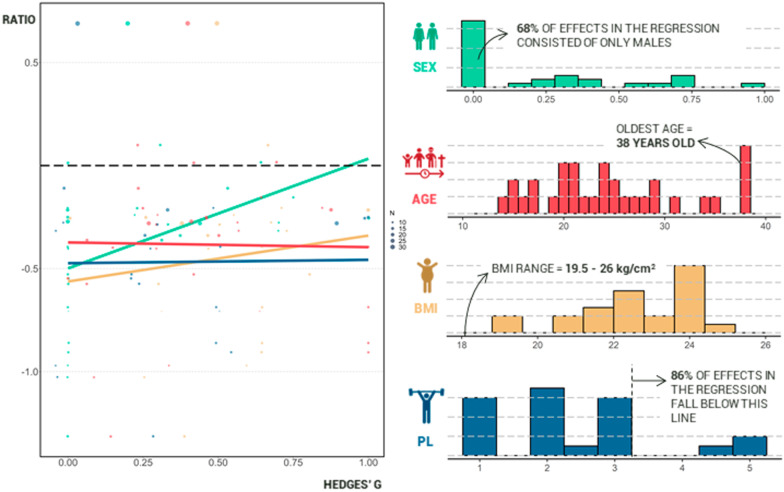
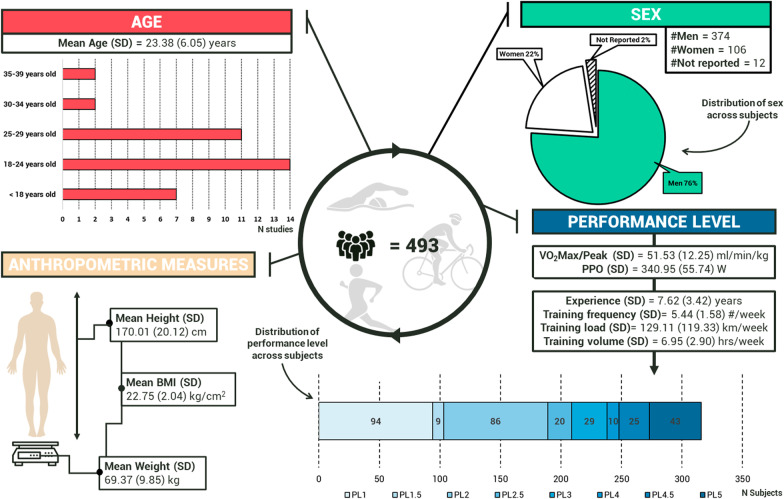
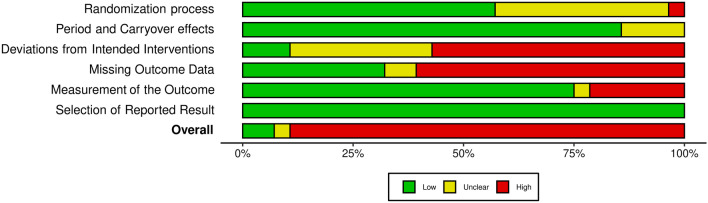
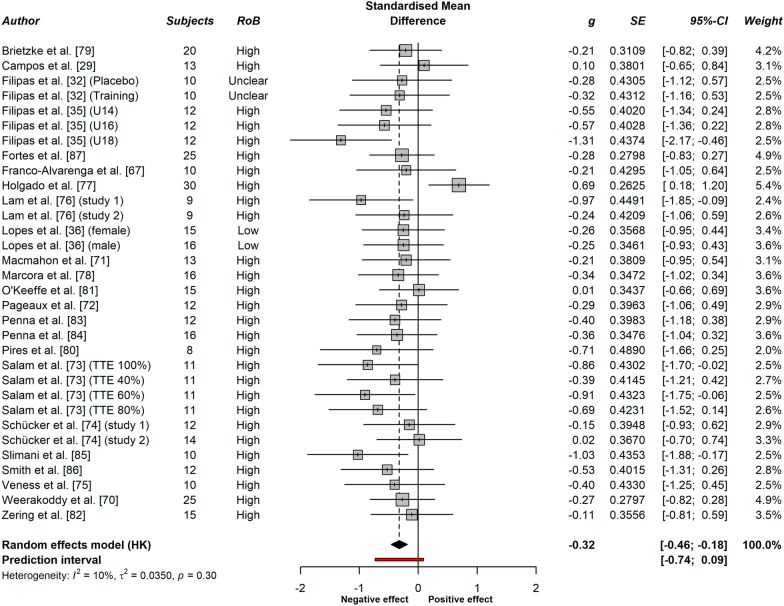
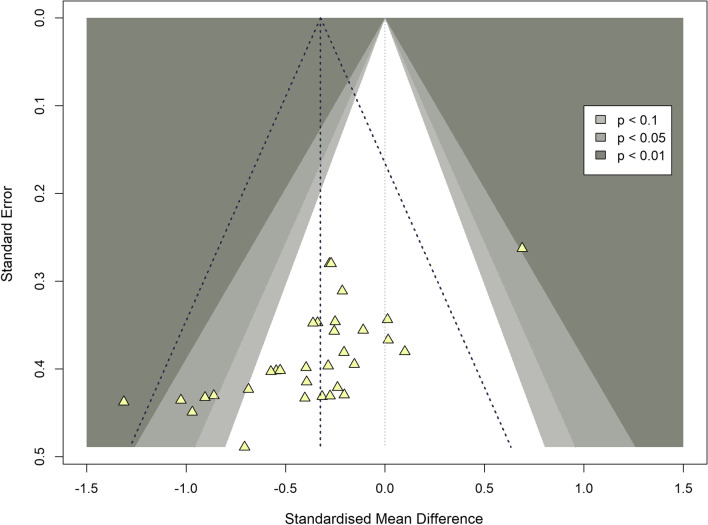
Twenty-eight studies were included, with 23 added to the meta-analysis. Overall risk of bias of the included studies was high, with only three presenting an unclear or low rating. The meta-analysis shows the effect of MF on endurance performance was on average slightly negative (g = - 0.32, [95% CI - 0.46; - 0.18], p < 0.001). The multiple meta-regression showed no significant influences of the included features (i.e. age, sex, body mass index and physical fitness level) on MF-susceptibility.
The present review confirmed the negative impact of MF on endurance performance. However, no individual features influencing MF-susceptibility were identified. This can partially be explained by the multiple methodological limitations such as underreporting of participant characteristics, lack of standardization across studies, and the restricted inclusion of potentially relevant variables. Future research should include a rigorous description of multiple different individual features (e.g., performance level, diet, etc.) to further elucidate MF mechanisms.
精神疲劳(MF)对身体机能的负面影响最近受到质疑。其背后的一个原因可能在于MF易感性的个体差异以及影响这些差异的个体特征。然而,精神疲劳易感性的个体差异范围尚不清楚,对于哪些个体特征可能导致这些差异也没有明确的共识。
概述MF对全身耐力表现影响的个体差异,以及影响这种影响的个体特征。
该综述已在PROSPERO数据库(CRD42022293242)注册。检索了PubMed、Web of Science、SPORTDiscus和PsycINFO,直至2022年6月16日,以查找详细描述MF对动态最大全身耐力表现影响的研究。研究需纳入健康参与者,描述参与者特征中至少一项个体特征,并应用至少一项操作检查。使用Cochrane交叉偏倚风险工具评估偏倚风险。在R中进行荟萃分析和回归分析。
纳入2八项研究,其中23项纳入荟萃分析。纳入研究的总体偏倚风险较高,只有三项呈现不明确或低评级。荟萃分析表明,MF对耐力表现的影响平均略为负面(g = -0.32,[95%置信区间 -0.46;-0.18],p < 0.001)。多元荟萃回归显示,纳入的特征(即年龄、性别、体重指数和身体素质水平)对MF易感性没有显著影响。
本综述证实了MF对耐力表现的负面影响。然而,未发现影响MF易感性的个体特征。这可以部分归因于多种方法学局限性,如参与者特征报告不足、研究间缺乏标准化以及潜在相关变量纳入受限。未来的研究应包括对多种不同个体特征(如表现水平、饮食等)的严格描述,以进一步阐明MF机制。