Brommage Robert, Liu Jeff, Powell David R
Department of Metabolism Research, Lexicon Pharmaceuticals, The Woodlands, TX, 77381, USA.
BoneGenomics, The Woodlands, TX, USA.
Bone Res. 2023 Feb 20;11(1):9. doi: 10.1038/s41413-022-00242-9.
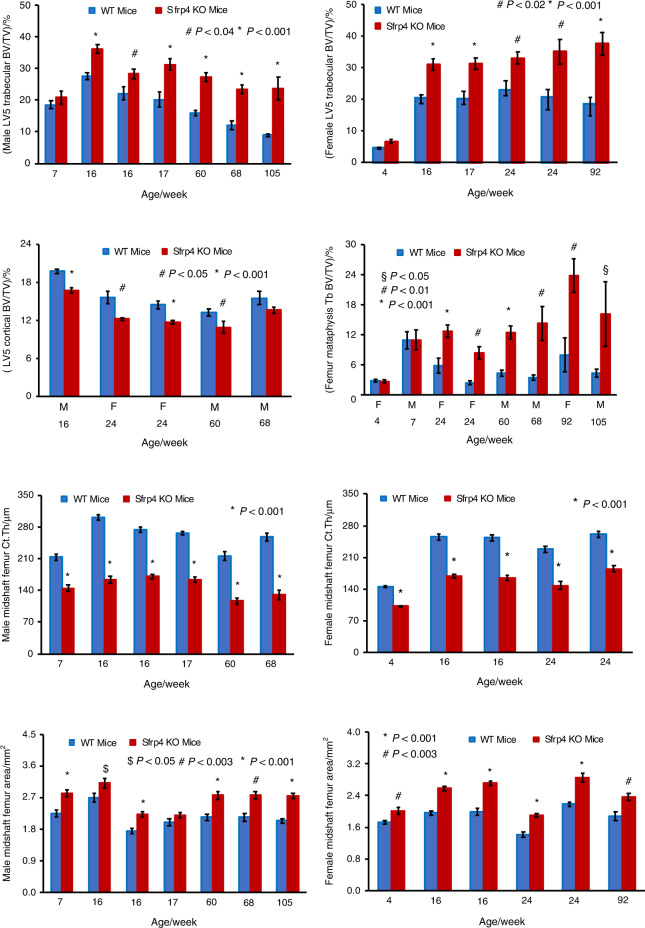
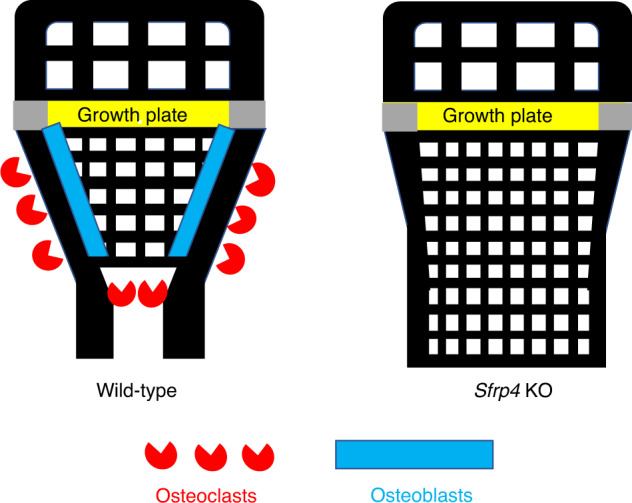
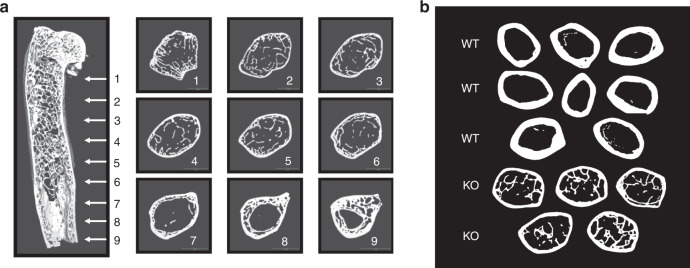
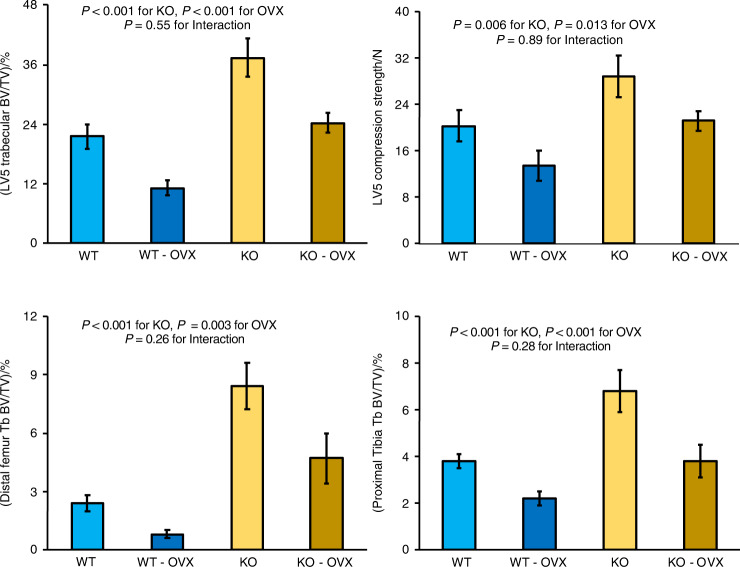
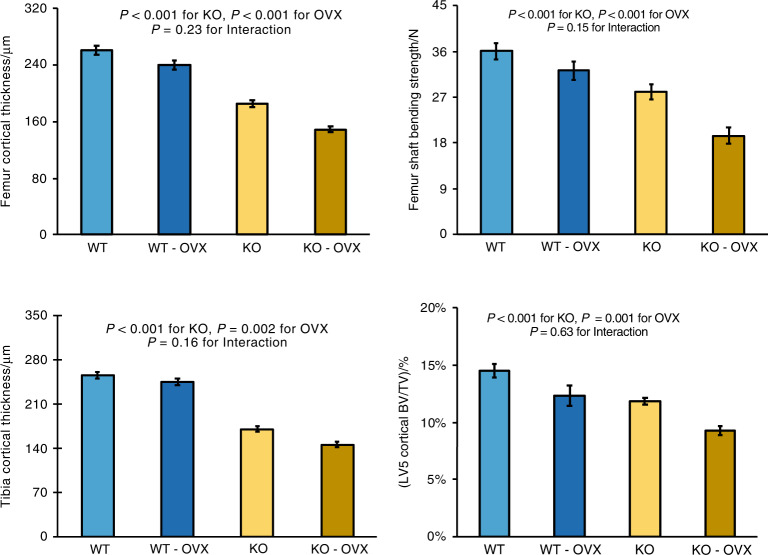
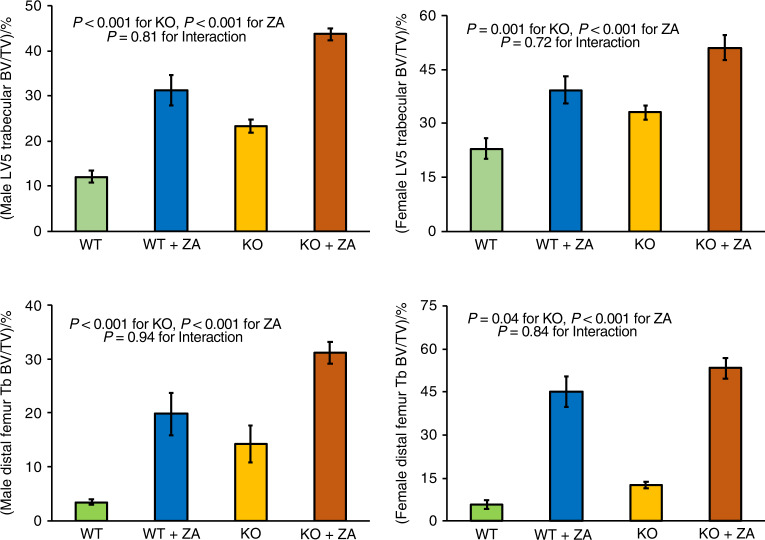
Mutations in SFRP4 cause Pyle's bone disease with wide metaphyses and increased skeletal fragility. The WNT signaling pathway plays important roles in determining skeletal architecture and SFRP4 is a secreted Frizzled decoy receptor that inhibits WNT signaling. Seven cohorts of male and female Sfrp4 gene knockout mice, examined through 2 years of age, had a normal lifespan but showed cortical and trabecular bone phenotypes. Mimicking human Erlenmeyer flask deformities, bone cross-sectional areas were elevated 2-fold in the distal femur and proximal tibia but only 30% in femur and tibia shafts. Reduced cortical bone thickness was observed in the vertebral body, midshaft femur and distal tibia. Elevated trabecular bone mass and numbers were observed in the vertebral body, distal femur metaphysis and proximal tibia metaphysis. Midshaft femurs retained extensive trabecular bone through 2 years of age. Vertebral bodies had increased compressive strength, but femur shafts had reduced bending strength. Trabecular, but not cortical, bone parameters in heterozygous Sfrp4 mice were modestly affected. Ovariectomy resulted in similar declines in both cortical and trabecular bone mass in wild-type and Sfrp4 KO mice. SFRP4 is critical for metaphyseal bone modeling involved in determining bone width. Sfrp4 KO mice show similar skeletal architecture and bone fragility deficits observed in patients with Pyle's disease with SFRP4 mutations.
SFRP4基因的突变会导致派尔氏骨病,出现干骺端增宽和骨骼脆性增加的症状。WNT信号通路在决定骨骼结构方面发挥着重要作用,而SFRP4是一种分泌型卷曲蛋白诱饵受体,可抑制WNT信号。对七组雄性和雌性Sfrp4基因敲除小鼠进行了长达2年的观察,它们的寿命正常,但表现出皮质骨和小梁骨表型。模仿人类烧瓶样畸形,股骨远端和胫骨近端的骨横截面积增加了2倍,但股骨干和胫骨干仅增加了30%。在椎体、股骨干中部和胫骨远端观察到皮质骨厚度减少。在椎体、股骨远端干骺端和胫骨近端干骺端观察到小梁骨量和数量增加。股骨干中部在2岁时仍保留大量小梁骨。椎体的抗压强度增加,但股骨干的抗弯强度降低。杂合子Sfrp4小鼠的小梁骨参数(而非皮质骨参数)受到适度影响。卵巢切除导致野生型和Sfrp4基因敲除小鼠的皮质骨和小梁骨量出现类似程度的下降。SFRP4对于决定骨宽度的干骺端骨建模至关重要。Sfrp4基因敲除小鼠表现出与携带SFRP4突变的派尔氏病患者相似的骨骼结构和骨脆性缺陷。