Khan Raheema L, Khraibi Ali A, Dumée Ludovic F, Corridon Peter R
Department of Immunology and Physiology, College of Medicine and Health Sciences, Khalifa University of Science and Technology, Abu Dhabi, United Arab Emirates.
Center for Biotechnology, Khalifa University of Science and Technology, Abu Dhabi, United Arab Emirates.
Front Bioeng Biotechnol. 2023 Feb 3;11:1091554. doi: 10.3389/fbioe.2023.1091554. eCollection 2023.
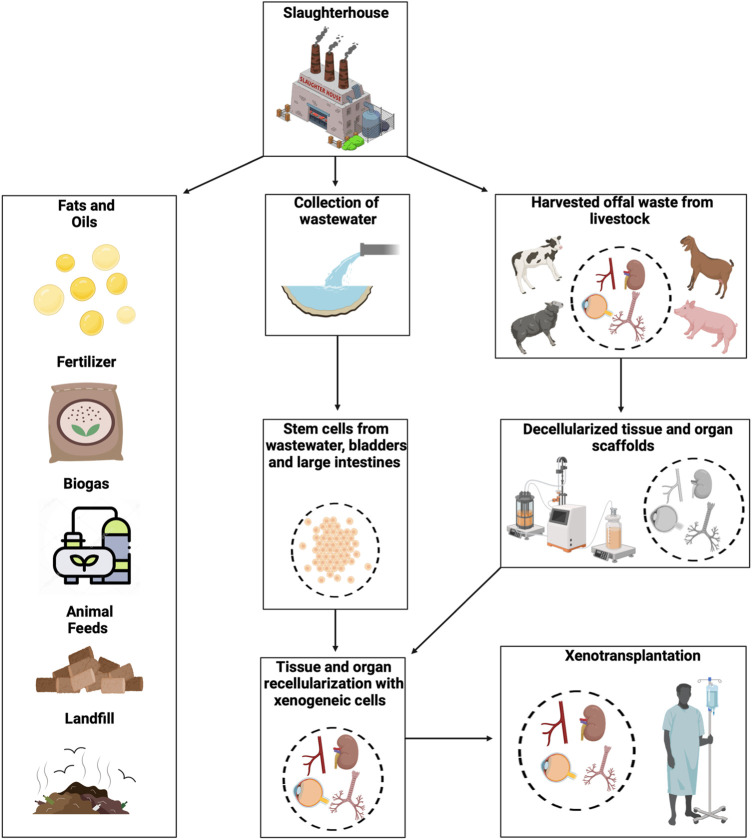
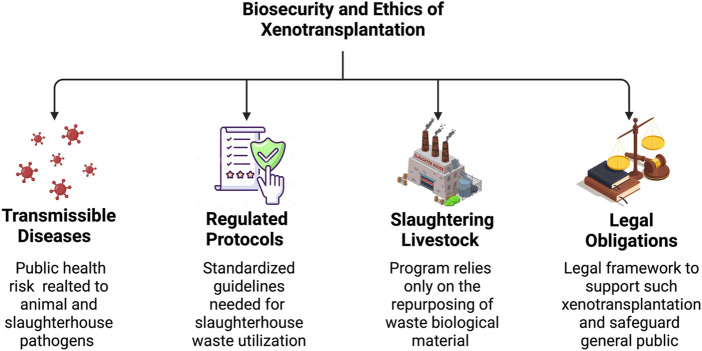
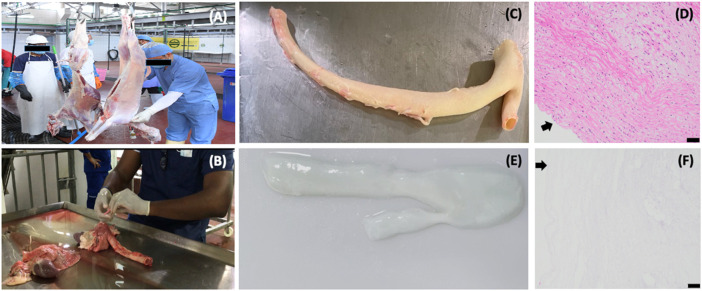
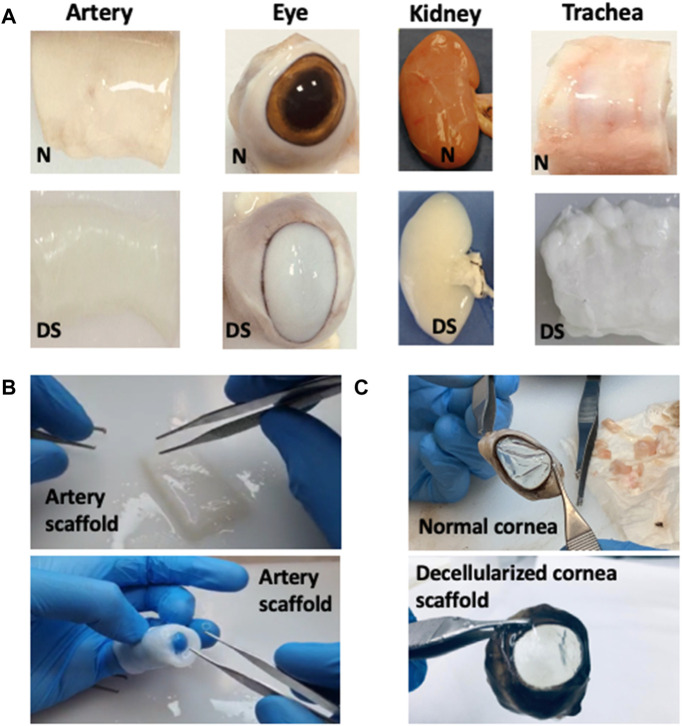
Slaughterhouses produce large quantities of biological waste, and most of these materials are underutilized. In many published reports, the possibility of repurposing this form of waste to create biomaterials, fertilizers, biogas, and feeds has been discussed. However, the employment of particular offal wastes in xenotransplantation has yet to be extensively uncovered. Overall, viable transplantable tissues and organs are scarce, and developing bioartificial components using such discarded materials may help increase their supply. This perspective manuscript explores the viability and sustainability of readily available and easily sourced slaughterhouse waste, such as blood vessels, eyes, kidneys, and tracheas, as starting materials in xenotransplantation derived from decellularization technologies. The manuscript also examines the innovative use of animal stem cells derived from the excreta to create a bioartificial tissue/organ platform that can be translated to humans. Institutional and governmental regulatory approaches will also be outlined to support this endeavor.
屠宰场会产生大量生物废弃物,且其中大部分材料未得到充分利用。在许多已发表的报告中,人们已讨论过将这种形式的废弃物重新利用以制造生物材料、肥料、沼气和饲料的可能性。然而,特定内脏废弃物在异种移植中的应用尚未得到广泛探索。总体而言,可行的可移植组织和器官稀缺,利用此类废弃材料开发生物人工组件可能有助于增加其供应。这篇观点性文稿探讨了如血管、眼睛、肾脏和气管等易于获取且来源广泛的屠宰场废弃物作为源自脱细胞技术的异种移植起始材料的可行性和可持续性。该文稿还研究了利用源自排泄物的动物干细胞创新性地创建可转化应用于人类的生物人工组织/器官平台。同时也将概述支持这一努力的机构和政府监管方法。