Li Mingyu, Nurzat Yeltai, Huang He, Min Peiru, Zhang Xiaowen
Department of Plastic and Reconstructive Surgery, Shanghai Ninth People's Hospital Affiliated to Shanghai Jiao Tong University School of Medicine, Shanghai, China.
State Key Laboratory of Respiratory Disease, Department of Otolaryngology, Head and Neck Surgery, Laboratory of ENT-HNS Disease, First Affiliated Hospital of Guangzhou Medical University, Guangzhou, China.
Front Genet. 2023 Feb 1;14:1028044. doi: 10.3389/fgene.2023.1028044. eCollection 2023.
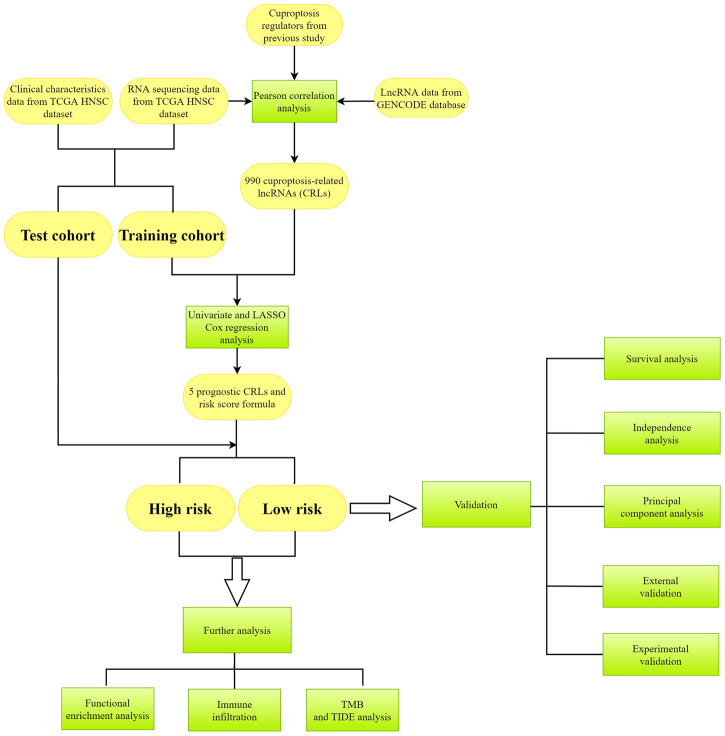
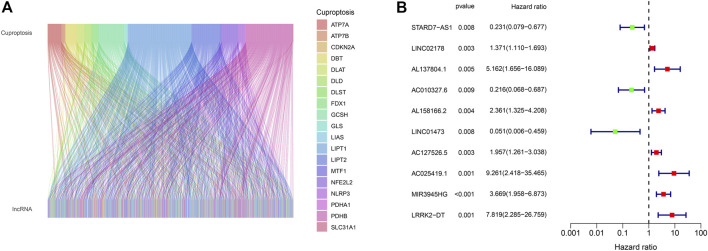
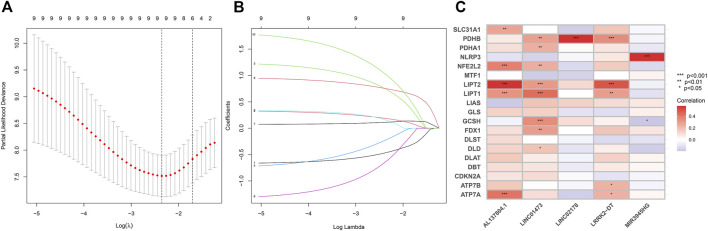
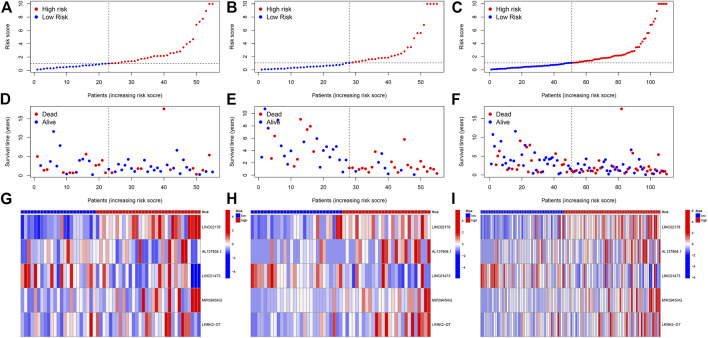
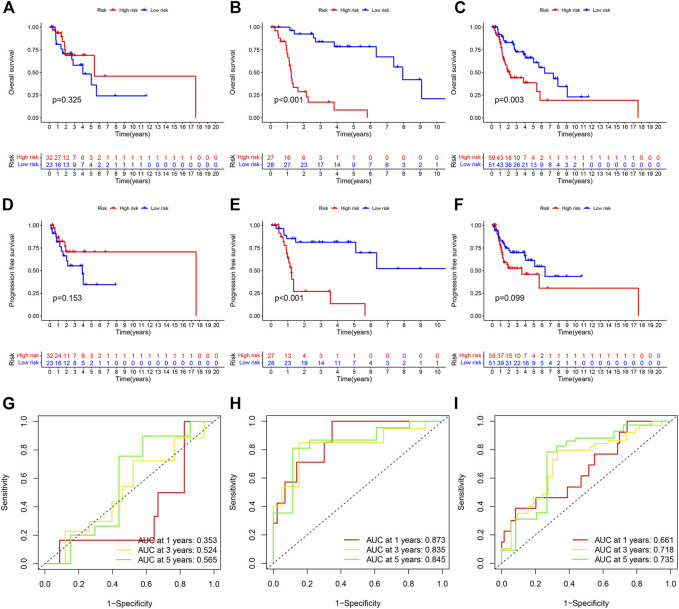
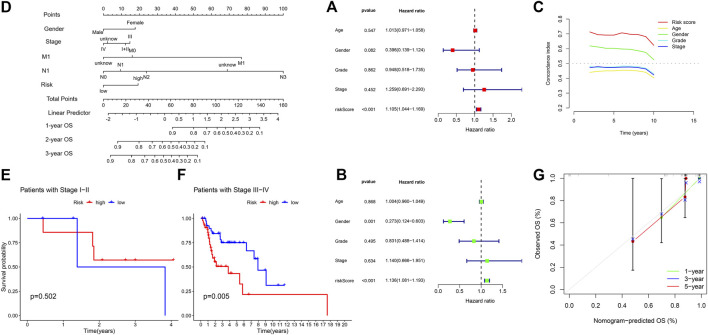
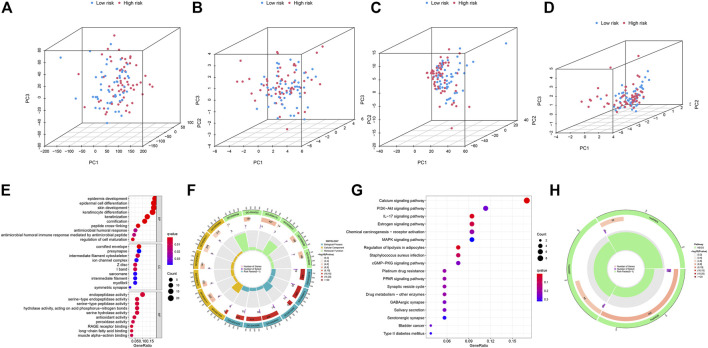
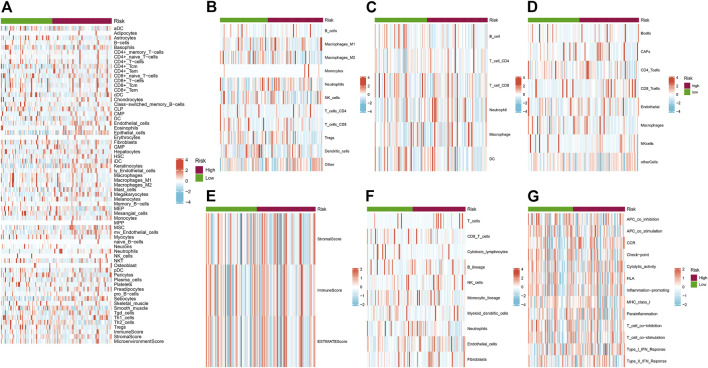
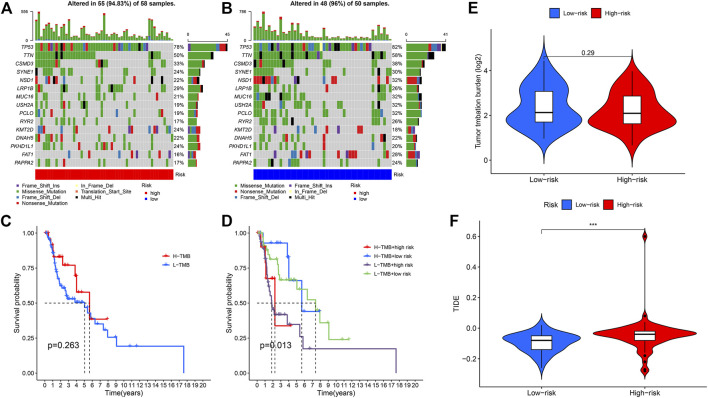
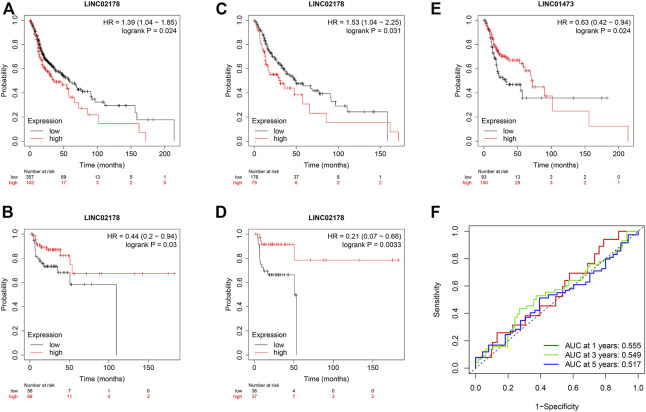
Cuproptosis is a novel cell death pathway, and the regulatory mechanism in head and neck squamous cell carcinoma (HNSC) remains to be explored. We determined whether cuproptosis-related lncRNAs (CRLs) could predict prognosis in HNSC. First, we identified 10 prognostic CRLs by Pearson correlation and univariate Cox regression analyses. Next, we constructed the CRLs prognostic model based on 5 CRLs screened by the least absolute shrinkage and selection operator (LASSO) Cox analysis. Following this, we calculated the risk score for HNSC patients and divided patients into high- and low-risk groups. In our prognostic model, HNSC patients with higher risk scores had poorer outcomes. Based on several prognostic features, a predictive nomogram was established. Furthermore, we investigated principal component analysis to distinguish two groups, and functional enrichment analysis of 176 differentially expressed genes (DEGs) between risk groups was performed. Finally, we analyzed relationships between tumor mutation burden (TMB) and risk scores. Cuproptosis-related lncRNAs can be applied to predict HNSC prognosis independent of TMB, which is closely correlated with tumor immunity.
铜死亡是一种新的细胞死亡途径,其在头颈部鳞状细胞癌(HNSC)中的调控机制仍有待探索。我们确定了铜死亡相关长链非编码RNA(CRLs)是否可以预测HNSC的预后。首先,我们通过Pearson相关性分析和单因素Cox回归分析确定了10个预后性CRLs。接下来,我们基于通过最小绝对收缩和选择算子(LASSO)Cox分析筛选出的5个CRLs构建了CRLs预后模型。随后,我们计算了HNSC患者的风险评分,并将患者分为高风险组和低风险组。在我们的预后模型中,风险评分较高的HNSC患者预后较差。基于多个预后特征,建立了预测列线图。此外,我们进行主成分分析以区分两组,并对风险组之间的176个差异表达基因(DEGs)进行功能富集分析。最后,我们分析了肿瘤突变负荷(TMB)与风险评分之间的关系。铜死亡相关长链非编码RNA可用于独立于TMB预测HNSC预后,TMB与肿瘤免疫密切相关。