
铜死亡相关长链非编码RNA是头颈部鳞状细胞癌预后和免疫微环境的生物标志物。
Cuproptosis-Related lncRNAs are Biomarkers of Prognosis and Immune Microenvironment in Head and Neck Squamous Cell Carcinoma.
作者信息
Yang Liuqing, Yu Jinling, Tao Lu, Huang Handan, Gao Ying, Yao Jingjing, Liu Zhihui
机构信息
Department of Prosthodontics, Hospital of Stomatology, Jilin University, Changchun, China.
出版信息
Front Genet. 2022 Jul 22;13:947551. doi: 10.3389/fgene.2022.947551. eCollection 2022.
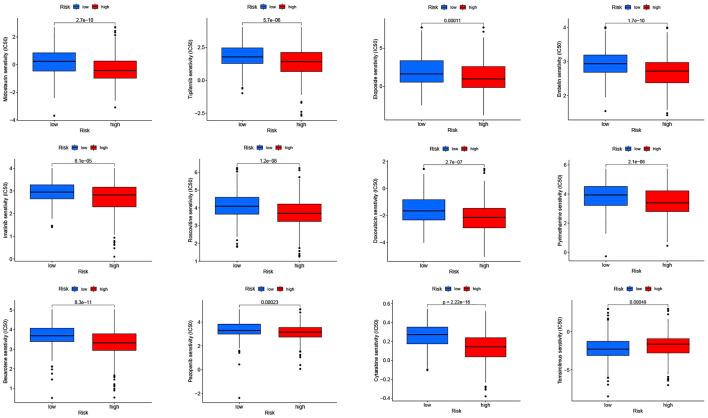
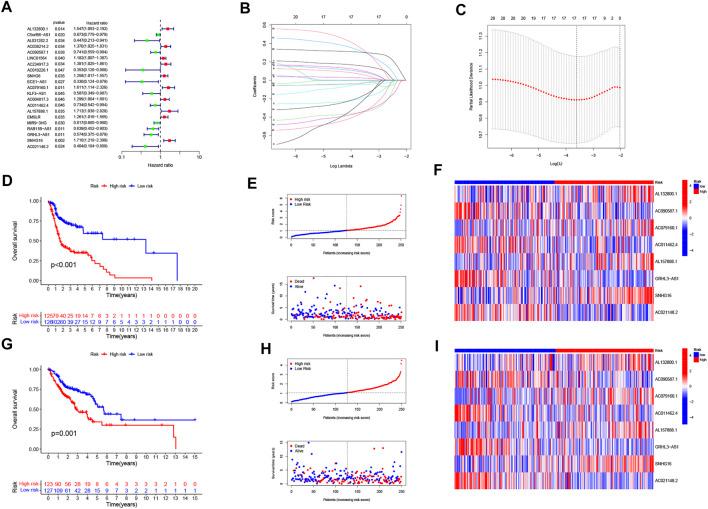
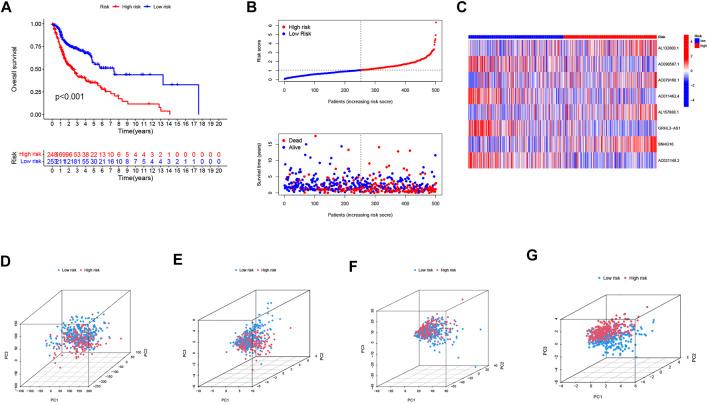
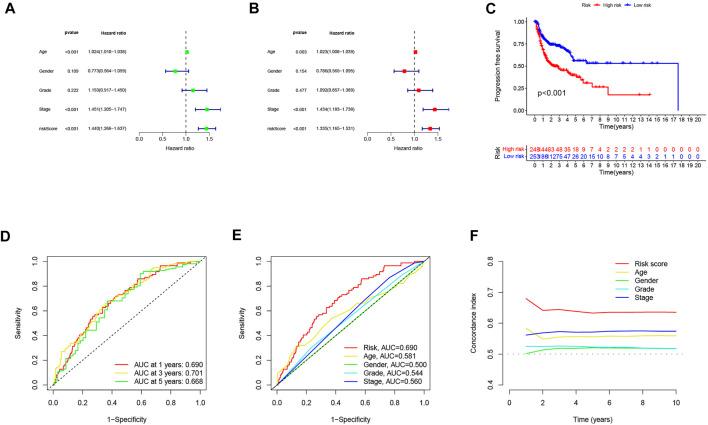
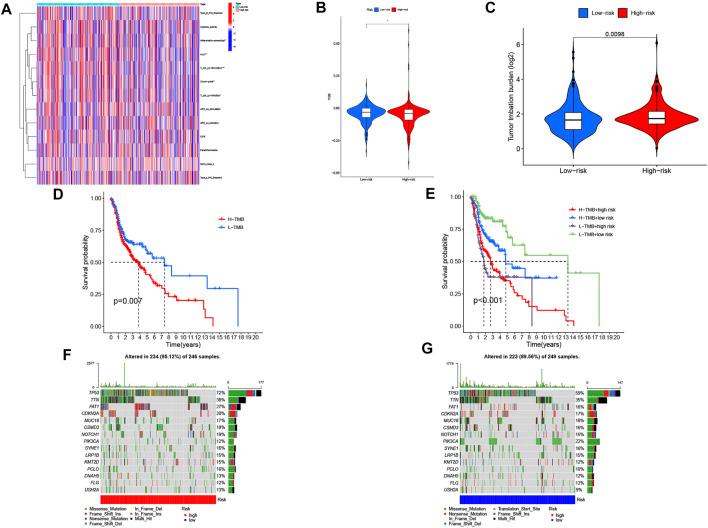
Cuproptosis is a new type of cell death that induces protein toxic stress and eventually leads to cell death. Hence, regulating cuproptosis in tumor cells is a new therapeutic approach. However, studies on cuproptosis-related long noncoding RNA (lncRNA) in head and neck squamous cell carcinoma (HNSC) have not been found. This study aimed to explore the cuproptosis-related lncRNAs prognostic marker and their relationship to immune microenvironment in HNSC by using bioinformatics methods. RNA sequencing, genomic mutations, and clinical data of TCGA_HNSC were downloaded from The Cancer Genome Atlas. HNSC patients were randomly assigned to either a training group or a validation cohort. The least absolute shrinkage and selection operator Cox regression and multivariate Cox regression models were used to determine the prognostic model in the training cohort, and its independent prognostic effect was further confirmed in the validation and entire cohorts. Based on previous literature, we collected 19 genes associated with cuproptosis. Afterward, 783 cuproptosis-related lncRNAs were obtained through coexpression. Cox model revealed and constructed eight cuproptosis-related lncRNAs prognostic marker (AL132800.1, AC090587.1, AC079160.1, AC011462.4, AL157888.1, GRHL3-AS1, SNHG16, and AC021148.2). Patients were divided into high- and low-risk groups based on the median risk score. The Kaplan-Meier survival curve revealed that the overall survival between the high- and low-risk groups was statistically significant. The receiver operating characteristic curve and principal component analysis demonstrated the accurate prognostic ability of the model. Univariate and multivariate Cox regression analysis showed that risk score was an independent prognostic factor. In addition, we used multivariate Cox regression to establish a nomogram of the predictive power of prognostic markers. The tumor mutation burden showed significant differences between the high- and low-risk groups. HNSC patients in the high-risk group responded better to immunotherapy than those in the low-risk group. We also found that risk scores were significantly associated with drug sensitivity in HNSC. In summary, our study identified eight cuprotosis-related lncRNAs signature of HNSC as the prognostic predictor, which may be promising biomarkers for predicting the benefit of HNSC immunotherapy as well as drug sensitivity.
铜死亡是一种新型细胞死亡方式,可引发蛋白质毒性应激并最终导致细胞死亡。因此,调控肿瘤细胞中的铜死亡是一种新的治疗方法。然而,尚未发现关于头颈部鳞状细胞癌(HNSC)中与铜死亡相关的长链非编码RNA(lncRNA)的研究。本研究旨在通过生物信息学方法探索HNSC中与铜死亡相关的lncRNAs预后标志物及其与免疫微环境的关系。从癌症基因组图谱下载了TCGA_HNSC的RNA测序、基因组突变和临床数据。将HNSC患者随机分为训练组或验证队列。使用最小绝对收缩和选择算子Cox回归及多变量Cox回归模型在训练队列中确定预后模型,并在验证队列和整个队列中进一步确认其独立预后作用。基于先前文献,我们收集了19个与铜死亡相关的基因。随后,通过共表达获得了783个与铜死亡相关的lncRNAs。Cox模型揭示并构建了8个与铜死亡相关的lncRNAs预后标志物(AL132800.1、AC090587.1、AC079160.1、AC011462.4、AL157888.1、GRHL3-AS1、SNHG16和AC021148.2)。根据中位风险评分将患者分为高风险组和低风险组。Kaplan-Meier生存曲线显示,高风险组和低风险组之间的总生存期具有统计学意义。受试者工作特征曲线和主成分分析证明了该模型具有准确的预后能力。单变量和多变量Cox回归分析表明,风险评分是一个独立的预后因素。此外,我们使用多变量Cox回归建立了预后标志物预测能力的列线图。高风险组和低风险组之间的肿瘤突变负担存在显著差异。HNSC高风险组患者对免疫治疗的反应优于低风险组患者。我们还发现,风险评分与HNSC中的药物敏感性显著相关。总之,我们的研究确定了HNSC的8个与铜死亡相关的lncRNAs特征作为预后预测指标,这可能是预测HNSC免疫治疗益处以及药物敏感性的有前景的生物标志物。


 Zotero 插件