Elhessy Heba M, Habotta Ola A, Eldesoqui Mamdouh, Elsaed Wael M, Soliman Mona F M, Sewilam Haitham M, Elhassan Y H, Lashine Nermeen H
Department of Anatomy and Embryology, Faculty of Medicine, Mansoura University, Mansoura, Egypt.
Department of Forensic Medicine and Toxicology, Faculty of Veterinary Medicine, Mansoura University, Mansoura, Egypt.
Front Neuroanat. 2023 Feb 1;17:1090738. doi: 10.3389/fnana.2023.1090738. eCollection 2023.
The majority of the suggested experimental modalities for peripheral nerve injury (PNI) result in varying degrees of recovery in animal models; however, there are not many reliable clinical pharmacological treatment models available. To alleviate PNI complications, research on approaches to accelerate peripheral nerve regeneration is encouraged. Cerebrolysin, dexamethasone, and ascorbic acid (vitamin C) drug models were selected in our study because of their reported curative effects of different mechanisms of action.
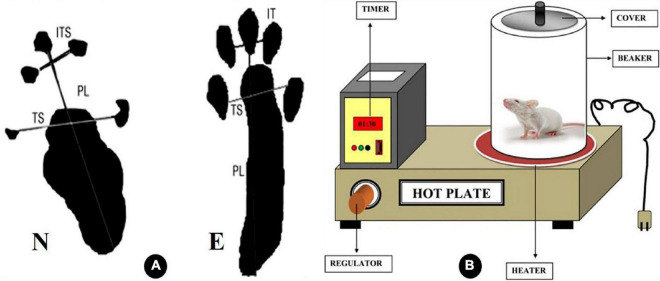
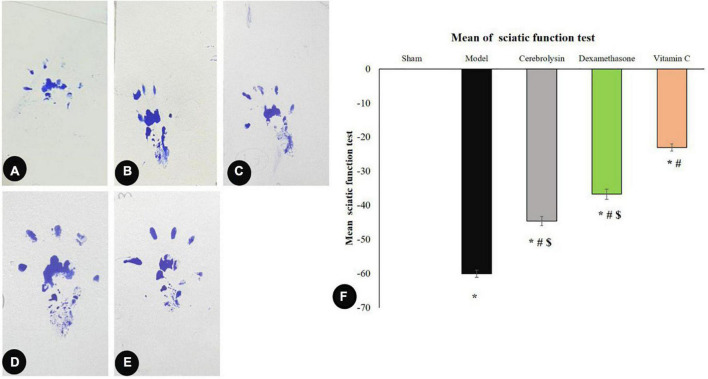
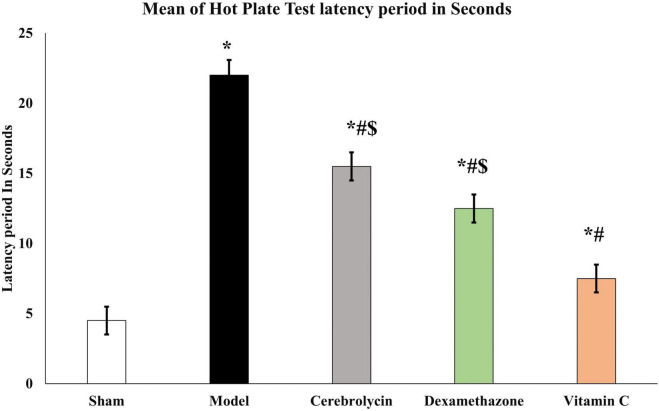
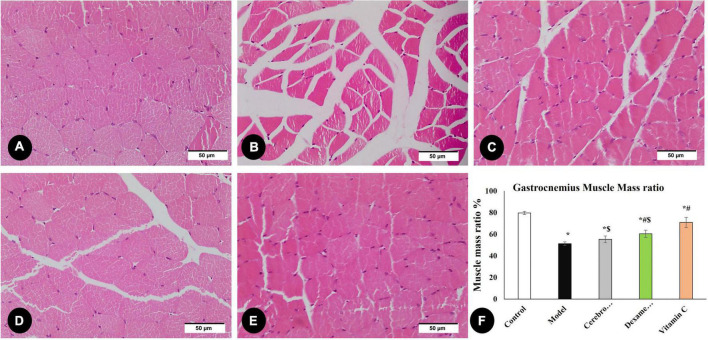
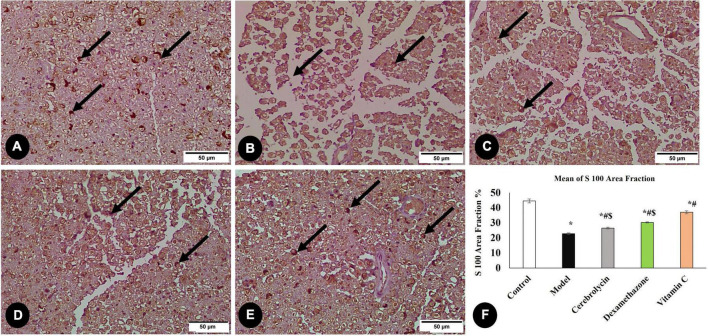
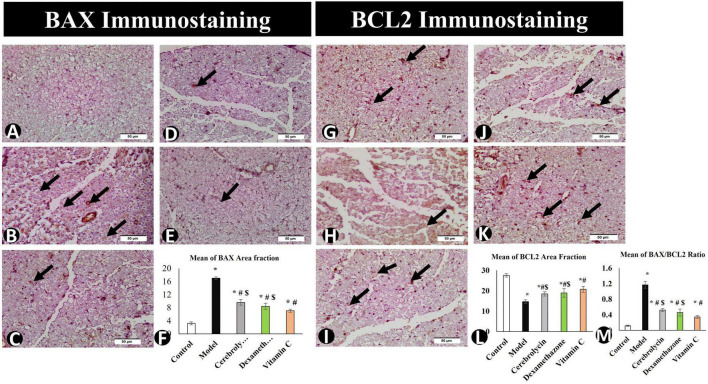
A total of 40 adult male albino rats were used in this study. Sciatic nerve crush injury was induced in 32 rats, which were divided equally into four groups (model, Cerebrolysin, dexamethasone, and vitamin C groups) and compared to the sham group ( = 8). The sciatic nerve sensory and motor function regeneration after crushing together with gastrocnemius muscle histopathological changes were evaluated by the sciatic function index, the hot plate test, gastrocnemius muscle mass ratio, and immune expression of S100 and apoptosis cascade (BAX, BCL2, and BAX/BCL2 ratio).
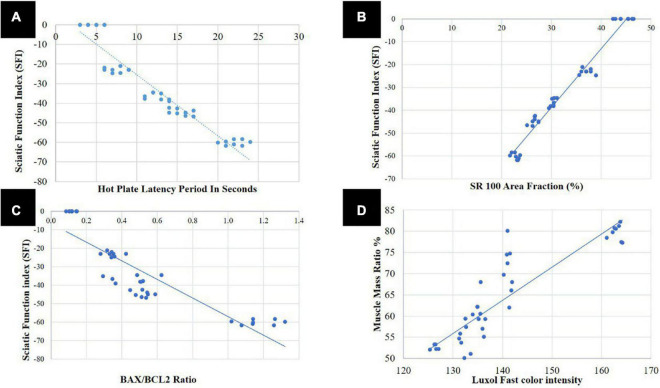
Significant improvement of the behavioral status and histopathological assessment scores occurred after the use of Cerebrolysin (as a neurotrophic factor), dexamethasone (as an anti-inflammatory), and vitamin C (as an antioxidant). Despite these seemingly concomitant, robust behavioral and pathological changes, vitamin C appeared to have the best results among the three main outcome measures. There was a positive correlation between motor and sensory improvement and also between behavioral and histopathological changes, boosting the effectiveness, and implication of the sciatic function index as a mirror for changes occurring on the tissue level.
Vitamin C is a promising therapeutic in the treatment of PNI. The sciatic function index (SFI) test is a reliable accurate method for assessing sciatic nerve integrity after both partial disruption and regrowth.
大多数针对周围神经损伤(PNI)建议的实验方法在动物模型中都能带来不同程度的恢复;然而,目前可用的可靠临床药理学治疗模型并不多。为了减轻PNI并发症,鼓励开展加速周围神经再生方法的研究。在我们的研究中选择了脑蛋白水解物、地塞米松和抗坏血酸(维生素C)药物模型,因为它们有不同作用机制的报道疗效。
本研究共使用40只成年雄性白化大鼠。32只大鼠诱导坐骨神经挤压损伤,将其平均分为四组(模型组、脑蛋白水解物组、地塞米松组和维生素C组),并与假手术组(n = 8)进行比较。通过坐骨神经功能指数、热板试验、腓肠肌质量比以及S100的免疫表达和凋亡级联反应(BAX、BCL2和BAX/BCL2比值)评估挤压后坐骨神经感觉和运动功能的再生以及腓肠肌组织病理学变化。
使用脑蛋白水解物(作为神经营养因子)、地塞米松(作为抗炎药)和维生素C(作为抗氧化剂)后,行为状态和组织病理学评估评分有显著改善。尽管有这些看似同时出现的、明显的行为和病理变化,但在三项主要结局指标中,维生素C似乎效果最佳。运动和感觉改善之间以及行为和组织病理学变化之间存在正相关,这增强了坐骨神经功能指数作为组织水平变化反映指标的有效性和意义。
维生素C是治疗PNI的一种有前景的疗法。坐骨神经功能指数(SFI)测试是评估部分破坏和再生后坐骨神经完整性的可靠准确方法。