Sudhakar Shyam Kumar
Division of Sciences, School of Interwoven Arts and Sciences, Krea University, Sri City, Andhra Pradesh, India.
Front Neurol. 2023 Feb 2;14:1109406. doi: 10.3389/fneur.2023.1109406. eCollection 2023.
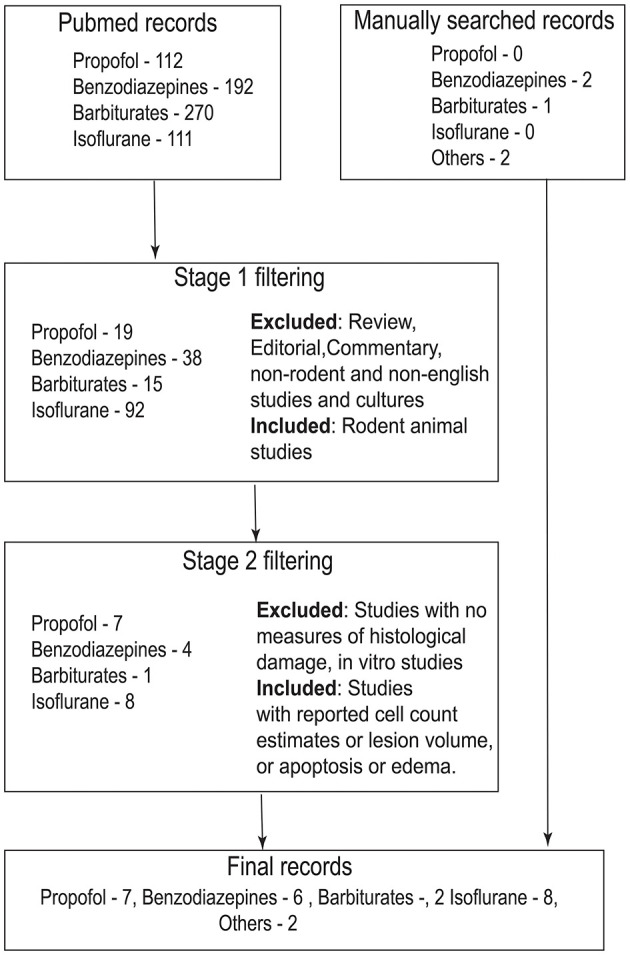
Traumatic brain injuries (TBI) caused by physical impact to the brain can adversely impact the welfare and well-being of the affected individuals. One of the leading causes of mortality and dysfunction in the world, TBI is a major public health problem facing the human community. Drugs that target GABAergic neurotransmission are commonly used for sedation in clinical TBI yet their potential to cause neuroprotection is unclear. In this paper, I have performed a rigorous literature review of the neuroprotective effects of drugs that increase GABAergic currents based on the results reported in preclinical literature. The drugs covered in this review include the following: propofol, benzodiazepines, barbiturates, isoflurane, and other drugs that are agonists of GABA receptors. A careful review of numerous preclinical studies reveals that these drugs fail to produce any neuroprotection after a primary impact to the brain. In numerous circumstances, they could be detrimental to neuroprotection by increasing the size of the contusional brain tissue and by severely interfering with behavioral and functional recovery. Therefore, anesthetic agents that work by enhancing the effect of neurotransmitter GABA should be administered with caution of TBI patients until a clear and concrete picture of their neuroprotective efficacy emerges in the clinical literature.
因脑部受到物理撞击而导致的创伤性脑损伤(TBI)会对受影响个体的健康和幸福产生不利影响。作为全球死亡和功能障碍的主要原因之一,TBI是人类社会面临的一个重大公共卫生问题。针对γ-氨基丁酸(GABA)能神经传递的药物在临床TBI中常用于镇静,但它们的神经保护潜力尚不清楚。在本文中,我根据临床前文献报道的结果,对增加GABA能电流的药物的神经保护作用进行了严格的文献综述。本综述涵盖的药物包括:丙泊酚、苯二氮䓬类、巴比妥类、异氟烷,以及其他作为GABA受体激动剂的药物。对大量临床前研究的仔细回顾表明,这些药物在对大脑产生原发性撞击后未能产生任何神经保护作用。在许多情况下,它们可能会因增加挫伤性脑组织的大小以及严重干扰行为和功能恢复而对神经保护产生不利影响。因此,在临床文献中明确其神经保护疗效之前,对于TBI患者,应谨慎使用通过增强神经递质GABA作用起效的麻醉剂。