Im Jeehye, Seo Eun Won, Jung Kyoungwon, Kwon Junsik
Research Institute of Health Insurance Review and Assessment, Health Insurance Review and Assessment Service, Wonju, Korea.
Division of Trauma Surgery, Department of Surgery, Ajou University School of Medicine, Suwon, Korea.
Ann Surg Treat Res. 2023 Feb;104(2):61-70. doi: 10.4174/astr.2023.104.2.61. Epub 2023 Jan 31.
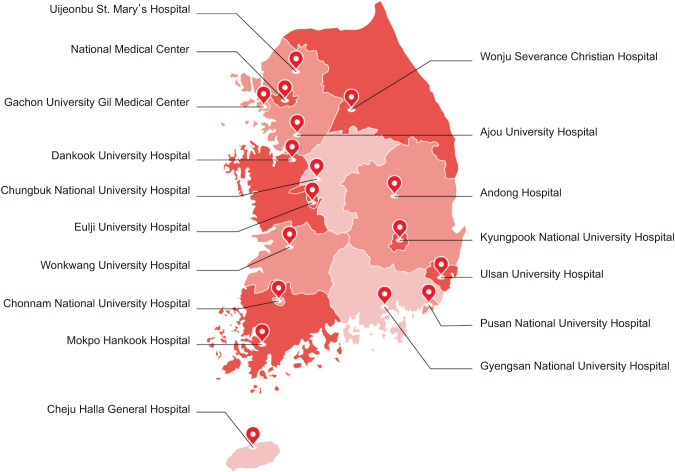
The Korean government initiated a plan to designate and establish Regional Trauma Centers to reduce the preventable trauma death rate to <20% so as to be on par with advanced countries by 2020. This initiative was undertaken because the reported preventable trauma death rate was close to 40% in South Korea from 1997 to 2009. This review aimed to provide an overview of these Regional Trauma Centers and discuss further development of the trauma care system to assess its performance. As of September 2021, 15 Regional Trauma Centers had been established through a metropolitan-based designation process. Each center has been equipped with Level-I facilities. These Regional Trauma Centers have had 2 positive effects; namely, an increase in the number of severely injured patients attending these centers and a decrease in the national preventable trauma death rate from 30.5% in 2015 to 19.9% in 2017. The establishment of Regional Trauma Centers can lead to improved performance, maximal efficiency, and reduction of preventable deaths in trauma patients. They can also play a key role in prehospital triage and transportation in the trauma care system.
韩国政府启动了一项计划,指定并建立区域创伤中心,以将可预防的创伤死亡率降低至20%以下,以便到2020年与发达国家持平。之所以采取这一举措,是因为1997年至2009年期间,韩国报告的可预防创伤死亡率接近40%。本综述旨在概述这些区域创伤中心,并讨论创伤护理系统的进一步发展,以评估其绩效。截至2021年9月,通过基于大都市的指定程序已建立了15个区域创伤中心。每个中心都配备了一级设施。这些区域创伤中心产生了两个积极影响;即,前往这些中心就诊的重伤患者数量增加,以及全国可预防创伤死亡率从2015年的30.5%降至2017年的19.9%。区域创伤中心的建立可提高绩效、实现最高效率并降低创伤患者的可预防死亡率。它们还可在创伤护理系统的院前分诊和转运中发挥关键作用。