Division of Endocrinology and Metabolism, Department of Internal Medicine, Chungbuk National University College of Medicine and Chungbuk National University Hospital, Cheongju, Republic of Korea.
Division of Pulmonary and Critical Care Medicine, Department of Internal Medicine, Chungbuk National University Hospital, Chungbuk National University College of Medicine, Cheongju, Republic of Korea.
Front Endocrinol (Lausanne). 2023 Feb 3;14:1077846. doi: 10.3389/fendo.2023.1077846. eCollection 2023.
Subjects with diabetes are at higher risk of serious influenza-related complications. We aimed to investigate the yearly trend of influenza vaccination and factors associated with being unvaccinated for influenza in subjects with diabetes using a nationwide observational study performed within the recent decade.
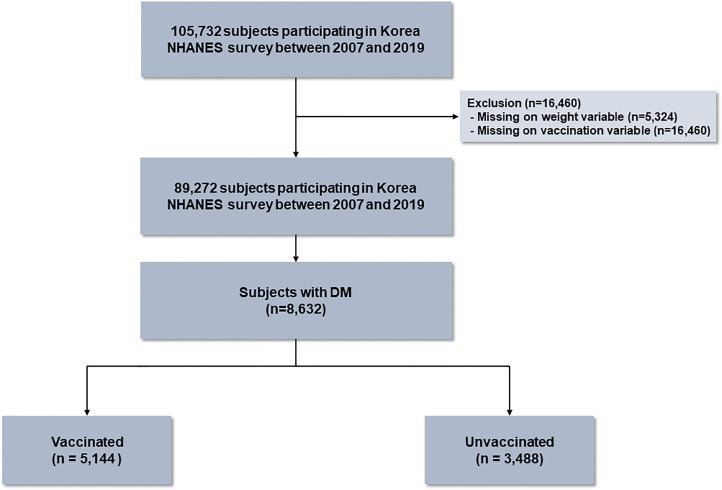
Among 105,732 subjects from the Korea National Health and Nutrition Examination Survey between 2007 and 2019, 8,632 with diabetes were included. We investigated the yearly trend of influenza vaccination and factors associated with being unvaccinated for influenza.
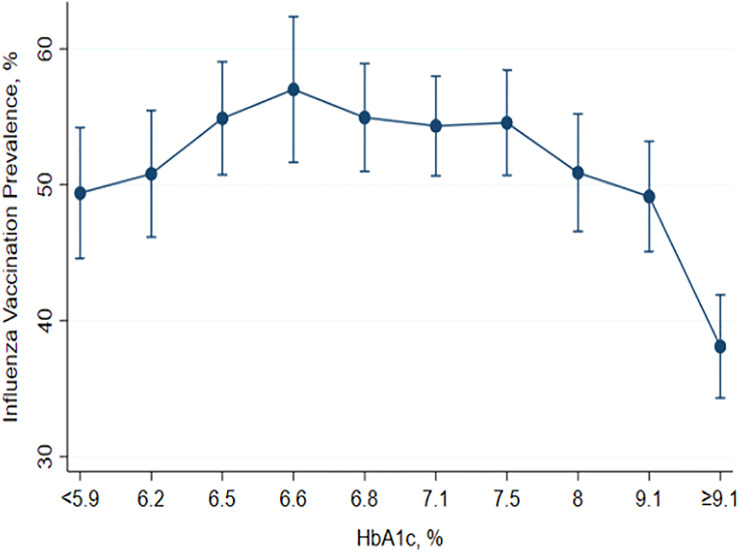
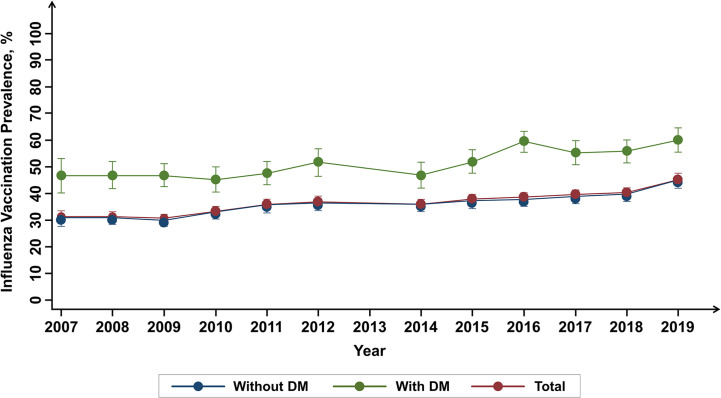
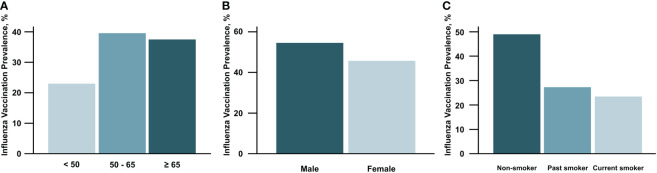
During the study period, the prevalence of influenza vaccination in subjects with diabetes showed a tendency to increase every year, reaching almost 60% in 2019, which was higher than the rate in subjects without diabetes. Younger age (adjusted hazard ratio (aHR) [95% CI] 11.29 [8.63-14.75] for < 50 years; 6.16 [5.21-7.29] for 50-65 years), male (aHR 1.67 [1.52-1.87]), current smoker (aHR 1.31 [1.00-1.72], lower-income status (aHR 1.46 [1.17, 1.84]), and high education level (aHR 1.30 [1.01-1.67]) were associated with being unvaccinated. Also, a poorer glycemic control with HbA1c ≥ 9% was found to be correlated with unvaccinated status (aHR 1.48 [1.15-1.90]).
The influenza vaccination rate is still unsatisfactory in subjects with diabetes. Young age, males, low-income level, high education level, and poor glycemic control were associated with unvaccinated status. Considering the risk-benefits of influenza vaccination in patients with diabetes, physicians should make an effort to increase vaccination rates, especially in low vaccination rate groups.
患有糖尿病的患者发生严重流感相关并发症的风险更高。我们旨在通过一项在最近十年内进行的全国性观察研究,调查糖尿病患者每年流感疫苗接种的趋势以及与流感疫苗接种相关的因素。
在 2007 年至 2019 年期间的韩国国家健康和营养检查调查的 105732 名受试者中,纳入了 8632 名患有糖尿病的患者。我们调查了流感疫苗接种的年度趋势以及与流感疫苗接种相关的因素。
在研究期间,糖尿病患者流感疫苗接种的流行率呈逐年上升趋势,在 2019 年达到近 60%,高于非糖尿病患者的接种率。年龄较小(<50 岁的调整后的危害比(aHR)[95%CI]为 11.29 [8.63-14.75];50-65 岁的 aHR 为 6.16 [5.21-7.29])、男性(aHR 1.67 [1.52-1.87])、当前吸烟者(aHR 1.31 [1.00-1.72])、低收入水平(aHR 1.46 [1.17, 1.84])和高教育水平(aHR 1.30 [1.01-1.67])与未接种疫苗有关。同时,糖化血红蛋白(HbA1c)≥9%表明血糖控制不佳,与未接种疫苗有关(aHR 1.48 [1.15-1.90])。
糖尿病患者的流感疫苗接种率仍然不理想。年龄较小、男性、低收入水平、高教育水平和血糖控制不佳与未接种疫苗有关。考虑到糖尿病患者接种流感疫苗的风险-效益,医生应努力提高疫苗接种率,特别是在疫苗接种率较低的人群中。