• 文献检索
  • 文档翻译
  • 深度研究
  • 学术资讯
  • Suppr Zotero 插件Zotero 插件
  • 邀请有礼
  • 套餐&价格
  • 历史记录
应用&插件
Suppr Zotero 插件Zotero 插件浏览器插件Mac 客户端Windows 客户端微信小程序
定价
高级版会员购买积分包购买API积分包
服务
文献检索文档翻译深度研究API 文档MCP 服务
关于我们
关于 Suppr公司介绍联系我们用户协议隐私条款
关注我们

Suppr 超能文献

核心技术专利:CN118964589B侵权必究
粤ICP备2023148730 号-1Suppr @ 2026

文献检索

告别复杂PubMed语法,用中文像聊天一样搜索,搜遍4000万医学文献。AI智能推荐,让科研检索更轻松。

立即免费搜索

文件翻译

保留排版,准确专业,支持PDF/Word/PPT等文件格式,支持 12+语言互译。

免费翻译文档

深度研究

AI帮你快速写综述,25分钟生成高质量综述,智能提取关键信息,辅助科研写作。

立即免费体验

ProtInteract:一种用于预测蛋白质-蛋白质相互作用的深度学习框架。

ProtInteract: A deep learning framework for predicting protein-protein interactions.

作者信息

Soleymani Farzan, Paquet Eric, Viktor Herna Lydia, Michalowski Wojtek, Spinello Davide

机构信息

Department of Mechanical Engineering, University of Ottawa, Ottawa, ON K1N 6N5, Canada.

National Research Council, 1200 Montreal Road, Ottawa, ON K1A 0R6, Canada.

出版信息

Comput Struct Biotechnol J. 2023 Jan 25;21:1324-1348. doi: 10.1016/j.csbj.2023.01.028. eCollection 2023.

DOI:10.1016/j.csbj.2023.01.028
PMID:36817951
原文链接:https://pmc.ncbi.nlm.nih.gov/articles/PMC9929211/
Abstract

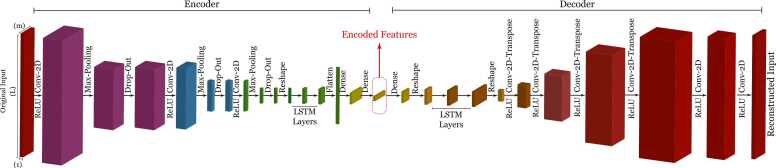
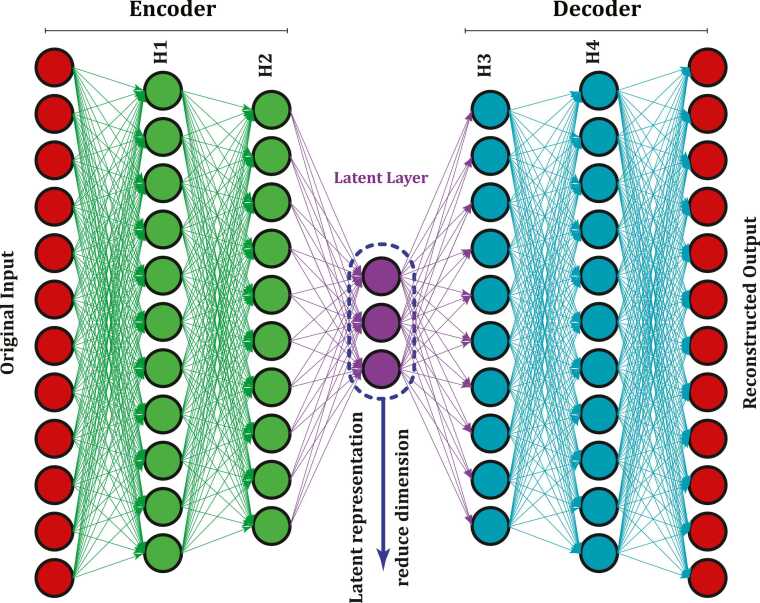
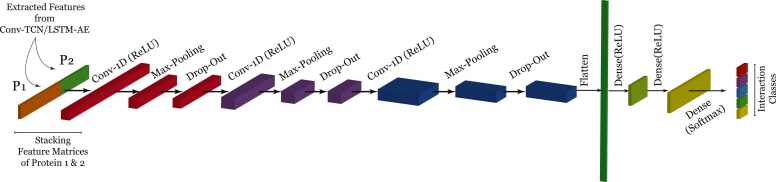
Proteins mainly perform their functions by interacting with other proteins. Protein-protein interactions underpin various biological activities such as metabolic cycles, signal transduction, and immune response. However, due to the sheer number of proteins, experimental methods for finding interacting and non-interacting protein pairs are time-consuming and costly. We therefore developed the ProtInteract framework to predict protein-protein interaction. ProtInteract comprises two components: first, a novel autoencoder architecture that encodes each protein's primary structure to a lower-dimensional vector while preserving its underlying sequence attributes. This leads to faster training of the second network, a deep convolutional neural network (CNN) that receives encoded proteins and predicts their interaction under three different scenarios. In each scenario, the deep CNN predicts the class of a given encoded protein pair. Each class indicates different ranges of confidence scores corresponding to the probability of whether a predicted interaction occurs or not. The proposed framework features significantly low computational complexity and relatively fast response. The contributions of this work are twofold. First, ProtInteract assimilates the protein's primary structure into a pseudo-time series. Therefore, we leverage the nature of the time series of proteins and their physicochemical properties to encode a protein's amino acid sequence into a lower-dimensional vector space. This approach enables extracting highly informative sequence attributes while reducing computational complexity. Second, the ProtInteract framework utilises this information to identify protein interactions with other proteins based on its amino acid configuration. Our results suggest that the proposed framework performs with high accuracy and efficiency in predicting protein-protein interactions.

摘要

蛋白质主要通过与其他蛋白质相互作用来发挥其功能。蛋白质-蛋白质相互作用支撑着各种生物活动,如代谢循环、信号转导和免疫反应。然而,由于蛋白质数量众多,寻找相互作用和非相互作用蛋白质对的实验方法既耗时又昂贵。因此,我们开发了ProtInteract框架来预测蛋白质-蛋白质相互作用。ProtInteract由两个组件组成:首先,一种新颖的自动编码器架构,它将每个蛋白质的一级结构编码为低维向量,同时保留其潜在的序列属性。这使得第二个网络(一个深度卷积神经网络(CNN))的训练速度更快,该网络接收编码后的蛋白质并在三种不同场景下预测它们的相互作用。在每种场景中,深度CNN预测给定编码蛋白质对的类别。每个类别表示对应于预测相互作用是否发生的概率的不同置信度分数范围。所提出的框架具有显著低的计算复杂度和相对较快的响应速度。这项工作的贡献有两方面。首先,ProtInteract将蛋白质的一级结构同化为伪时间序列。因此,我们利用蛋白质时间序列的性质及其物理化学性质将蛋白质的氨基酸序列编码到低维向量空间中。这种方法能够在降低计算复杂度的同时提取高度信息丰富的序列属性。其次,ProtInteract框架利用这些信息根据其氨基酸构型识别与其他蛋白质的相互作用。我们的结果表明,所提出的框架在预测蛋白质-蛋白质相互作用方面具有高精度和高效率。

https://cdn.ncbi.nlm.nih.gov/pmc/blobs/cb97/9929211/ec3558971a5f/gr22.jpg
https://cdn.ncbi.nlm.nih.gov/pmc/blobs/cb97/9929211/82243002b945/ga1.jpg
https://cdn.ncbi.nlm.nih.gov/pmc/blobs/cb97/9929211/6348a3c61b67/gr1.jpg
https://cdn.ncbi.nlm.nih.gov/pmc/blobs/cb97/9929211/914c3af06689/gr2.jpg
https://cdn.ncbi.nlm.nih.gov/pmc/blobs/cb97/9929211/22b80b155414/gr3.jpg
https://cdn.ncbi.nlm.nih.gov/pmc/blobs/cb97/9929211/2ee48aabf8e8/gr4.jpg
https://cdn.ncbi.nlm.nih.gov/pmc/blobs/cb97/9929211/d96c227aa319/gr5.jpg
https://cdn.ncbi.nlm.nih.gov/pmc/blobs/cb97/9929211/55d88e839cc1/gr6.jpg
https://cdn.ncbi.nlm.nih.gov/pmc/blobs/cb97/9929211/54b19dc72941/gr7.jpg
https://cdn.ncbi.nlm.nih.gov/pmc/blobs/cb97/9929211/fbfa39ca4612/gr8.jpg
https://cdn.ncbi.nlm.nih.gov/pmc/blobs/cb97/9929211/d9ecfdd2d05a/gr9.jpg
https://cdn.ncbi.nlm.nih.gov/pmc/blobs/cb97/9929211/25b4c1117687/gr10.jpg
https://cdn.ncbi.nlm.nih.gov/pmc/blobs/cb97/9929211/8dc4a8b04571/gr11.jpg
https://cdn.ncbi.nlm.nih.gov/pmc/blobs/cb97/9929211/6d6dfa4e5e17/gr12.jpg
https://cdn.ncbi.nlm.nih.gov/pmc/blobs/cb97/9929211/1d24607a6763/gr13.jpg
https://cdn.ncbi.nlm.nih.gov/pmc/blobs/cb97/9929211/61a491ec022d/gr14.jpg
https://cdn.ncbi.nlm.nih.gov/pmc/blobs/cb97/9929211/d6f88d4120c6/gr15.jpg
https://cdn.ncbi.nlm.nih.gov/pmc/blobs/cb97/9929211/fa1582ffb376/gr16.jpg
https://cdn.ncbi.nlm.nih.gov/pmc/blobs/cb97/9929211/1014159c002f/gr17.jpg
https://cdn.ncbi.nlm.nih.gov/pmc/blobs/cb97/9929211/74daccf045b7/gr18.jpg
https://cdn.ncbi.nlm.nih.gov/pmc/blobs/cb97/9929211/210976082cb6/gr19.jpg
https://cdn.ncbi.nlm.nih.gov/pmc/blobs/cb97/9929211/39d489bb0581/gr20.jpg
https://cdn.ncbi.nlm.nih.gov/pmc/blobs/cb97/9929211/274d08c54f3e/gr21.jpg
https://cdn.ncbi.nlm.nih.gov/pmc/blobs/cb97/9929211/ec3558971a5f/gr22.jpg
https://cdn.ncbi.nlm.nih.gov/pmc/blobs/cb97/9929211/82243002b945/ga1.jpg
https://cdn.ncbi.nlm.nih.gov/pmc/blobs/cb97/9929211/6348a3c61b67/gr1.jpg
https://cdn.ncbi.nlm.nih.gov/pmc/blobs/cb97/9929211/914c3af06689/gr2.jpg
https://cdn.ncbi.nlm.nih.gov/pmc/blobs/cb97/9929211/22b80b155414/gr3.jpg
https://cdn.ncbi.nlm.nih.gov/pmc/blobs/cb97/9929211/2ee48aabf8e8/gr4.jpg
https://cdn.ncbi.nlm.nih.gov/pmc/blobs/cb97/9929211/d96c227aa319/gr5.jpg
https://cdn.ncbi.nlm.nih.gov/pmc/blobs/cb97/9929211/55d88e839cc1/gr6.jpg
https://cdn.ncbi.nlm.nih.gov/pmc/blobs/cb97/9929211/54b19dc72941/gr7.jpg
https://cdn.ncbi.nlm.nih.gov/pmc/blobs/cb97/9929211/fbfa39ca4612/gr8.jpg
https://cdn.ncbi.nlm.nih.gov/pmc/blobs/cb97/9929211/d9ecfdd2d05a/gr9.jpg
https://cdn.ncbi.nlm.nih.gov/pmc/blobs/cb97/9929211/25b4c1117687/gr10.jpg
https://cdn.ncbi.nlm.nih.gov/pmc/blobs/cb97/9929211/8dc4a8b04571/gr11.jpg
https://cdn.ncbi.nlm.nih.gov/pmc/blobs/cb97/9929211/6d6dfa4e5e17/gr12.jpg
https://cdn.ncbi.nlm.nih.gov/pmc/blobs/cb97/9929211/1d24607a6763/gr13.jpg
https://cdn.ncbi.nlm.nih.gov/pmc/blobs/cb97/9929211/61a491ec022d/gr14.jpg
https://cdn.ncbi.nlm.nih.gov/pmc/blobs/cb97/9929211/d6f88d4120c6/gr15.jpg
https://cdn.ncbi.nlm.nih.gov/pmc/blobs/cb97/9929211/fa1582ffb376/gr16.jpg
https://cdn.ncbi.nlm.nih.gov/pmc/blobs/cb97/9929211/1014159c002f/gr17.jpg
https://cdn.ncbi.nlm.nih.gov/pmc/blobs/cb97/9929211/74daccf045b7/gr18.jpg
https://cdn.ncbi.nlm.nih.gov/pmc/blobs/cb97/9929211/210976082cb6/gr19.jpg
https://cdn.ncbi.nlm.nih.gov/pmc/blobs/cb97/9929211/39d489bb0581/gr20.jpg
https://cdn.ncbi.nlm.nih.gov/pmc/blobs/cb97/9929211/274d08c54f3e/gr21.jpg
https://cdn.ncbi.nlm.nih.gov/pmc/blobs/cb97/9929211/ec3558971a5f/gr22.jpg

相似文献

1
ProtInteract: A deep learning framework for predicting protein-protein interactions.ProtInteract:一种用于预测蛋白质-蛋白质相互作用的深度学习框架。
Comput Struct Biotechnol J. 2023 Jan 25;21:1324-1348. doi: 10.1016/j.csbj.2023.01.028. eCollection 2023.
2
DSResSol: A Sequence-Based Solubility Predictor Created with Dilated Squeeze Excitation Residual Networks.DSResSol:一种基于序列的溶解度预测模型,该模型使用了扩张挤压残差网络创建。
Int J Mol Sci. 2021 Dec 17;22(24):13555. doi: 10.3390/ijms222413555.
3
Protein secondary structure prediction improved by recurrent neural networks integrated with two-dimensional convolutional neural networks.通过与二维卷积神经网络集成的循环神经网络改进蛋白质二级结构预测。
J Bioinform Comput Biol. 2018 Oct;16(5):1850021. doi: 10.1142/S021972001850021X.
4
Protein-protein interaction prediction based on ordinal regression and recurrent convolutional neural networks.基于有序回归和递归卷积神经网络的蛋白质-蛋白质相互作用预测。
BMC Bioinformatics. 2021 Oct 8;22(Suppl 6):485. doi: 10.1186/s12859-021-04369-0.
5
Deep learning-driven insights into super protein complexes for outer membrane protein biogenesis in bacteria.深度学习驱动的细菌外膜蛋白生物发生中超蛋白复合物的研究进展
Elife. 2022 Dec 28;11:e82885. doi: 10.7554/eLife.82885.
6
Learning hidden patterns from patient multivariate time series data using convolutional neural networks: A case study of healthcare cost prediction.使用卷积神经网络从患者多变量时间序列数据中学习隐藏模式:以医疗保健成本预测为例。
J Biomed Inform. 2020 Nov;111:103565. doi: 10.1016/j.jbi.2020.103565. Epub 2020 Sep 25.
7
EDLMFC: an ensemble deep learning framework with multi-scale features combination for ncRNA-protein interaction prediction.EDLMFC:一种具有多尺度特征组合的集成深度学习框架,用于 ncRNA-蛋白质相互作用预测。
BMC Bioinformatics. 2021 Mar 19;22(1):133. doi: 10.1186/s12859-021-04069-9.
8
Deep_CNN_LSTM_GO: Protein function prediction from amino-acid sequences.深度卷积神经网络-长短期记忆网络-广义输出:从氨基酸序列预测蛋白质功能。
Comput Biol Chem. 2021 Dec;95:107584. doi: 10.1016/j.compbiolchem.2021.107584. Epub 2021 Sep 24.
9
DeepACLSTM: deep asymmetric convolutional long short-term memory neural models for protein secondary structure prediction.DeepACLSTM:用于蛋白质二级结构预测的深度非对称卷积长短时记忆神经模型。
BMC Bioinformatics. 2019 Jun 17;20(1):341. doi: 10.1186/s12859-019-2940-0.
10
deepNEC: a novel alignment-free tool for the identification and classification of nitrogen biochemical network-related enzymes using deep learning.深度 NEC:一种新颖的无对齐工具,用于使用深度学习识别和分类与氮生化网络相关的酶。
Brief Bioinform. 2022 May 13;23(3). doi: 10.1093/bib/bbac071.

引用本文的文献

1
Large Context, Deeper Insights: Harnessing Large Language Models for Advancing Protein-Protein Interaction Analysis.大背景,更深刻的见解:利用大语言模型推动蛋白质-蛋白质相互作用分析
Methods Mol Biol. 2025;2941:243-267. doi: 10.1007/978-1-0716-4623-6_15.
2
Recent advances in antibody optimization based on deep learning methods.基于深度学习方法的抗体优化研究进展
J Zhejiang Univ Sci B. 2025 May 28;26(5):409-420. doi: 10.1631/jzus.B2400387.
3
EvoWeaver: large-scale prediction of gene functional associations from coevolutionary signals.

本文引用的文献

1
The STRING database in 2023: protein-protein association networks and functional enrichment analyses for any sequenced genome of interest.2023 年的 STRING 数据库:针对任何感兴趣的测序基因组的蛋白质-蛋白质关联网络和功能富集分析。
Nucleic Acids Res. 2023 Jan 6;51(D1):D638-D646. doi: 10.1093/nar/gkac1000.
2
Protein-protein interaction prediction with deep learning: A comprehensive review.基于深度学习的蛋白质-蛋白质相互作用预测:综述
Comput Struct Biotechnol J. 2022 Sep 19;20:5316-5341. doi: 10.1016/j.csbj.2022.08.070. eCollection 2022.
3
Directing the Self-Assembly of Aromatic Foldamer Helices using Acridine Appendages and Metal Coordination.
EvoWeaver:基于共进化信号的基因功能关联大规模预测
Nat Commun. 2025 Apr 24;16(1):3878. doi: 10.1038/s41467-025-59175-6.
4
Feature fusion with attributed deepwalk for protein-protein interaction prediction.基于属性深度游走的特征融合用于蛋白质-蛋白质相互作用预测
Sci Rep. 2025 Apr 10;15(1):12255. doi: 10.1038/s41598-025-96510-9.
5
VHI-Pred: A Multi-Feature-Based Tool for Predicting Human-Virus Protein-Protein Interactions.VHI-Pred:一种基于多特征的人类病毒蛋白质-蛋白质相互作用预测工具。
Mol Biotechnol. 2025 Apr 5. doi: 10.1007/s12033-025-01417-5.
6
Structure-Based Deep Learning Framework for Modeling Human-Gut Bacterial Protein Interactions.用于模拟人肠道细菌蛋白质相互作用的基于结构的深度学习框架
Proteomes. 2025 Feb 17;13(1):10. doi: 10.3390/proteomes13010010.
7
Structure-Based Approaches for Protein-Protein Interaction Prediction Using Machine Learning and Deep Learning.基于结构的机器学习和深度学习蛋白质-蛋白质相互作用预测方法
Biomolecules. 2025 Jan 17;15(1):141. doi: 10.3390/biom15010141.
8
PMSFF: Improved Protein Binding Residues Prediction through Multi-Scale Sequence-Based Feature Fusion Strategy.PMSFF:通过多尺度序列的基于特征融合策略来提高蛋白质结合残基预测。
Biomolecules. 2024 Sep 27;14(10):1220. doi: 10.3390/biom14101220.
9
Structure-based protein and small molecule generation using EGNN and diffusion models: A comprehensive review.使用基于图神经网络(EGNN)和扩散模型的基于结构的蛋白质和小分子生成:全面综述。
Comput Struct Biotechnol J. 2024 Jun 26;23:2779-2797. doi: 10.1016/j.csbj.2024.06.021. eCollection 2024 Dec.
10
An Ensemble Classifiers for Improved Prediction of Native-Non-Native Protein-Protein Interaction.用于改进天然-非天然蛋白质-蛋白质相互作用预测的集成分类器。
Int J Mol Sci. 2024 May 29;25(11):5957. doi: 10.3390/ijms25115957.
利用吖啶基团和金属配位作用导向芳香折叠体螺旋的自组装。
Chemistry. 2022 Nov 7;28(62):e202201345. doi: 10.1002/chem.202201345. Epub 2022 Sep 13.
4
Spatial organization of hydrophobic and charged residues affects protein thermal stability and binding affinity.疏水性和带电残基的空间组织影响蛋白质的热稳定性和结合亲和力。
Sci Rep. 2022 Jul 15;12(1):12087. doi: 10.1038/s41598-022-16338-5.
5
Deep learning frameworks for protein-protein interaction prediction.用于蛋白质-蛋白质相互作用预测的深度学习框架。
Comput Struct Biotechnol J. 2022 Jun 15;20:3223-3233. doi: 10.1016/j.csbj.2022.06.025. eCollection 2022.
6
DeepTrio: a ternary prediction system for protein-protein interaction using mask multiple parallel convolutional neural networks.DeepTrio:一种使用掩膜多并行卷积神经网络的蛋白质-蛋白质相互作用三元预测系统。
Bioinformatics. 2022 Jan 12;38(3):694-702. doi: 10.1093/bioinformatics/btab737.
7
Sequence-Based Prediction of Plant Protein-Protein Interactions by Combining Discrete Sine Transformation With Rotation Forest.基于离散正弦变换与旋转森林相结合的植物蛋白质-蛋白质相互作用的序列预测
Evol Bioinform Online. 2021 Oct 12;17:11769343211050067. doi: 10.1177/11769343211050067. eCollection 2021.
8
Parkinson's Disease Phenotypes in Patient Neuronal Cultures and Brain Organoids Improved by 2-Hydroxypropyl-β-Cyclodextrin Treatment.2-羟丙基-β-环糊精治疗可改善患者神经元培养物和脑类器官中的帕金森病表型。
Mov Disord. 2022 Jan;37(1):80-94. doi: 10.1002/mds.28810. Epub 2021 Oct 12.
9
Protein-protein interaction prediction based on ordinal regression and recurrent convolutional neural networks.基于有序回归和递归卷积神经网络的蛋白质-蛋白质相互作用预测。
BMC Bioinformatics. 2021 Oct 8;22(Suppl 6):485. doi: 10.1186/s12859-021-04369-0.
10
D-SCRIPT translates genome to phenome with sequence-based, structure-aware, genome-scale predictions of protein-protein interactions.D-SCRIPT 通过基于序列、结构感知的基因组规模的蛋白质-蛋白质相互作用预测,将基因组转化为表型。
Cell Syst. 2021 Oct 20;12(10):969-982.e6. doi: 10.1016/j.cels.2021.08.010. Epub 2021 Oct 9.