Yamada Yohei, Toribatake Yasumitsu, Okamoto Shumpei, Kato Satoshi, Kobayashi Motoya, Tsuchiya Hiroyuki
Department of Orthopaedic Surgery, JA Toyama Kouseiren Takaoka Hospital, Takaoka, Japan.
Department of Orthopaedic Surgery, Kanazawa University School of Medicine, Kanazawa, Japan.
Spine Surg Relat Res. 2022 Aug 23;7(1):89-95. doi: 10.22603/ssrr.2022-0012. eCollection 2023 Jan 27.
This study aimed to identify factors associated with adjacent vertebral fracture (AVF) incidence after balloon kyphoplasty (BKP).
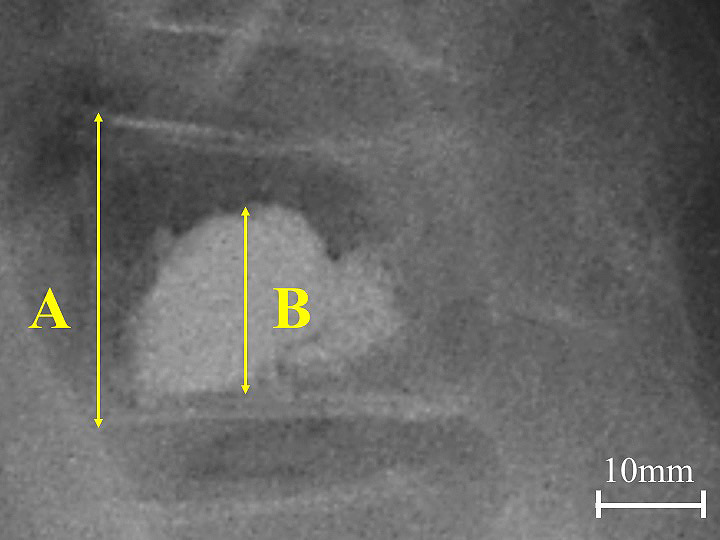
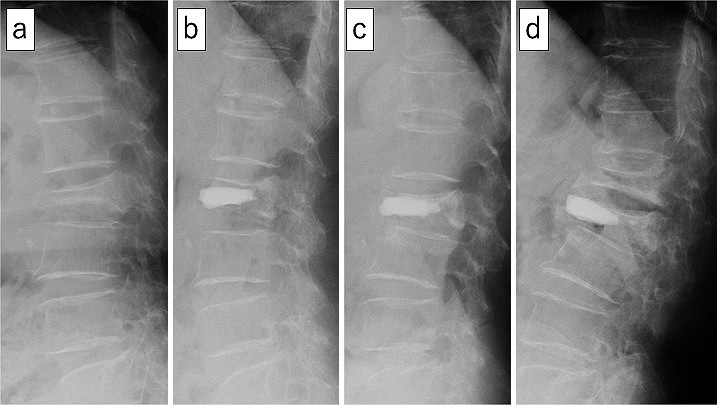
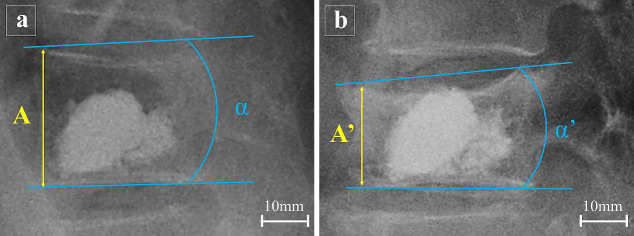
To perform the analyses, 133 vertebrae of 128 patients who underwent BKP for osteoporotic vertebral compression fracture were retrospectively investigated. According to the presence of AVF throughout a 1-year period following BKP, patients were divided into AVF (n = 22) and non-AVF (n = 111) groups. The groups were compared with respect to pre- and postoperative parameters, including the incidence of recompression of augmented vertebrae (RAV). RAV was defined as a decrease in anterior vertebral body height of at least 5 mm within the 3 months that followed BKP. To identify factors associated with AVF incidence, univariate and multivariate analyses were performed.
The univariate analysis revealed that the AVF group had a lower cement augmentation ratio, greater preoperative wedge angle, lower preoperative vertebral body height, lower postoperative vertebral body height 3 months post-BKP, and a greater change in vertebral body height and rate of RAV than the non-AVF group. Multivariate analysis revealed that low preoperative vertebral body height and RAV occurrence were associated with AVF incidence.
To the best of our knowledge, this study is the first to indicate that RAV is a risk factor for AVF. Study findings indicate that the incidence of AVF can be decreased if RAV development is avoided.
本研究旨在确定球囊后凸成形术(BKP)后相邻椎体骨折(AVF)发生率的相关因素。
为进行分析,对128例因骨质疏松性椎体压缩骨折接受BKP治疗的患者的133个椎体进行了回顾性研究。根据BKP后1年期间是否发生AVF,将患者分为AVF组(n = 22)和非AVF组(n = 111)。比较两组术前和术后参数,包括强化椎体再压缩(RAV)的发生率。RAV定义为BKP后3个月内椎体前缘高度下降至少5 mm。为确定与AVF发生率相关的因素,进行了单因素和多因素分析。
单因素分析显示,与非AVF组相比,AVF组的骨水泥填充率较低,术前楔角较大,术前椎体高度较低,BKP后3个月的术后椎体高度较低,椎体高度变化和RAV发生率较大。多因素分析显示,术前椎体高度较低和RAV的发生与AVF发生率相关。
据我们所知,本研究首次表明RAV是AVF的危险因素。研究结果表明,如果避免RAV的发生,AVF的发生率可能会降低。