Gruba Sarah, Wu Xiaojie, Spanolios Eleni, He Jiayi, Xiong-Hang Kang, Haynes Christy L
Department of Chemistry, University of Minnesota, Minneapolis, Minnesota 55455, United States.
ACS Bio Med Chem Au. 2022 Dec 2;3(1):87-96. doi: 10.1021/acsbiomedchemau.2c00059. eCollection 2023 Feb 15.
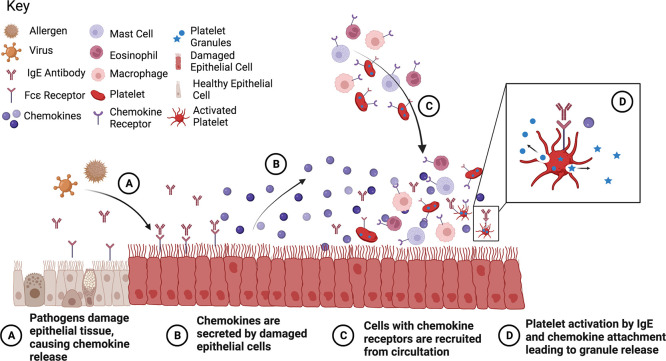
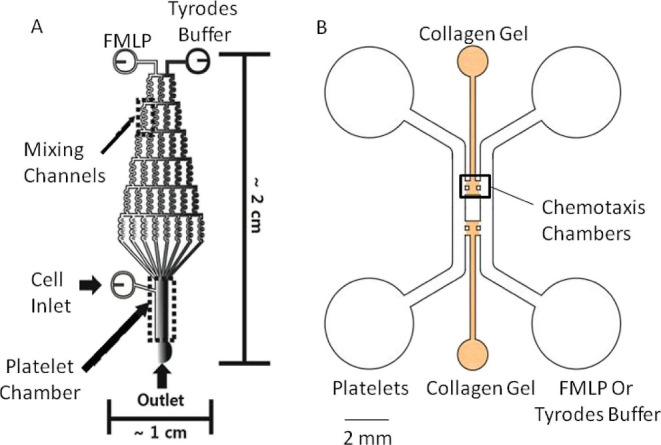
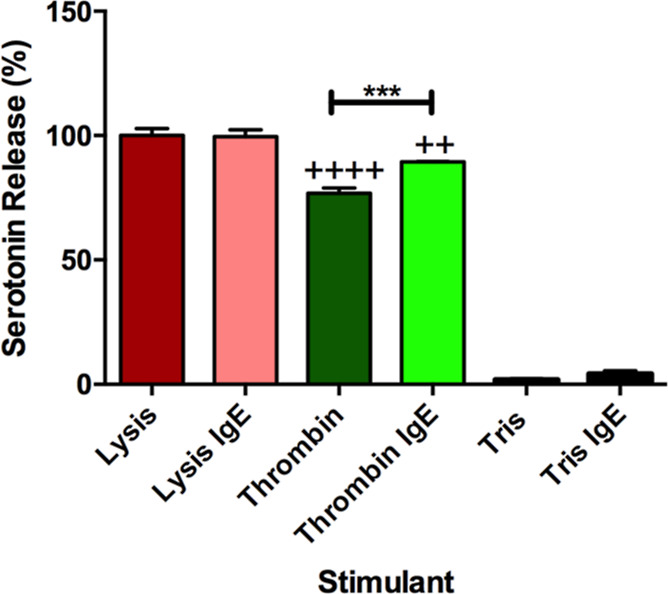
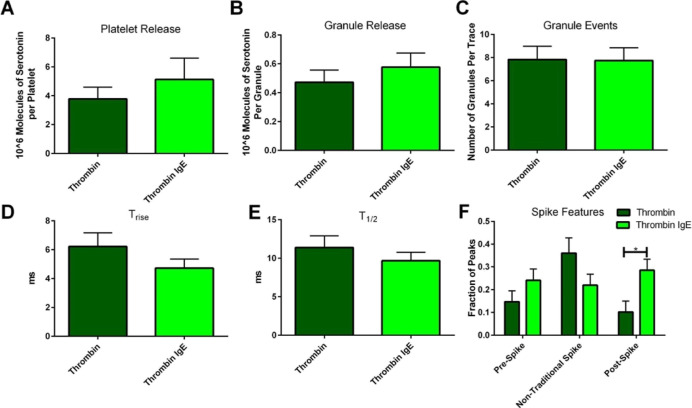
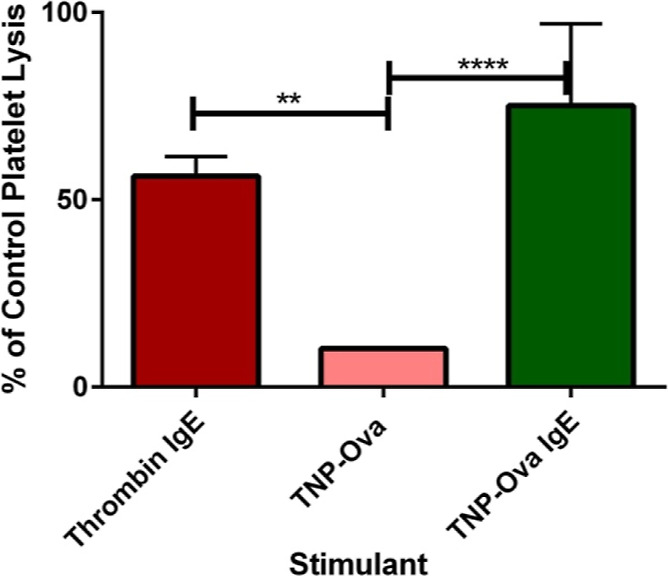
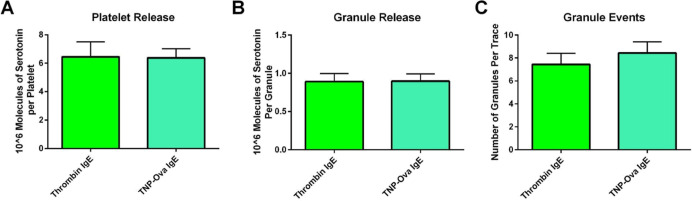
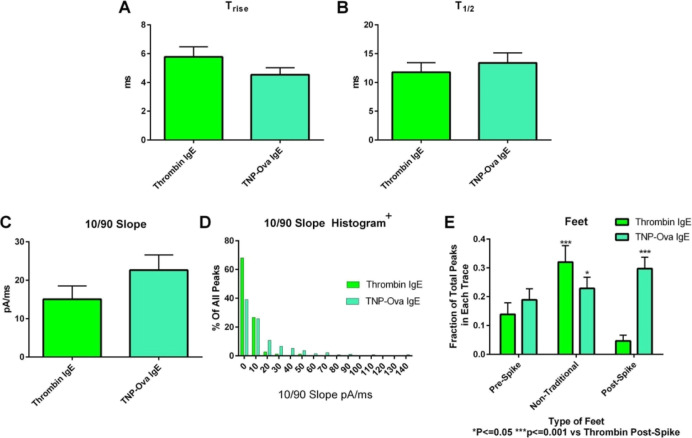
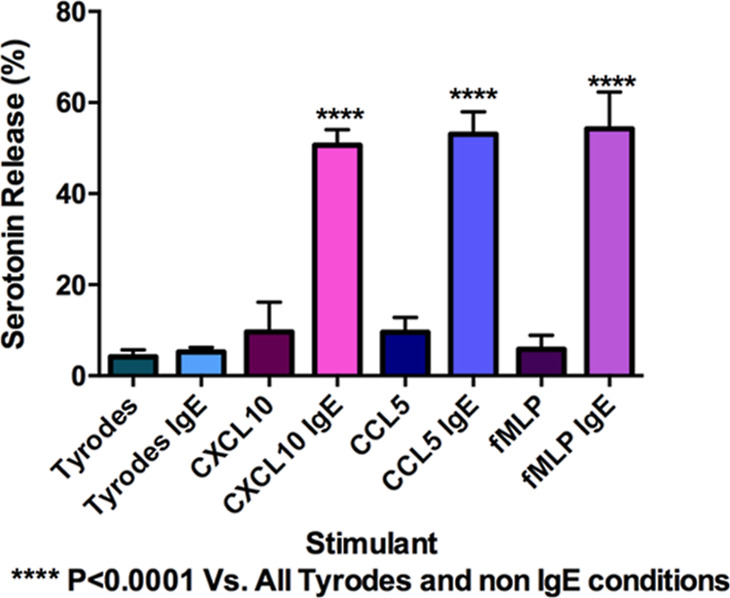
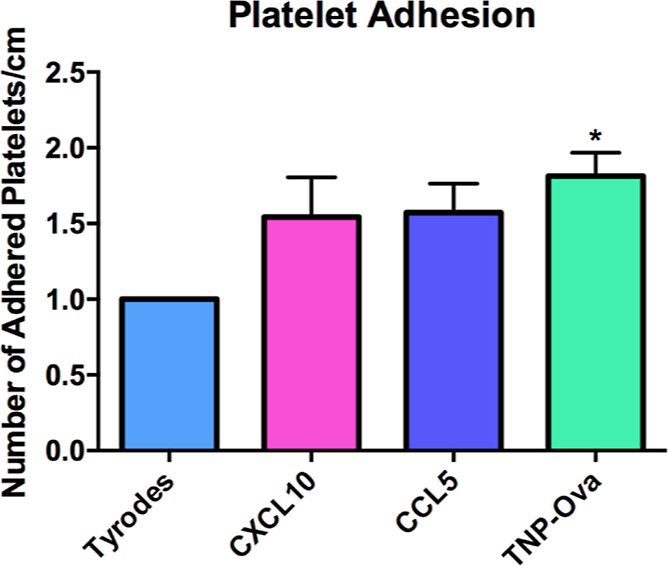
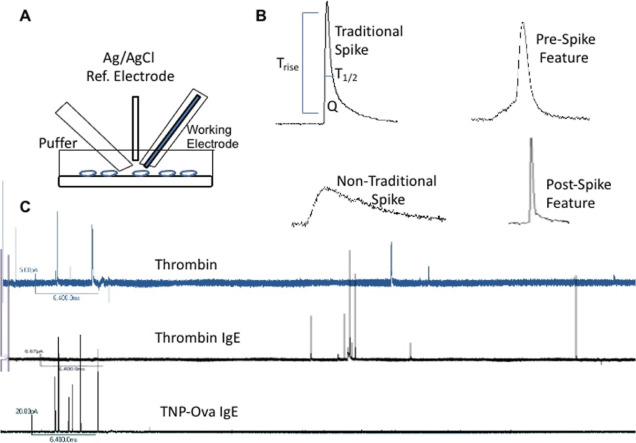
Asthma is a chronic respiratory disease initiated by a variety of factors, including allergens. During an asthma attack, the secretion of C-X-C-motif chemokine 10 (CXCL10) and chemokine ligand 5 (CCL5) causes the migration of immune cells, including platelets, into the lungs and airway. Platelets, which contain three classes of chemical messenger-filled granules, can secrete vasodilators (adenosine diphosphate and adenosine triphosphate), serotonin (a vasoconstrictor and a vasodilator, depending on the biological system), platelet-activating factor, -formylmethionyl-leucyl-phenylalanine ((fMLP), a bacterial tripeptide that stimulates chemotaxis), and chemokines (CCL5, platelet factor 4 (PF4), and C-X-C-motif chemokine 12 (CXCL12)), amplifying the asthma response. The goal of this work was threefold: (1) to understand if and how the antibody immunoglobulin E (IgE), responsible for allergic reactions, affects platelet response to the common platelet activator thrombin; (2) to understand how allergen stimulation compares to thrombin stimulation; and (3) to monitor platelet response to fMLP and the chemokines CXCL10 and CCL5. Herein, high-pressure liquid chromatography with electrochemical detection and/or carbon-fiber microelectrode amperometry measured granular secretion events from platelets with and without IgE in the presence of the allergen 2,4,6-trinitrophenyl-conjugated ovalbumin (TNP-Ova), thrombin, CXCL10, or CCL5. Platelet adhesion and chemotaxis were measured using a microfluidic platform in the presence of CXCL10, CCL5, or TNP-OVA. Results indicate that IgE binding promotes δ-granule secretion in response to platelet stimulation by thrombin in bulk. Single-cell results on platelets with exogenous IgE exposure showed significant changes in the post-membrane-granule fusion behavior during chemical messenger delivery events after thrombin stimulation. In addition, TNP-Ova allergen stimulation of IgE-exposed platelets secreted serotonin to the same extent as thrombin platelet stimulation. Enhanced adhesion to endothelial cells was demonstrated by TNP-Ova stimulation. Finally, only after incubation with IgE did platelets secrete chemical messengers in response to stimulation with fMLP, CXCL10, and CCL5.
哮喘是一种由多种因素引发的慢性呼吸道疾病,包括过敏原。在哮喘发作期间,C-X-C基序趋化因子10(CXCL10)和趋化因子配体5(CCL5)的分泌会导致包括血小板在内的免疫细胞迁移至肺部和气道。血小板含有三类充满化学信使的颗粒,可分泌血管舒张剂(二磷酸腺苷和三磷酸腺苷)、血清素(一种血管收缩剂和血管舒张剂,具体取决于生物系统)、血小板活化因子、N-甲酰甲硫氨酰-亮氨酰-苯丙氨酸((fMLP),一种刺激趋化作用的细菌三肽)以及趋化因子(CCL5、血小板因子4 (PF4) 和C-X-C基序趋化因子12 (CXCL12)),从而放大哮喘反应。这项工作的目标有三个:(1)了解负责过敏反应的抗体免疫球蛋白E(IgE)是否以及如何影响血小板对常见血小板激活剂凝血酶的反应;(2)了解过敏原刺激与凝血酶刺激相比情况如何;(3)监测血小板对fMLP以及趋化因子CXCL10和CCL5的反应。在此,采用带有电化学检测和/或碳纤维微电极安培法的高压液相色谱法,测量了在存在过敏原2,4,6-三硝基苯基偶联卵清蛋白(TNP-Ova)、凝血酶、CXCL10或CCL5的情况下,有或没有IgE的血小板的颗粒分泌事件。在存在CXCL10、CCL5或TNP-OVA的情况下,使用微流控平台测量血小板黏附和趋化作用。结果表明,IgE结合会促进δ颗粒在凝血酶对血小板的整体刺激下分泌。对外源性IgE暴露血小板的单细胞结果显示,在凝血酶刺激后的化学信使传递事件中,膜后颗粒融合行为发生了显著变化。此外,TNP-Ova过敏原对IgE暴露血小板的刺激分泌血清素的程度与凝血酶对血小板的刺激相同。TNP-Ova刺激证明了对内皮细胞黏附增强。最后,只有在与IgE孵育后,血小板才会对fMLP、CXCL10和CCL5的刺激分泌化学信使。