Calvary Health Care Kogarah, Kogarah, NSW, 2217, Australia.
IMPACCT-Improving Palliative, Aged and Chronic Care Through Clinical Research and Translation, Faculty of Health, University of Technology, Sydney, NSW, 2007, Australia.
Int J Clin Oncol. 2023 Apr;28(4):592-602. doi: 10.1007/s10147-023-02300-6. Epub 2023 Feb 23.
Cancer cachexia (CC) is a debilitating syndrome severely impacting patients' quality of life and survivorship. We aimed to investigate the health care professionals' (HCPs') experiences of dealing with CC.
Survey questions entailed definitions and guidelines, importance of CC management, clinician confidence and involvement, screening and assessment, interventions, psychosocial and food aspects. The online survey was disseminated through Australian and New Zealand palliative care, oncology, allied health and nursing organisations. Frequencies were reported using descriptive statistics accounting for response rates. Associations were examined between variables using Fisher's exact and Pearson's chi-square tests.
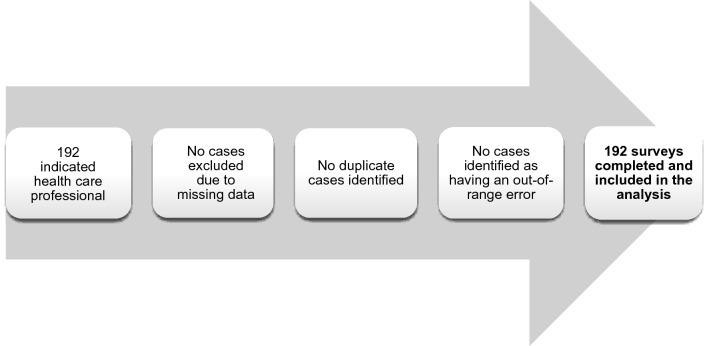
Over 90% of the respondents (n = 192) were medical doctors or nurses. Over 85% of the respondents were not aware of any guidelines, with 83% considering ≥ 10% weight loss from baseline indicative of CC. CC management was considered important by 77% of HCPs, and 55% indicated that it was part of their clinical role to assess and treat CC. In contrast, 56% of respondents were not confident about managing CC, and 93% believed formal training in CC would benefit their clinical practice. Although formal screening tools were generally not used (79%), 75% of respondents asked patients about specific symptoms. Antiemetics (80%) and nutritional counselling (86%) were most prescribed or recommended interventions, respectively.
This study underlines the deficiencies in knowledge and training of CC which has implications for patients' function, well-being and survival. HCP training and a structured approach to CC management is advocated for optimal and continued patient care.
癌症恶病质(CC)是一种使人虚弱的综合征,严重影响患者的生活质量和生存。我们旨在调查医疗保健专业人员(HCP)处理 CC 的经验。
调查问题包括定义和指南、CC 管理的重要性、临床医生的信心和参与度、筛查和评估、干预措施、心理社会和饮食方面。在线调查通过澳大利亚和新西兰的姑息治疗、肿瘤学、联合健康和护理组织进行了分发。使用描述性统计数据报告了频率,并考虑了响应率。使用 Fisher 的精确检验和 Pearson 的卡方检验检查了变量之间的关联。
超过 90%的受访者(n=192)是医生或护士。超过 85%的受访者不知道任何指南,83%的人认为基线时体重减轻≥10%表明存在 CC。77%的 HCP 认为 CC 管理很重要,55%的人表示评估和治疗 CC 是其临床角色的一部分。相比之下,56%的受访者对管理 CC 没有信心,93%的人认为 CC 的正规培训将有益于他们的临床实践。尽管通常不使用正式的筛查工具(79%),但 75%的受访者会询问患者特定的症状。止吐药(80%)和营养咨询(86%)是最常开的或推荐的干预措施。
这项研究强调了 CC 知识和培训的不足,这对患者的功能、幸福感和生存有影响。提倡对 HCP 进行培训,并采用结构化方法管理 CC,以实现最佳和持续的患者护理。