Division of Medical Oncology, Chulabhorn Hospital, Chulabhorn Royal Academy, Bangkok, Thailand.
Faculty of Medicine and Public Health, Princess Srisavangavadhana College of Medicine, Chulabhorn Royal Academy, Bangkok, Thailand.
JCO Glob Oncol. 2023 Feb;9:e2200331. doi: 10.1200/GO.22.00331.
The COVID-19 pandemic has affected public health worldwide. The efficacy and safety of COVID-19 vaccines have been evaluated in the general population; however, data on patients with malignancies are limited.
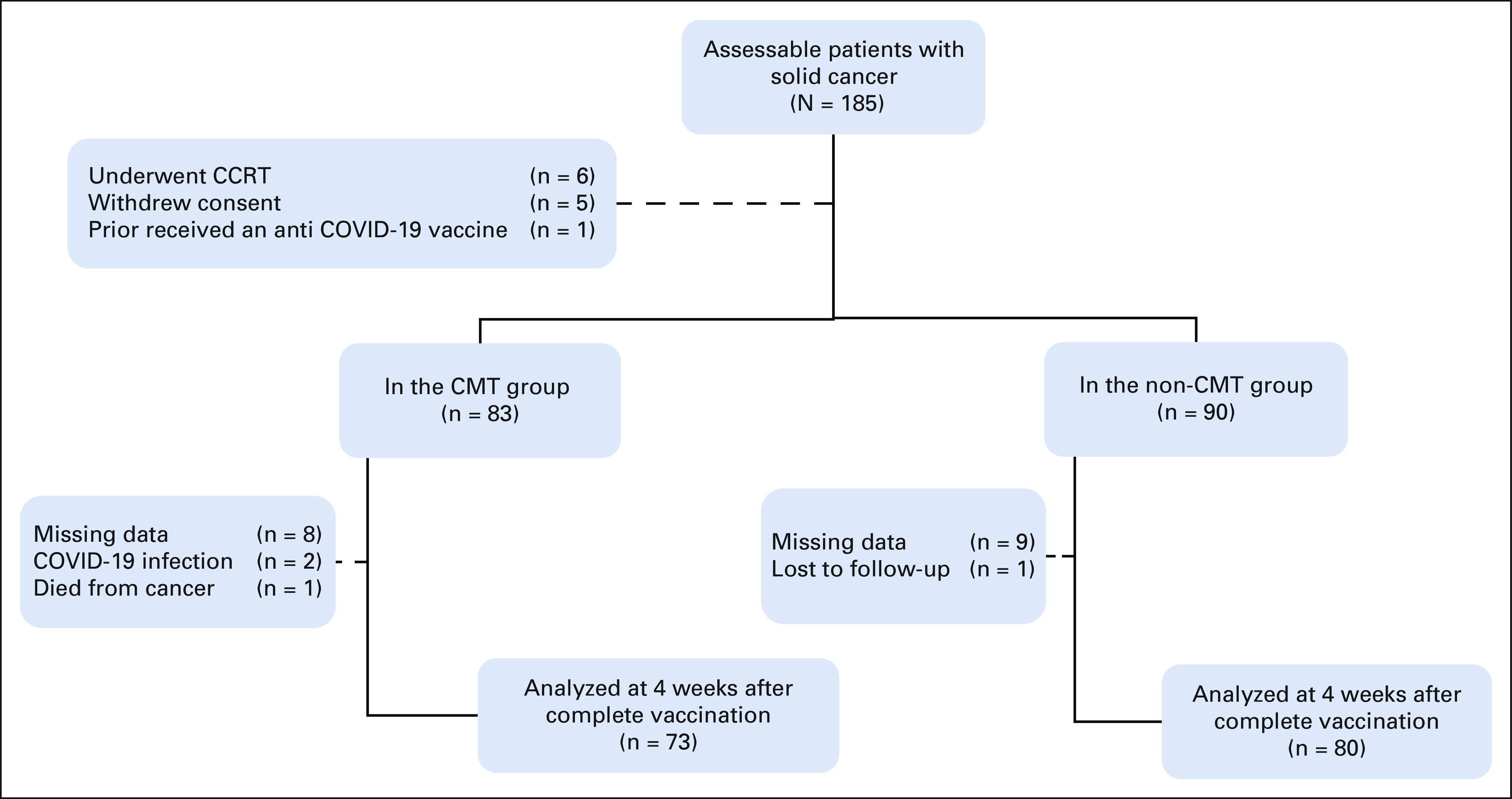
This prospective longitudinal observational cohort study was conducted between June and July 2021. Enrolled adult patients with cancer were divided into chemotherapy and nonchemotherapy groups. All participants were immunized with two doses of the ChAdOx1 nCoV-19 or CoronaVac COVID-19 vaccines. The primary outcome was a comparison of the immunogenicity (as assessed by spike protein [anti-S] immunoglobulin G [IgG] antibody titers) of two doses of COVID-19 vaccine in the chemotherapy and nonchemotherapy groups. The secondary outcomes included the anti-S IgG seroconversion rate and vaccine safety in both groups.
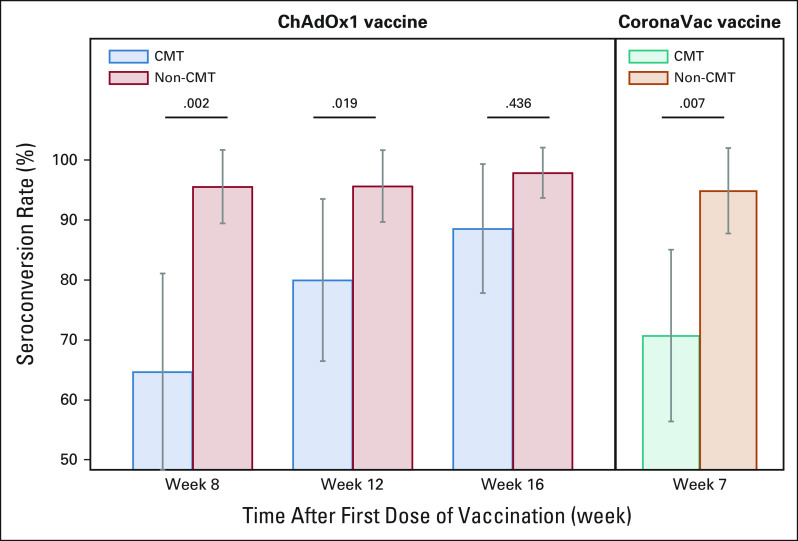
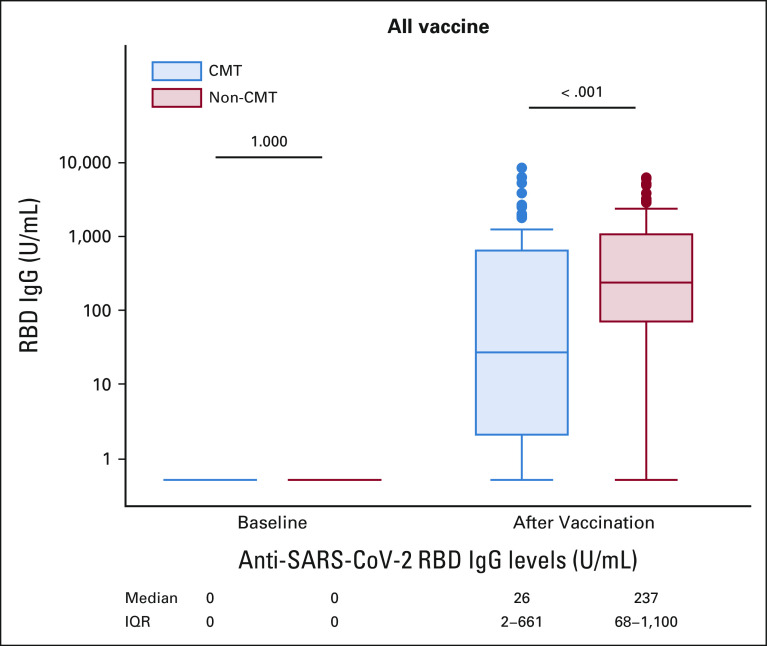
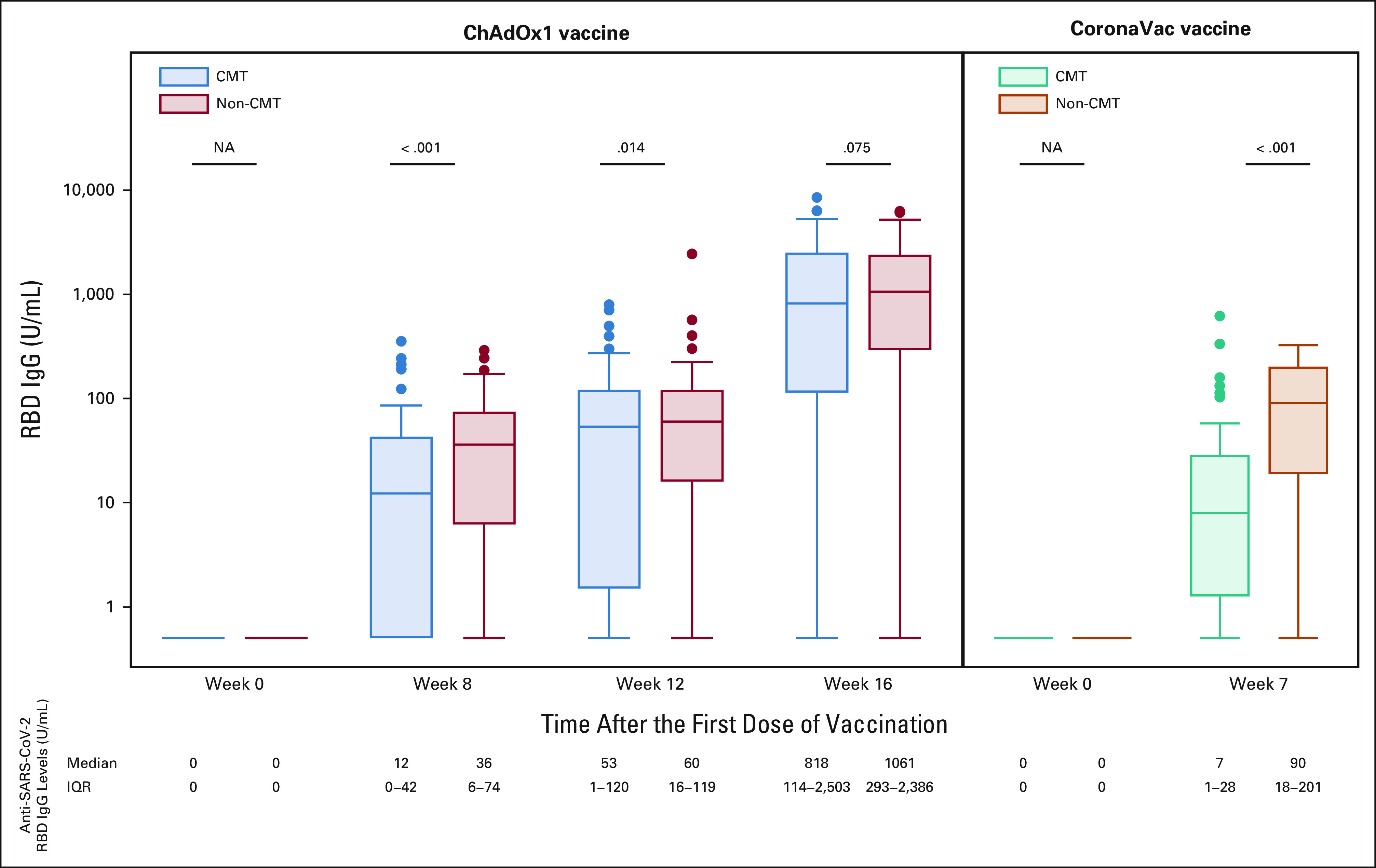
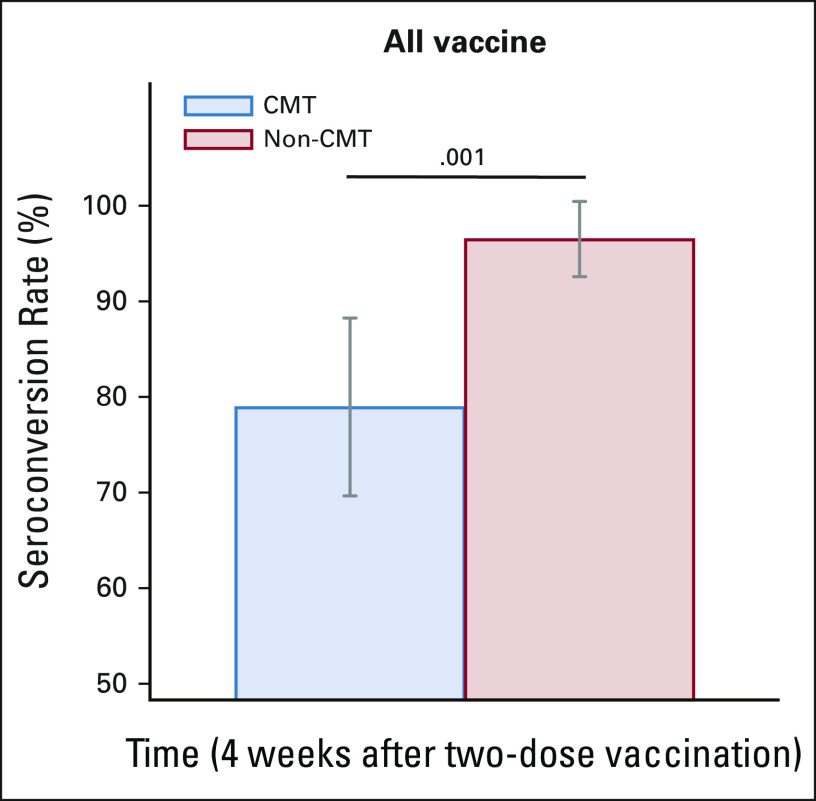
Among the 173 enrolled patients with solid cancer, after COVID-19 vaccination, the chemotherapy group had a significantly lower median anti-S IgG titer than the nonchemotherapy group (26 237 U/mL, < .001). A statistically significant difference in anti-S IgG titer was found between groups vaccinated with CoronaVac (7 90 U/mL, < .001), but no difference was found in those vaccinated with ChAdOx1 nCoV-19 (818 1061 U/mL, = .075). The anti-S IgG seroconversion rate was significantly lower in the chemotherapy group than that in the nonchemotherapy group (78.9% 96.5%, = .001). No new or serious vaccine-related adverse events were reported.
Patients with solid cancer receiving a COVID-19 vaccine while undergoing chemotherapy had lower immunogenicity responses to vaccination than those who were vaccinated while undergoing nonchemotherapy treatment. No statistically significant difference was observed in the COVID-19 vaccine safety profiles between groups.
COVID-19 大流行已对全球公共卫生造成影响。COVID-19 疫苗在普通人群中的疗效和安全性已得到评估,但癌症患者的数据有限。
这是一项于 2021 年 6 月至 7 月进行的前瞻性纵向观察性队列研究。纳入的成年癌症患者分为化疗组和非化疗组。所有参与者均接种两剂 ChAdOx1 nCoV-19 或 CoronaVac COVID-19 疫苗。主要结局是比较化疗组和非化疗组两剂 COVID-19 疫苗的免疫原性(通过刺突蛋白[抗-S]免疫球蛋白 G[IgG]抗体滴度评估)。次要结局包括两组的抗-S IgG 血清转化率和疫苗安全性。
在 173 例纳入的实体瘤患者中,COVID-19 疫苗接种后,化疗组的中位抗-S IgG 滴度明显低于非化疗组(26 237 U/mL, <.001)。接种 CoronaVac 的两组之间抗-S IgG 滴度存在统计学显著差异(7 90 U/mL, <.001),但接种 ChAdOx1 nCoV-19 的两组之间无差异(818 1061 U/mL, =.075)。化疗组的抗-S IgG 血清转化率明显低于非化疗组(78.9% 96.5%, =.001)。未报告新的或严重的疫苗相关不良事件。
正在接受化疗的实体瘤患者接种 COVID-19 疫苗后的免疫反应低于正在接受非化疗治疗的患者。两组的 COVID-19 疫苗安全性特征无统计学显著差异。