Elston Katherine M, Phillips Laila E, Leonard Sean P, Young Eleanor, Holley Jo-Anne C, Ahsanullah Tasneem, McReynolds Braydin, Moran Nancy A, Barrick Jeffrey E
Department of Molecular Biosciences, The University of Texas at Austin, Austin, TX 78712, USA.
Department of Integrative Biology, The University of Texas at Austin, Austin, TX 78712, USA.
bioRxiv. 2023 Feb 16:2023.02.15.528778. doi: 10.1101/2023.02.15.528778.
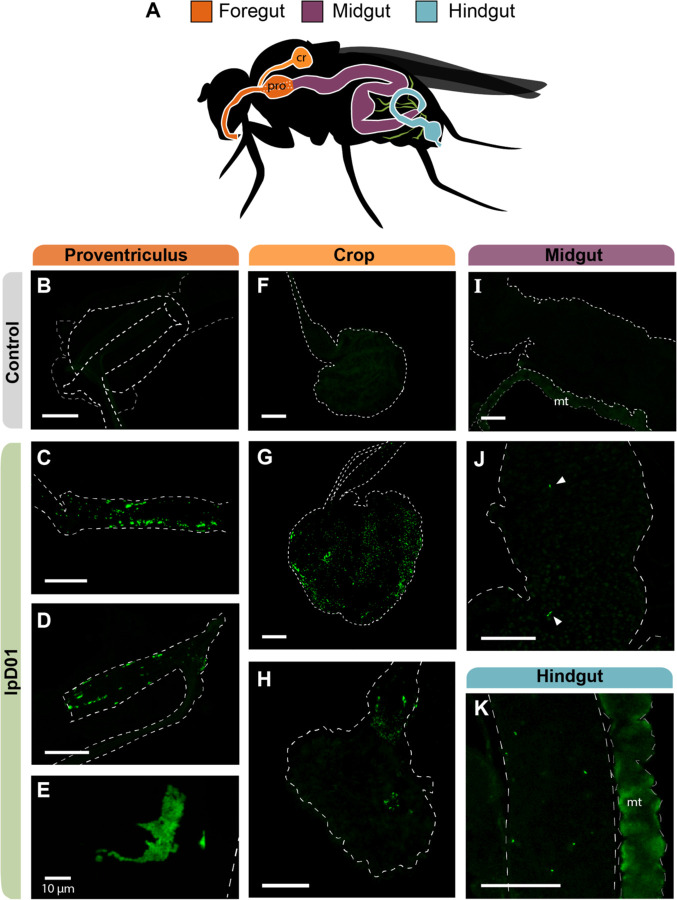
Toolkits of plasmids and genetic parts streamline the process of assembling DNA constructs and engineering microbes. Many of these kits were designed with specific industrial or laboratory microbes in mind. For researchers interested in non-model microbial systems, it is often unclear which tools and techniques will function in newly isolated strains. To address this challenge, we designed the Pathfinder toolkit for quickly determining the compatibility of a bacterium with different plasmid components. Pathfinder plasmids combine three different broad-host-range origins of replication with multiple antibiotic resistance cassettes and reporters, so that sets of parts can be rapidly screened through multiplex conjugation. We first tested these plasmids in , a strain of that colonizes insects, and a isolate from leafhoppers. Then, we used the Pathfinder plasmids to engineer previously unstudied bacteria from the family that were isolated from several fly species. Engineered strains were able to colonize and could be visualized in fly guts. are common and abundant in the guts of wild-caught flies but have not been included in laboratory studies of how the microbiome affects fly health. Thus, this work provides foundational genetic tools for studying new host-associated microbes, including bacteria that are a key constituent of the gut microbiome of a model insect species.
To fully understand how microbes have evolved to interact with their environments, one must be able to modify their genomes. However, it can be difficult and laborious to discover which genetic tools and approaches work for a new isolate. Bacteria from the recently described family are common in the microbiomes of insects. We developed the Pathfinder plasmid toolkit for testing the compatibility of different genetic parts with newly cultured bacteria. We demonstrate its utility by engineering strains isolated from flies to express fluorescent proteins and characterizing how they colonize the gut. are widespread in in the wild but have not been included in laboratory studies examining how the gut microbiome affects fly nutrition, health, and longevity. Our work establishes a path for genetic studies aimed at understanding and altering interactions between these and other newly isolated bacteria and their hosts.
质粒和基因元件工具包简化了DNA构建体组装和微生物工程改造的过程。这些工具包中的许多都是针对特定的工业或实验室微生物设计的。对于对非模式微生物系统感兴趣的研究人员来说,通常不清楚哪些工具和技术在新分离的菌株中会起作用。为应对这一挑战,我们设计了探索者工具包,用于快速确定细菌与不同质粒成分的兼容性。探索者质粒将三种不同的广泛宿主范围的复制起点与多个抗生素抗性盒和报告基因结合在一起,这样就可以通过多重接合快速筛选元件组。我们首先在一种定殖于昆虫的菌株以及一种从叶蝉中分离出的菌株中测试了这些质粒。然后,我们使用探索者质粒对从几种果蝇物种中分离出的、此前未被研究过的伯克霍尔德菌科细菌进行工程改造。经过工程改造的菌株能够定殖于果蝇,并能在果蝇肠道中被观察到。伯克霍尔德菌在野生捕获的果蝇肠道中很常见且数量众多,但尚未被纳入关于果蝇微生物组如何影响果蝇健康的实验室研究中。因此,这项工作为研究新的宿主相关微生物提供了基础遗传工具,包括作为模式昆虫物种肠道微生物组关键组成部分的细菌。
为了全面了解微生物如何进化以与它们的环境相互作用,必须能够修改它们的基因组。然而,发现哪些遗传工具和方法对新分离的菌株有效可能既困难又费力。最近描述的伯克霍尔德菌科细菌在昆虫微生物组中很常见。我们开发了探索者质粒工具包,用于测试不同基因元件与新培养细菌的兼容性。我们通过对从果蝇中分离出的菌株进行工程改造以表达荧光蛋白,并表征它们如何定殖于果蝇肠道,证明了其效用。伯克霍尔德菌在野生果蝇中广泛存在,但尚未被纳入研究肠道微生物组如何影响果蝇营养、健康和寿命的实验室研究中。我们的工作为旨在理解和改变这些以及其他新分离细菌与其宿主之间相互作用的遗传研究开辟了道路。