Ingeniería en Biotecnología, Facultad de Ingeniería y Ciencias Aplicadas, Universidad de Las Américas, Quito 170125, Ecuador.
Grupo de Bio-Quimioinformática, Universidad de Las Américas, Quito 170125, Ecuador.
Mar Drugs. 2023 Jan 31;21(2):104. doi: 10.3390/md21020104.
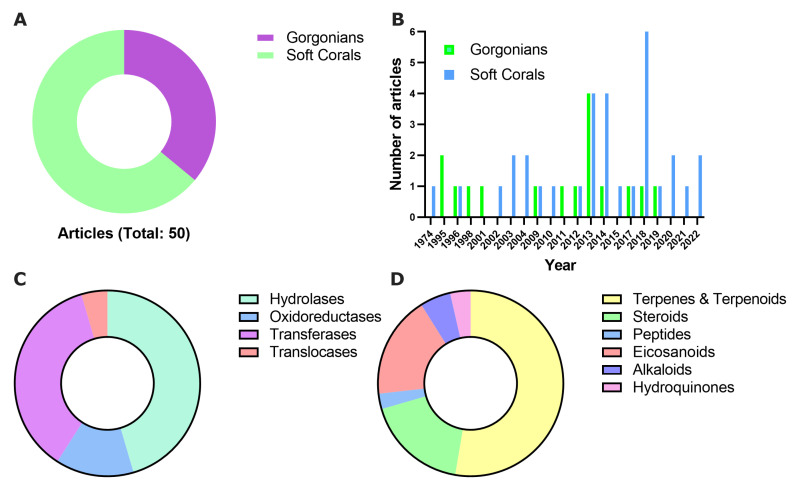
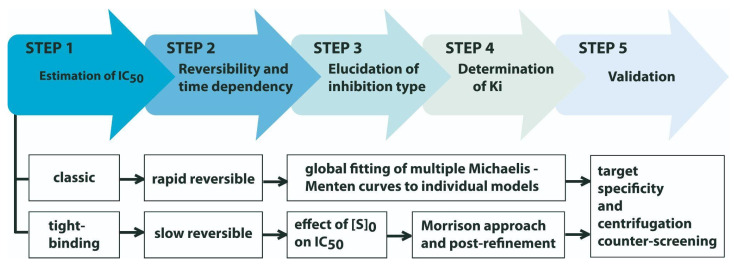
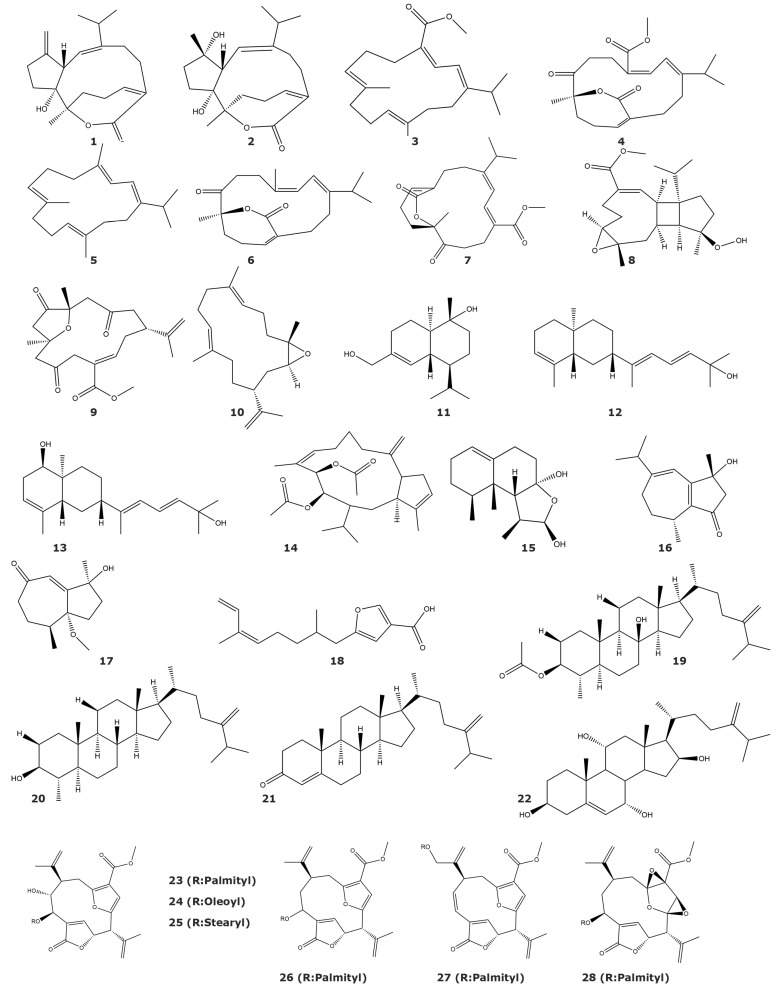
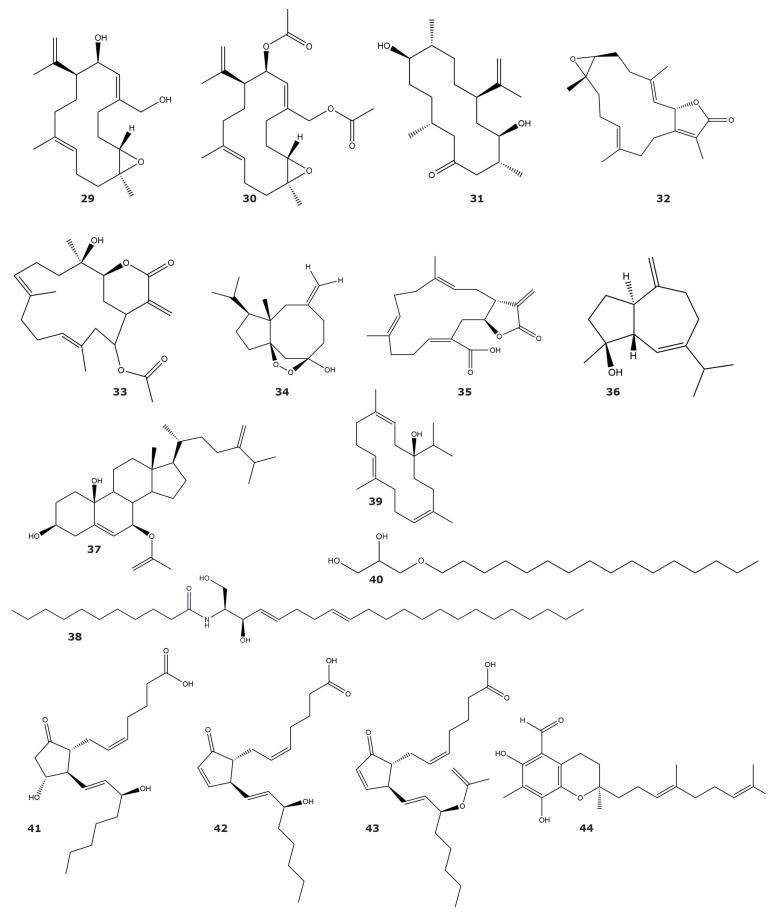
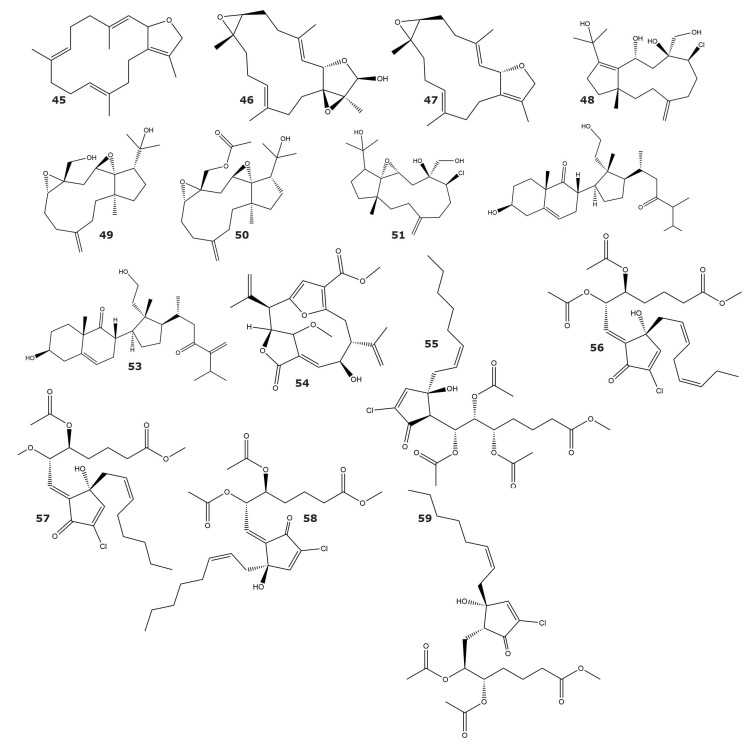
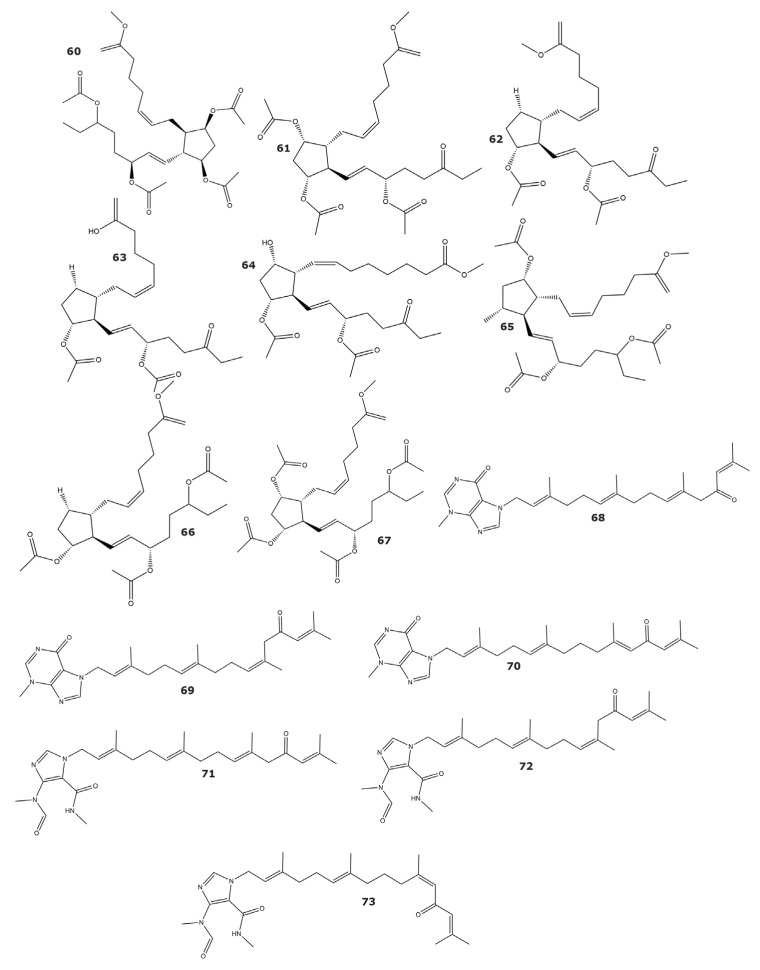
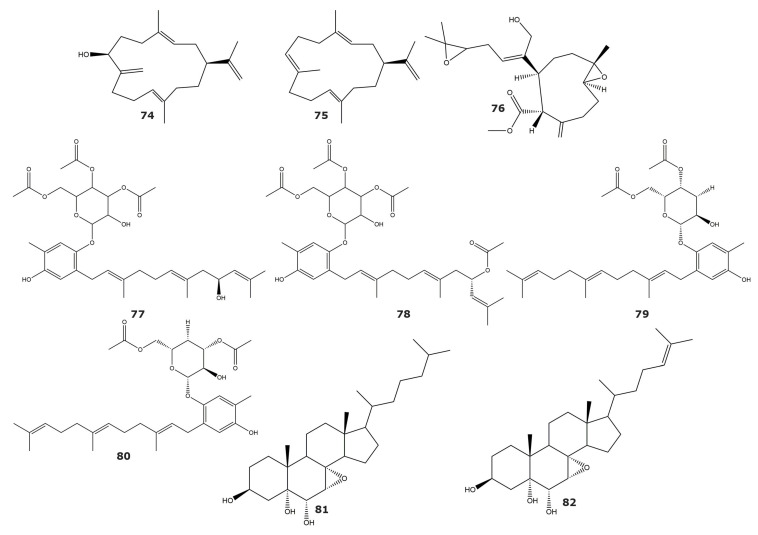
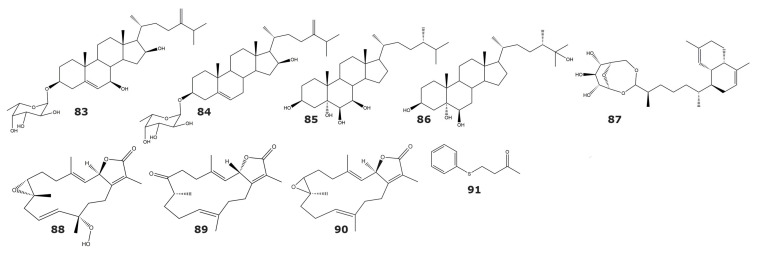
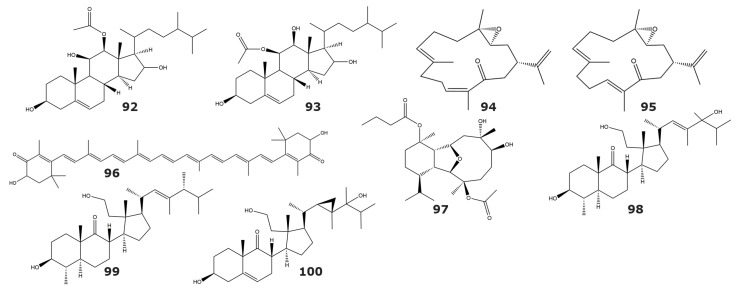
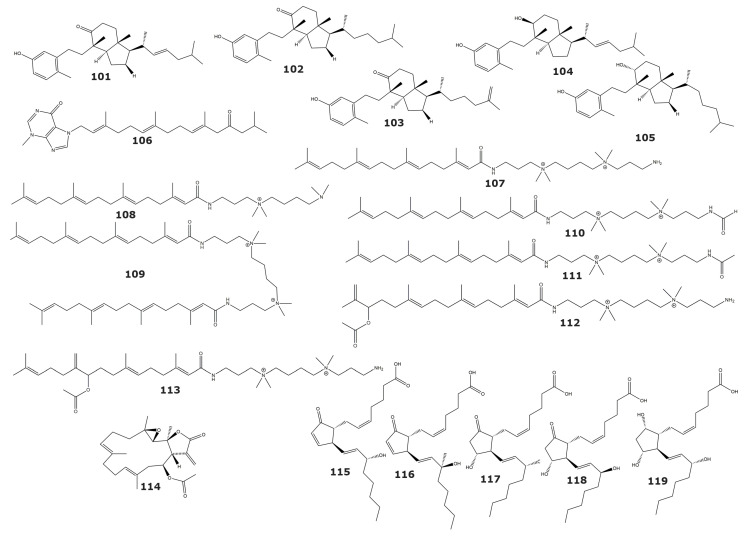
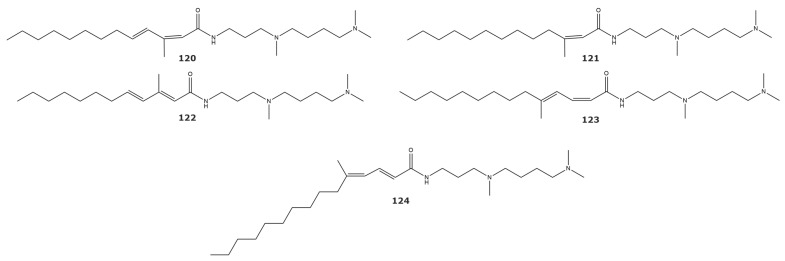
For decades, gorgonians and soft corals have been considered promising sources of bioactive compounds, attracting the interest of scientists from different fields. As the most abundant bioactive compounds within these organisms, terpenoids, steroids, and alkaloids have received the highest coverage in the scientific literature. However, enzyme inhibitors, a functional class of bioactive compounds with high potential for industry and biomedicine, have received much less notoriety. Thus, we revised scientific literature (1974-2022) on the field of marine natural products searching for enzyme inhibitors isolated from these taxonomic groups. In this review, we present representative enzyme inhibitors from an enzymological perspective, highlighting, when available, data on specific targets, structures, potencies, mechanisms of inhibition, and physiological roles for these molecules. As most of the characterization studies for the new inhibitors remain incomplete, we also included a methodological section presenting a general strategy to face this goal by accomplishing STRENDA (Standards for Reporting Enzymology Data) project guidelines.
几十年来,海葵和软珊瑚一直被认为是有前途的生物活性化合物来源,吸引了来自不同领域的科学家的关注。作为这些生物体中最丰富的生物活性化合物,萜类化合物、类固醇和生物碱在科学文献中得到了最高的报道。然而,酶抑制剂,一类具有高工业和生物医学应用潜力的生物活性化合物,却鲜为人知。因此,我们查阅了 1974 年至 2022 年的海洋天然产物科学文献,寻找从这些分类群中分离得到的酶抑制剂。在这篇综述中,我们从酶学的角度介绍了有代表性的酶抑制剂,强调了可用时针对这些分子的特定靶点、结构、活性、抑制机制和生理作用的数据。由于大多数新抑制剂的表征研究仍不完整,我们还包括了一个方法学部分,介绍了一种通过完成 STRENDA(酶学数据报告标准)项目指南来实现这一目标的一般策略。