Wan Guoguo, Chen Zhiwei, Lei Lei, Geng Xiaoyu, Zhang Yi, Yang Congwen, Cao Wenfu, Pan Zheng
Chongqing Key Laboratory of Traditional Chinese Medicine for Prevention and Cure of Metabolic Diseases, College of Traditional Chinese Medicine, Chongqing Medical University, No.1, Yixueyuan Road, Yuzhong District, Chongqing, 400016, People's Republic of China.
Centre for Academic Inheritance and Innovation of Ethnic Medicine, Chengdu University of Traditional Chinese Medicine, Chengdu, 611130, China.
Chin Med. 2023 Feb 24;18(1):20. doi: 10.1186/s13020-023-00723-x.
Hepatic fibrosis is characterized by the excessive deposition of extracellular matrix (ECM) which is mainly secreted by activated hepatic stellate cells (HSCs). Lamiophlomis rotata (L. rotata) was recorded to treat jaundice in the traditional Tibetan medical system with the potential of hepatoprotection. However, the bioactivities and the possible mechanism of L. rotata on hepatic fibrosis is still largely unknown.
To investigate the anti-hepatic fibrosis effects of bioactivities in L. rotata and the probable mechanism of action.
Herein, total polyphenolic glycosides of L. rotata (TPLR) was purified with the selectivity adsorption resin and was analyzed by ultrahigh-performance liquid chromatography coupled with time-of-flight mass spectrometry (UPLC-Q/TOF/MS). The anti-hepatic fibrosis effect of TPLR was evaluated by carbon tetrachloride (CCl)-induced liver fibrosis, and was evaluated with the apoptosis of activated HSCs.
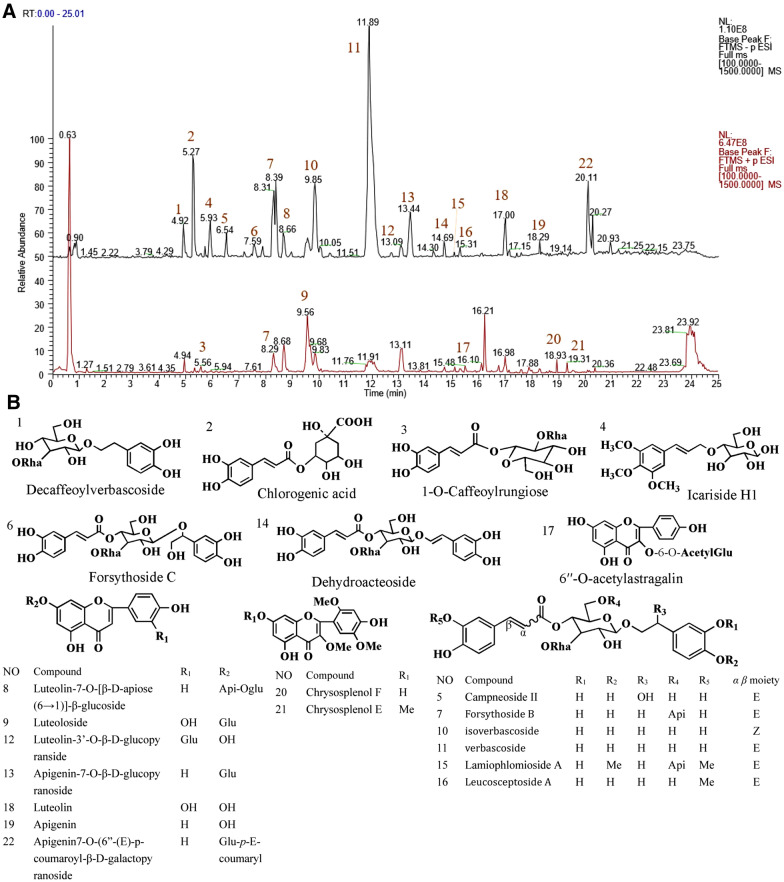
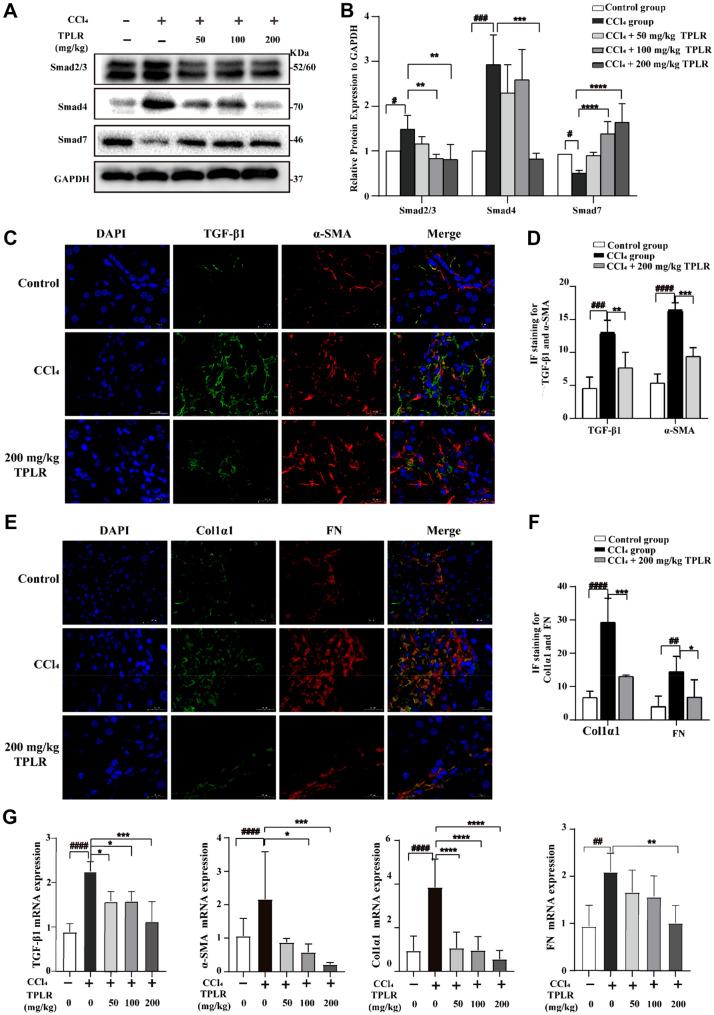
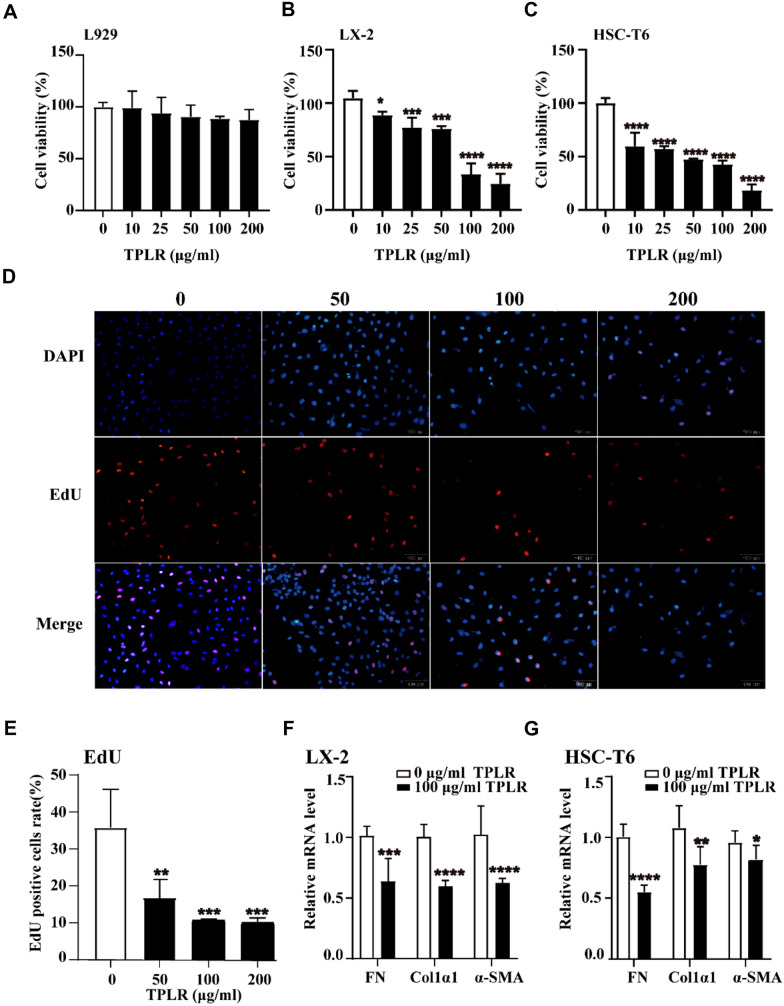
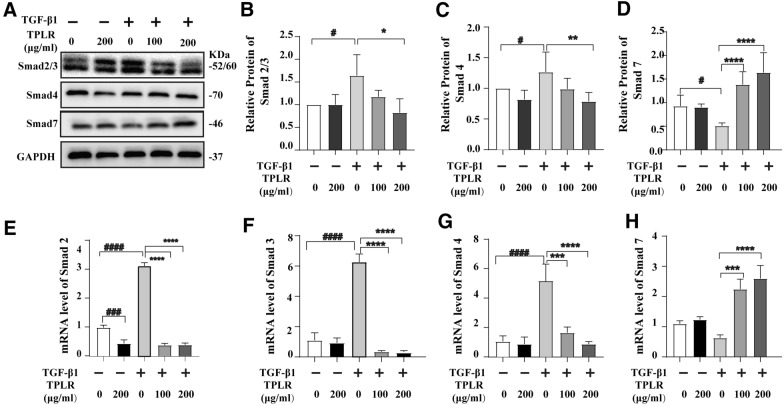
In total, sixteen compounds, including nine phenylpropanoids and six flavonoids, were identified in the UPLC-TOF-MS profile of the extracts. TPLR significantly ameliorated hepatic fibrosis in CCl-induced mice and inhibited HSCs proliferation, Moreover, TPLR notably increased the apoptosis of activated HSCs along with up-regulated caspase-3, -8, -9, and -10. Furthermore, TPLR inhibited TGF-β/Smad pathway ameliorating hepatic fibrosis though downregulation the expression of Smad2/3, Smad4, and upregulation the expression of Smad7 in vivo and in vitro. Simultaneously, the expression of fibronectin (FN), α-smooth muscle actin (α-SMA), and Collagen I (Col1α1) were decreased in tissues and in cells with TPLR administration.
These results initially demonstrated that TPLR has the potential to ameliorate hepatic fibrosis through an apoptosis mechanism via TGF-β/Smad signaling pathway.
肝纤维化的特征是细胞外基质(ECM)过度沉积,而ECM主要由活化的肝星状细胞(HSCs)分泌。在传统藏医学体系中,麻花艽被记载可治疗黄疸,具有肝脏保护潜力。然而,麻花艽对肝纤维化的生物活性及可能机制仍 largely 未知。
探讨麻花艽生物活性的抗肝纤维化作用及其可能的作用机制。
在此,用选择性吸附树脂纯化麻花艽总多酚苷(TPLR),并通过超高效液相色谱-飞行时间质谱联用(UPLC-Q/TOF/MS)进行分析。通过四氯化碳(CCl)诱导的肝纤维化评估 TPLR 的抗肝纤维化作用,并通过活化 HSCs 的凋亡进行评估。
在提取物的 UPLC-TOF-MS 图谱中总共鉴定出 16 种化合物,包括 9 种苯丙烷类化合物和 6 种黄酮类化合物。TPLR 显著改善 CCl 诱导小鼠的肝纤维化并抑制 HSCs 增殖,此外,TPLR 显著增加活化 HSCs 的凋亡,同时上调 caspase-3、-8、-9 和 -10。此外,TPLR 在体内和体外通过下调 Smad2/3、Smad4 的表达以及上调 Smad7 的表达来抑制 TGF-β/Smad 通路,从而改善肝纤维化。同时,给予 TPLR 后,组织和细胞中纤连蛋白(FN)、α-平滑肌肌动蛋白(α-SMA)和 I 型胶原(Col1α1)的表达降低。
这些结果初步表明,TPLR 有潜力通过 TGF-β/Smad 信号通路的凋亡机制改善肝纤维化。