Department of Clinical Biochemistry and Pharmacology, Ben-Gurion University of the Negev, Beer-Sheva 8410501, Israel.
Department of Physiology and Cell Biology, Ben-Gurion University of the Negev, Beer-Sheva 84710501, Israel.
Biomolecules. 2023 Feb 16;13(2):376. doi: 10.3390/biom13020376.
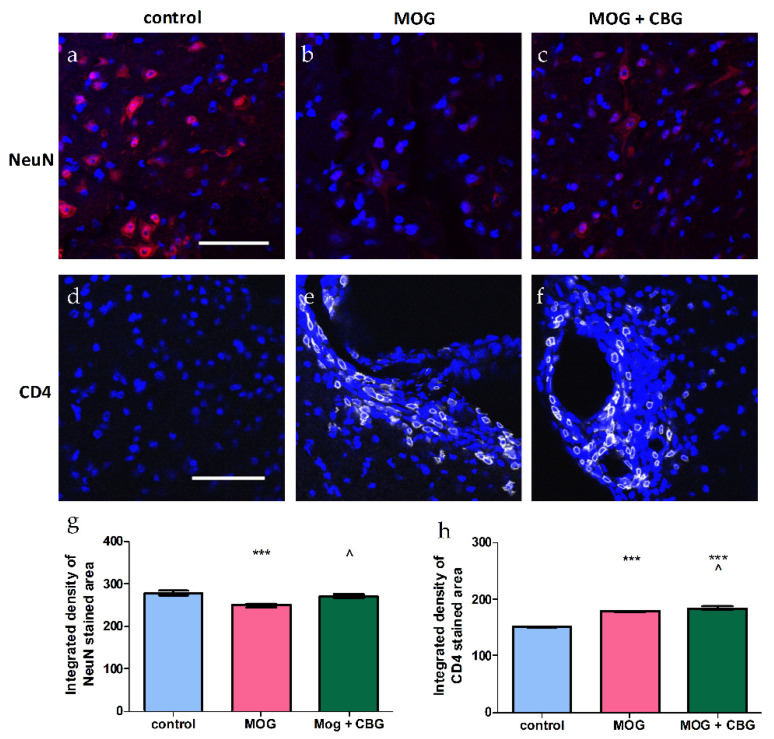
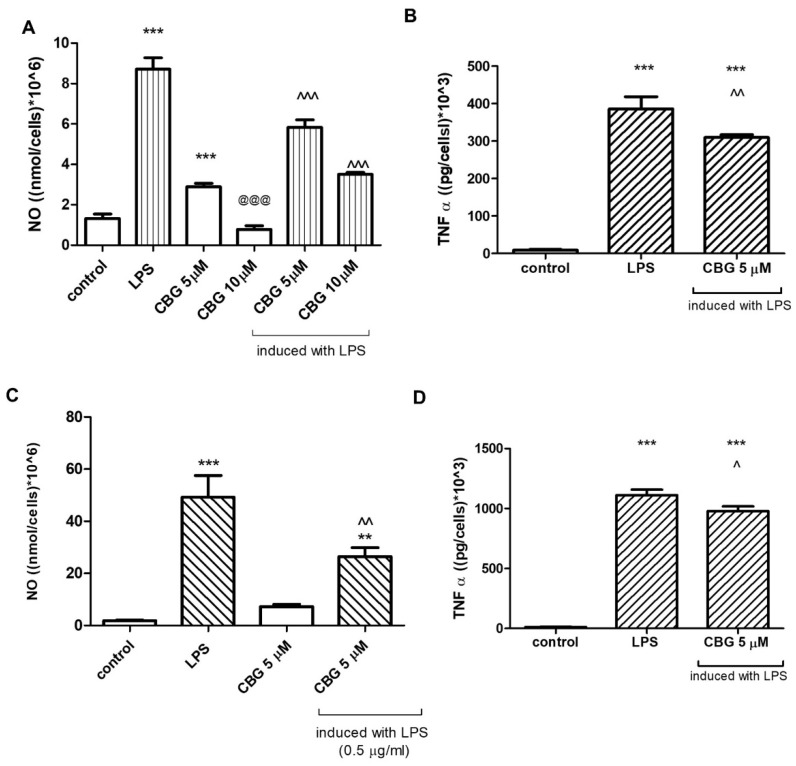
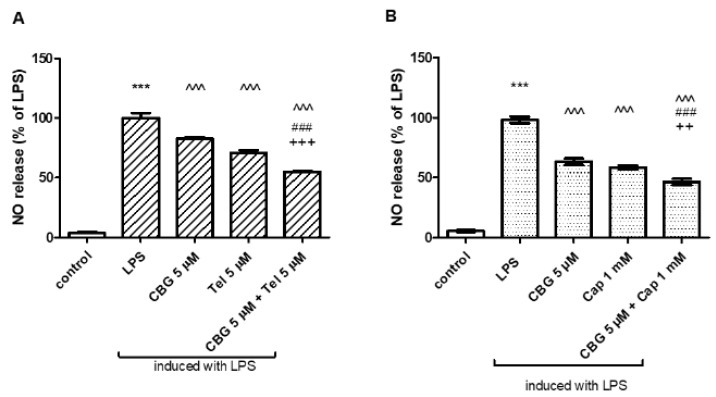
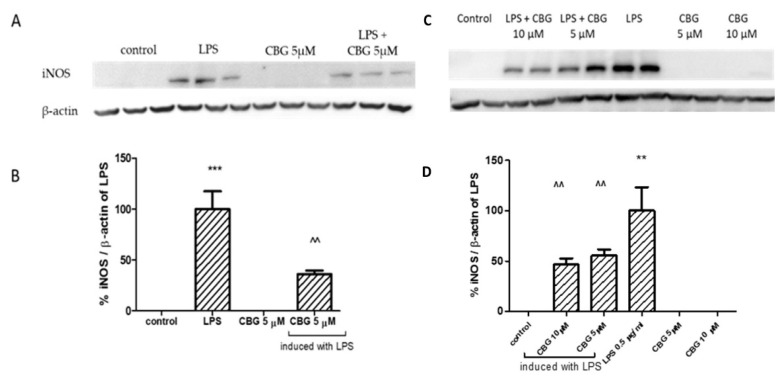
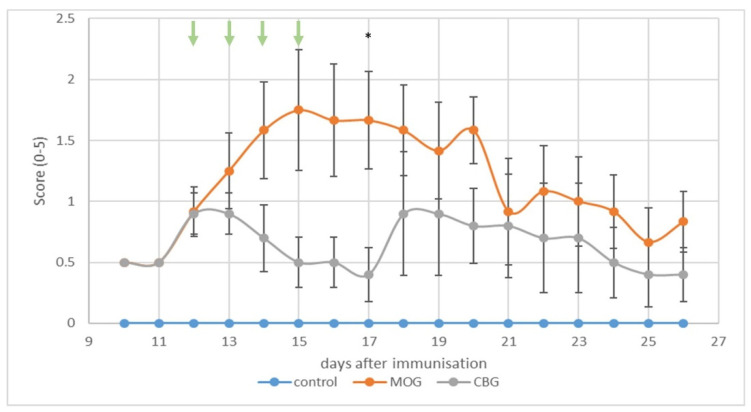
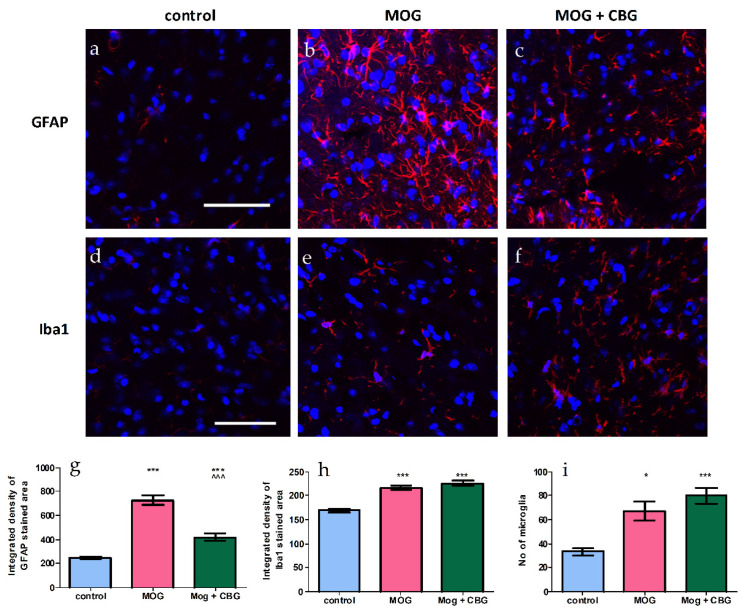
Multiple sclerosis (MS) is a widespread chronic neuroinflammatory and neurodegenerative disease. Microglia play a crucial role in the pathogenesis of MS via the release of cytokines and reactive oxygen species, e.g., nitric oxide. Research involving the role of phytocannabinoids in neuroinflammation is currently receiving much attention. Cannabigerol is a main phytocannabinoid, which has attracted significant pharmacological interest due to its non-psychotropic nature. In this research, we studied the effects of cannabigerol on microglial inflammation in vitro, followed by an in vivo study. Cannabigerol attenuated the microglial production of nitric oxide in BV2 microglia and primary glial cells; concomitant treatment of the cells with cannabigerol and telmisartan (a neuroprotective angiotensin receptor blocker) decreased nitric oxide production additively. Inducible nitric oxide synthase (iNOS) expression was also reduced by cannabigerol. Moreover, tumor necrosis factor-α (TNF-α), a major cytokine involved in MS, was significantly reduced by cannabigerol in both cell cultures. Next, we studied the effects of cannabigerol in vivo using a mice model of MS, experimental autoimmune encephalomyelitis (EAE). The clinical scores of EAE mice were attenuated upon cannabigerol treatment; additionally, lumbar sections of EAE mice showed enhanced neuronal loss (relative to control mice), which was restored by cannabigerol treatment. Altogether, the set of experiments presented in this work indicates that cannabigerol possesses an appealing therapeutic potential for the treatment of MS.
多发性硬化症(MS)是一种广泛存在的慢性神经炎症和神经退行性疾病。小胶质细胞通过释放细胞因子和活性氧物质(如一氧化氮)在 MS 的发病机制中发挥关键作用。目前,涉及植物大麻素在神经炎症中的作用的研究受到了广泛关注。大麻萜酚是一种主要的植物大麻素,由于其非精神活性性质,引起了人们极大的药理学兴趣。在这项研究中,我们研究了大麻萜酚对体外小胶质细胞炎症的影响,随后进行了体内研究。大麻萜酚可减轻 BV2 小胶质细胞和原代神经胶质细胞中一氧化氮的产生;同时用大麻萜酚和替米沙坦(一种神经保护血管紧张素受体阻滞剂)处理细胞可使一氧化氮产生呈累加性减少。大麻萜酚还可降低诱导型一氧化氮合酶(iNOS)的表达。此外,肿瘤坏死因子-α(TNF-α)是 MS 中一种主要的细胞因子,在细胞培养物中也被大麻萜酚显著降低。接下来,我们使用 MS 动物模型,实验性自身免疫性脑脊髓炎(EAE),在体内研究了大麻萜酚的作用。EAE 小鼠的临床评分在大麻萜酚治疗后减轻;此外,EAE 小鼠的腰段切片显示神经元丢失增加(相对于对照小鼠),而大麻萜酚治疗可恢复这种情况。总之,本工作中进行的一系列实验表明,大麻萜酚具有治疗 MS 的诱人治疗潜力。