Mangiatordi Giuseppe Felice, Cavalluzzi Maria Maddalena, Delre Pietro, Lamanna Giuseppe, Lumuscio Maria Cristina, Saviano Michele, Majoral Jean-Pierre, Mignani Serge, Duranti Andrea, Lentini Giovanni
Institute of Crystallography, National Research Council of Italy, Via G. Amendola 122/O, 70126 Bari, Italy.
Department of Pharmacy-Pharmaceutical Sciences, University of Bari Aldo Moro, Via E. Orabona 4, 70125 Bari, Italy.
Biomedicines. 2023 Feb 6;11(2):469. doi: 10.3390/biomedicines11020469.
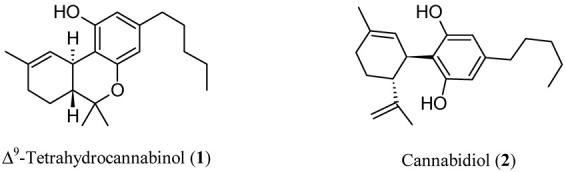
The endocannabinoid system (ECS) plays a very important role in numerous physiological and pharmacological processes, such as those related to the central nervous system (CNS), including learning, memory, emotional processing, as well pain control, inflammatory and immune response, and as a biomarker in certain psychiatric disorders. Unfortunately, the half-life of the natural ligands responsible for these effects is very short. This perspective describes the potential role of the inhibitors of the enzymes fatty acid amide hydrolase (FAAH) and monoacylglycerol lipase (MGL), which are mainly responsible for the degradation of endogenous ligands in psychic disorders and related pathologies. The examination was carried out considering both the impact that the classical exogenous ligands such as Δ-tetrahydrocannabinol (THC) and (-)-trans-cannabidiol (CBD) have on the ECS and through an analysis focused on the possibility of predicting the potential toxicity of the inhibitors before they are subjected to clinical studies. In particular, cardiotoxicity (hERG liability), probably the worst early adverse reaction studied during clinical studies focused on acute toxicity, was predicted, and some of the most used and robust metrics available were considered to select which of the analyzed compounds could be repositioned as possible oral antipsychotics.
内源性大麻素系统(ECS)在众多生理和药理过程中发挥着非常重要的作用,例如与中枢神经系统(CNS)相关的过程,包括学习、记忆、情绪处理以及疼痛控制、炎症和免疫反应,还作为某些精神疾病的生物标志物。不幸的是,负责这些作用的天然配体的半衰期非常短。本文阐述了脂肪酸酰胺水解酶(FAAH)和单酰甘油脂肪酶(MGL)抑制剂的潜在作用,这两种酶主要负责精神疾病及相关病理中内源性配体的降解。研究既考虑了经典外源性配体如Δ-四氢大麻酚(THC)和(-)-反式大麻二酚(CBD)对ECS的影响,也通过分析来预测抑制剂在进行临床研究之前的潜在毒性。特别是预测了心脏毒性(hERG易感性),这可能是临床研究中针对急性毒性所研究的最严重的早期不良反应,并且考虑了一些最常用且可靠的指标,以选择哪些被分析的化合物可以重新定位为可能的口服抗精神病药物。