Division of Cardiovascular Surgery, The Hospital for Sick Children, Toronto, ON M5G 1X8, Canada.
Program in Translational Medicine, SickKids Research Institute, Toronto, ON M5G 0A4, Canada.
Int J Mol Sci. 2023 Feb 5;24(4):3162. doi: 10.3390/ijms24043162.
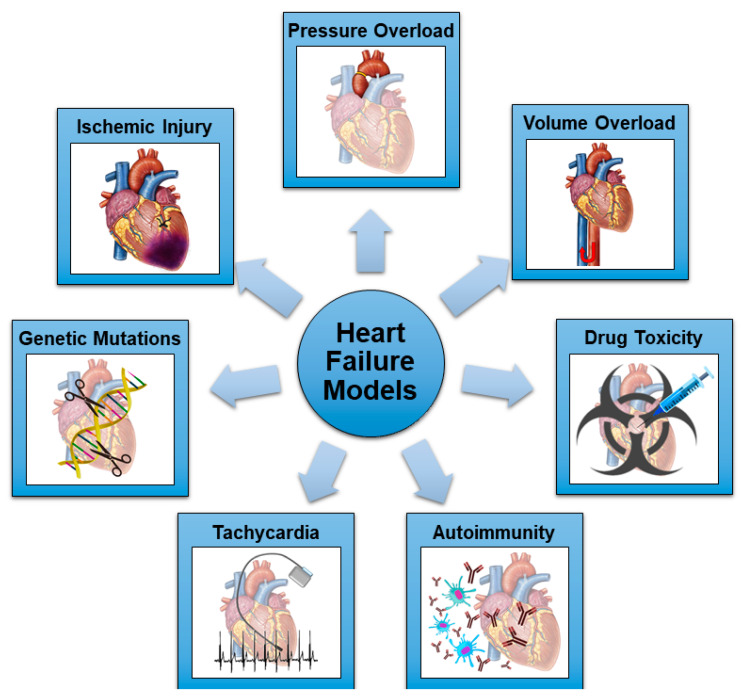
Even with modern therapy, patients with heart failure only have a 50% five-year survival rate. To improve the development of new therapeutic strategies, preclinical models of disease are needed to properly emulate the human condition. Determining the most appropriate model represents the first key step for reliable and translatable experimental research. Rodent models of heart failure provide a strategic compromise between human in vivo similarity and the ability to perform a larger number of experiments and explore many therapeutic candidates. We herein review the currently available rodent models of heart failure, summarizing their physiopathological basis, the timeline of the development of ventricular failure, and their specific clinical features. In order to facilitate the future planning of investigations in the field of heart failure, a detailed overview of the advantages and possible drawbacks of each model is provided.
即使采用现代疗法,心力衰竭患者的五年生存率也只有 50%。为了改进新治疗策略的开发,需要疾病的临床前模型来适当模拟人类的状况。确定最合适的模型是可靠和可转化的实验研究的第一步关键步骤。心力衰竭的啮齿动物模型在人类体内相似性和进行更多实验以及探索许多治疗候选物的能力之间提供了一种战略折衷。本文综述了现有的心力衰竭啮齿动物模型,总结了它们的生理病理基础、心室衰竭发展的时间进程及其特定的临床特征。为了方便未来心力衰竭领域的研究规划,本文详细介绍了每种模型的优缺点。