Division of Endocrinology and Metabolism, Department of Internal Medicine, Hallym University Sacred Heart Hospital, Hallym University College of Medicine, Anyang 14068, Republic of Korea.
Division of Endocrinology and Metabolism, Department of Internal Medicine, Korea University College of Medicine, Seoul 02841, Republic of Korea.
Int J Mol Sci. 2023 Feb 8;24(4):3384. doi: 10.3390/ijms24043384.
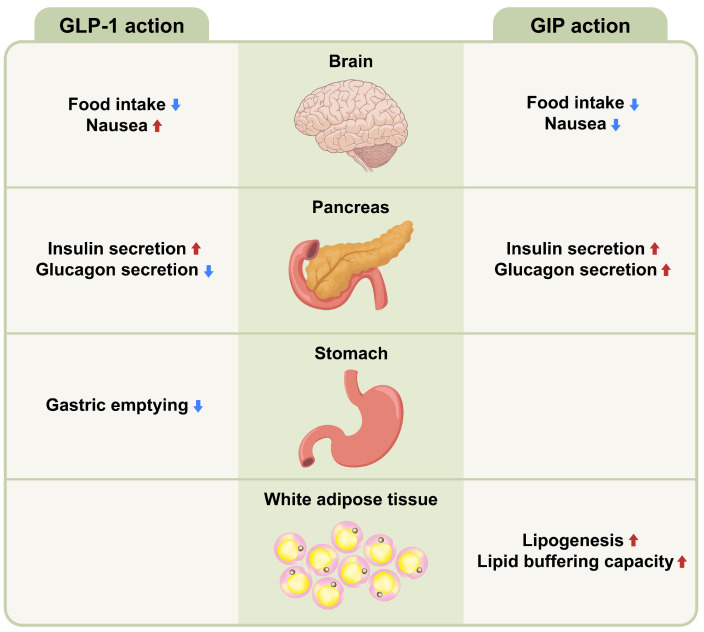
The brain, particularly the hypothalamus and brainstem, monitors and integrates circulating metabolic signals, including gut hormones. Gut-brain communication is also mediated by the vagus nerve, which transmits various gut-derived signals. Recent advances in our understanding of molecular gut-brain communication promote the development of next-generation anti-obesity medications that can safely achieve substantial and lasting weight loss comparable to metabolic surgery. Herein, we comprehensively review the current knowledge about the central regulation of energy homeostasis, gut hormones involved in the regulation of food intake, and clinical data on how these hormones have been applied to the development of anti-obesity drugs. Insight into and understanding of the gut-brain axis may provide new therapeutic perspectives for the treatment of obesity and diabetes.
大脑,特别是下丘脑和脑干,监测和整合循环代谢信号,包括肠道激素。肠道-大脑通讯也通过迷走神经介导,迷走神经传递各种源自肠道的信号。我们对分子肠道-大脑通讯的理解的最新进展促进了下一代抗肥胖药物的开发,这些药物可以安全地实现与代谢手术相当的大量和持久的体重减轻。在此,我们全面回顾了关于能量平衡的中枢调节、参与调节食物摄入的肠道激素以及这些激素在开发抗肥胖药物方面的临床数据的现有知识。对肠道-大脑轴的深入了解和理解可能为肥胖和糖尿病的治疗提供新的治疗视角。