Department of Neonatology and Pediatric Intensive Care, Children's Hospital, University of Bonn, 53127 Bonn, Germany.
Deutsche Zentrum für Neurodegenerative Erkrankungen (DZNE), 53127 Bonn, Germany.
Int J Mol Sci. 2023 Feb 10;24(4):3598. doi: 10.3390/ijms24043598.
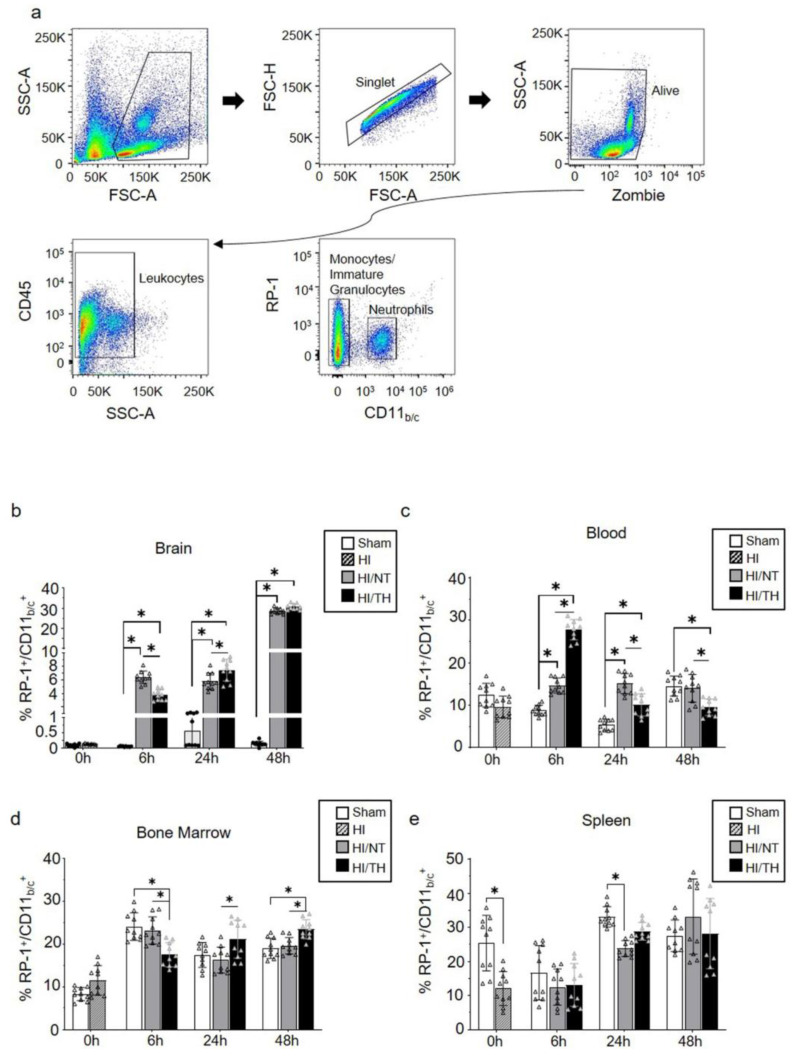
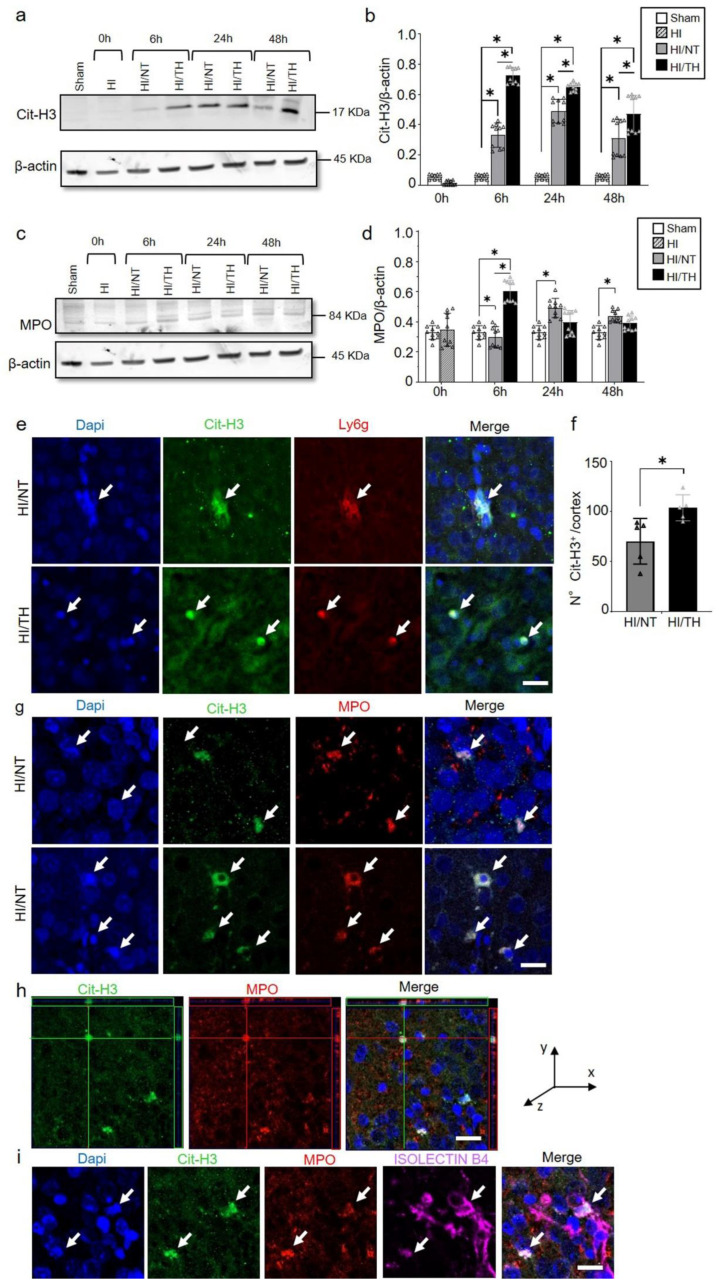
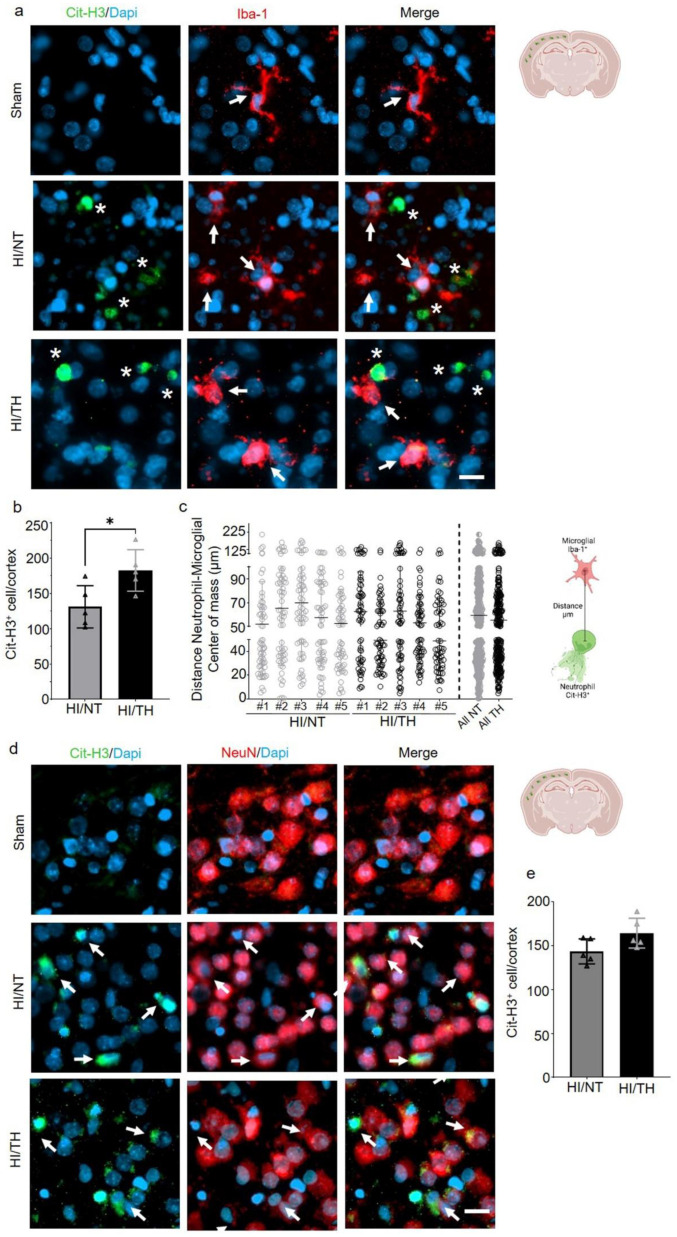
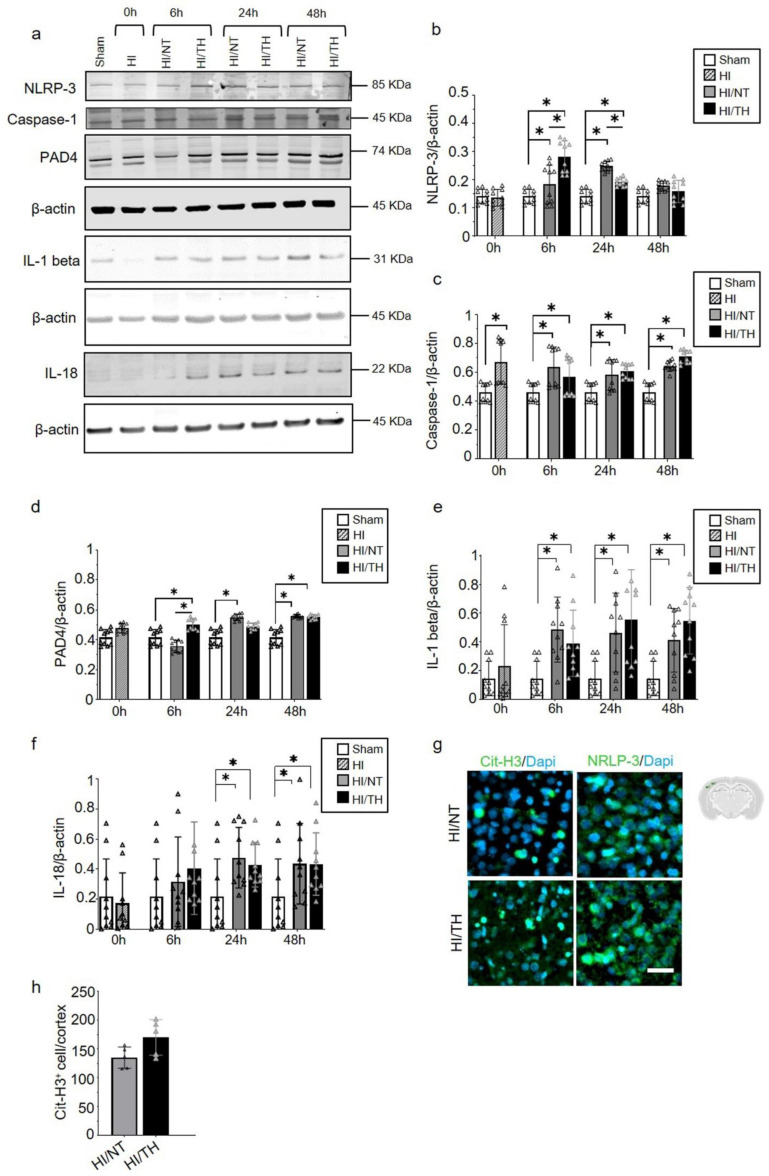
The peripheral immune system plays a critical role in neuroinflammation of the central nervous system after an insult. Hypoxic-ischemic encephalopathy (HIE) induces a strong neuroinflammatory response in neonates, which is often associated with exacerbated outcomes. In adult models of ischemic stroke, neutrophils infiltrate injured brain tissue immediately after an ischemic insult and aggravate inflammation via various mechanisms, including neutrophil extracellular trap (NETs) formation. In this study, we used a neonatal model of experimental hypoxic-ischemic (HI) brain injury and demonstrated that circulating neutrophils were rapidly activated in neonatal blood. We observed an increased infiltration of neutrophils in the brain after exposure to HI. After treatment with either normothermia (NT) or therapeutic hypothermia (TH), we observed a significantly enhanced expression level of the NETosis marker Citrullinated H3 (Cit-H3), which was significantly more pronounced in animals treated with TH than in those treated with NT. NETs and NLR family pyrin domain containing 3 (NLRP-3) inflammasome assembly are closely linked in adult models of ischemic brain injury. In this study, we observed an increase in the activation of the NLRP-3 inflammasome at the time points analyzed, particularly immediately after TH, when we observed a significant increase in NETs structures in the brain. Together, these results suggest the important pathological functions of early arriving neutrophils and NETosis following neonatal HI, particularly after TH treatment, which is a promising starting point for the development of potential new therapeutic targets for neonatal HIE.
外周免疫系统在中枢神经系统受到损伤后的神经炎症中起着关键作用。缺氧缺血性脑病 (HIE) 在新生儿中引起强烈的神经炎症反应,通常与恶化的结局有关。在成人缺血性中风模型中,中性粒细胞在缺血性损伤后立即浸润受损脑组织,并通过多种机制加剧炎症,包括中性粒细胞胞外诱捕网 (NETs) 的形成。在这项研究中,我们使用了实验性缺氧缺血 (HI) 脑损伤的新生儿模型,并证明了循环中性粒细胞在新生儿血液中迅速被激活。我们观察到 HI 暴露后大脑中中性粒细胞的浸润增加。在接受正常体温 (NT) 或治疗性低温 (TH) 治疗后,我们观察到 NETosis 标志物瓜氨酸化 H3 (Cit-H3) 的表达水平显著增强,在接受 TH 治疗的动物中比在接受 NT 治疗的动物中更为明显。NETs 和富含 N 端亮氨酸重复序列的 NLR 家族pyrin 结构域 3 (NLRP-3) 炎性小体在成人缺血性脑损伤模型中紧密相关。在这项研究中,我们观察到 NLRP-3 炎性小体在分析的时间点被激活增加,特别是在 TH 后立即观察到大脑中 NETs 结构显著增加时。总之,这些结果表明,新生儿 HI 后尤其是 TH 治疗后,早期到达的中性粒细胞和 NETosis 具有重要的病理功能,这为开发新生儿 HIE 的潜在新治疗靶点提供了一个有希望的起点。