
压电能量收集器响应统计数据。
Piezoelectric Energy Harvester Response Statistics.
作者信息
Gaidai Oleg, Cao Yu, Xing Yihan, Wang Junlei
机构信息
Shanghai Engineering Research Center of Hadal Science and Technology, College of Engineering Science and Technology, Shanghai Ocean University, Shanghai 201306, China.
Department of Mechanical and Structural Engineering and Material Sciences, University of Stavanger, N-4036 Stavanger, Norway.
出版信息
Micromachines (Basel). 2023 Jan 20;14(2):271. doi: 10.3390/mi14020271.
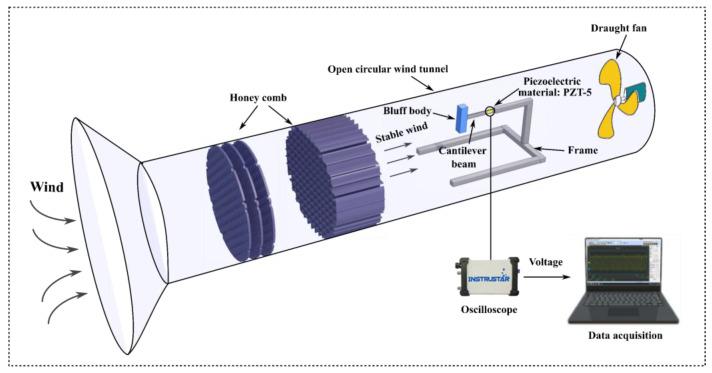
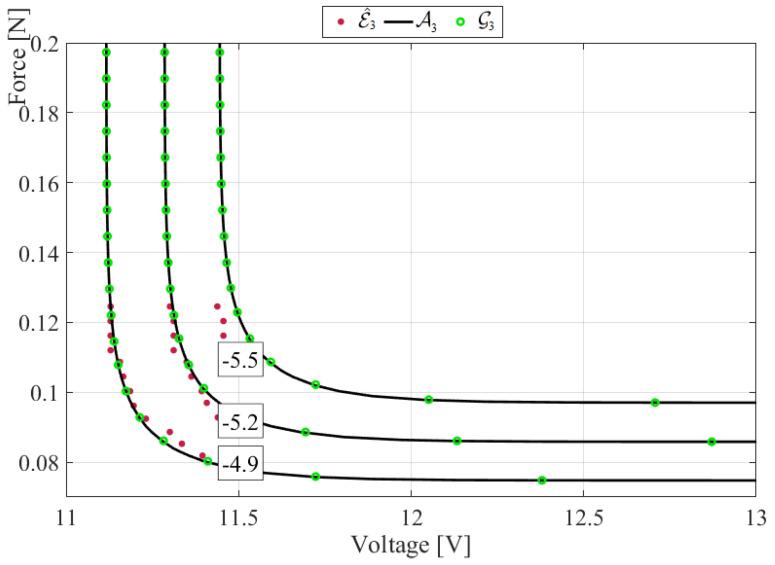
Safety and reliability are essential engineering concerns for energy-harvesting installations. In the case of the piezoelectric galloping energy harvester, there is a risk that excessive wake galloping may lead to instability, overload, and thus damage. With this in mind, this paper studies bivariate statistics of the extreme, experimental galloping energy harvester dynamic response under realistic environmental conditions. The bivariate statistics were extracted from experimental wind tunnel results, specifically for the voltage-force data set. Authors advocate a novel general-purpose reliability approach that may be applied to a wide range of dynamic systems, including micro-machines. Both experimental and numerically simulated dynamic responses can be used as input for the suggested structural reliability analysis. The statistical analysis proposed in this study may be used at the design stage, supplying proper characteristic values and safeguarding the dynamic system from overload, thus extending the machine's lifetime. This work introduces a novel bivariate technique for reliability analysis instead of the more general univariate design approaches.
安全性和可靠性是能量收集装置至关重要的工程考量因素。对于压电驰振能量收集器而言,存在过度尾流驰振可能导致不稳定、过载进而造成损坏的风险。考虑到这一点,本文研究了在实际环境条件下实验性驰振能量收集器动态响应的双变量统计。这些双变量统计数据是从实验风洞结果中提取的,具体针对电压 - 力数据集。作者提倡一种新颖的通用可靠性方法,该方法可应用于包括微机械在内的广泛动态系统。实验和数值模拟的动态响应均可用作建议的结构可靠性分析的输入。本研究中提出的统计分析可在设计阶段使用,提供适当的特征值并保护动态系统免受过载影响,从而延长机器的使用寿命。这项工作引入了一种新颖的双变量可靠性分析技术,而非更为通用的单变量设计方法。



 Zotero 插件