Siddique Abu Bakar, Ebrahim Hassan Y, Tajmim Afsana, King Judy Ann, Abdelwahed Khaldoun S, Abd Elmageed Zakaria Y, El Sayed Khalid A
School of Basic Pharmaceutical and Toxicological Sciences, College of Pharmacy, University of Louisiana Monroe, 1800 Bienville Drive, Monroe, LA 71201, USA.
Department of Pathology and Translational Pathobiology, LSU Health Shreveport, 1501 Kings Highway, Shreveport, LA 71103, USA.
Cancers (Basel). 2022 Jul 21;14(14):3542. doi: 10.3390/cancers14143542.
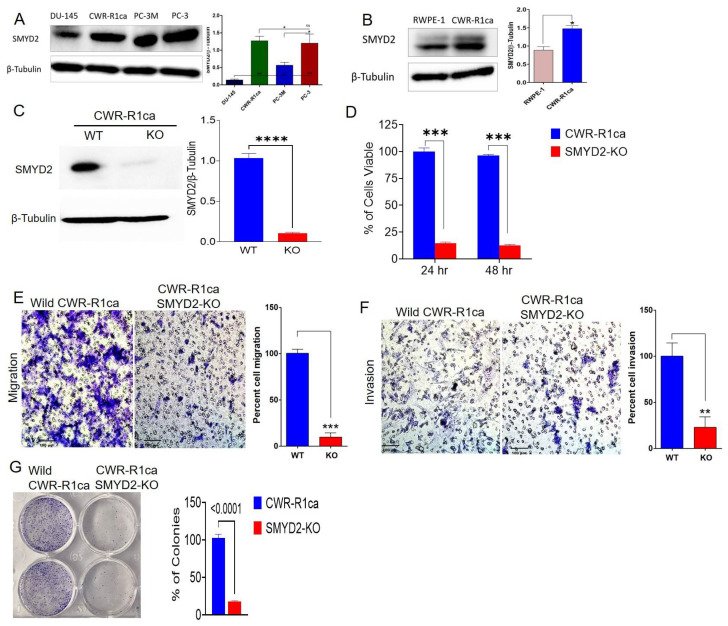
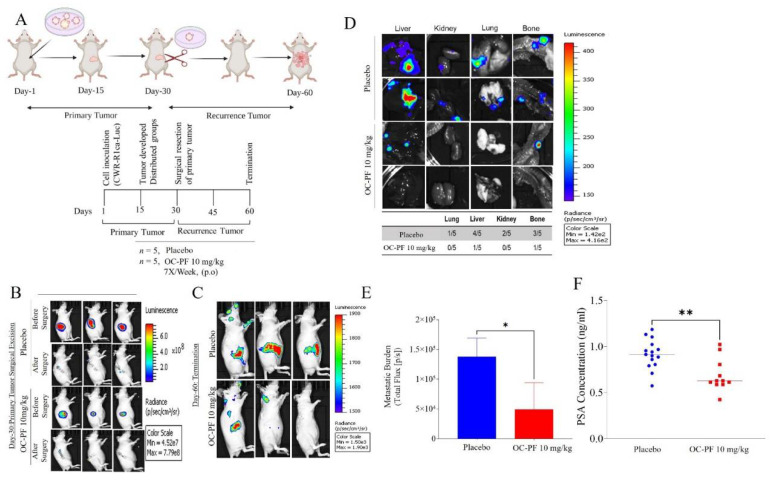
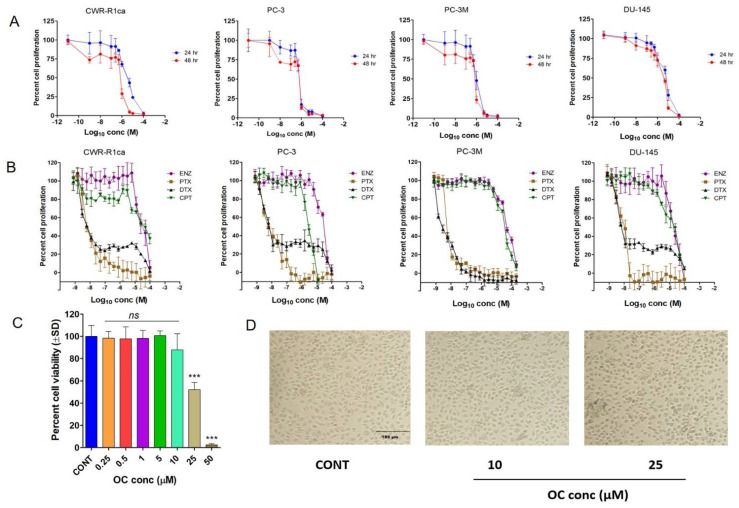
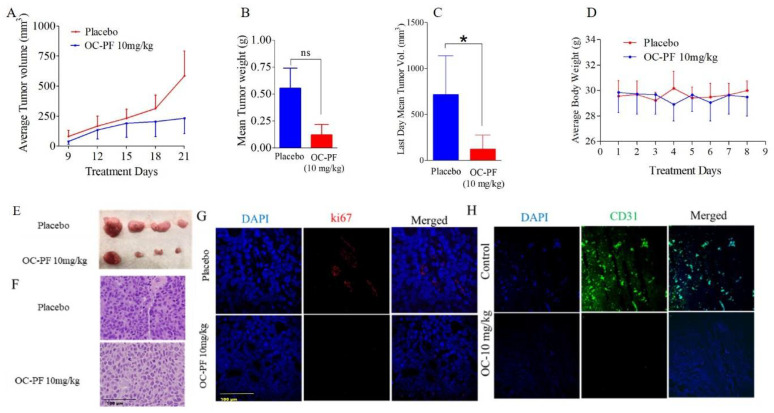
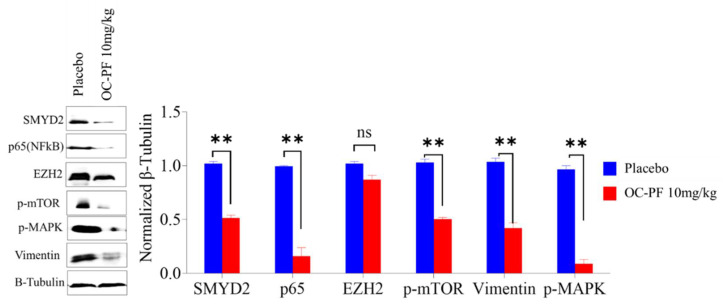
Metastatic castration-resistant prostate cancer (mCRPC) is the most aggressive prostate cancer (PC) phenotype. Cellular lysine methylation is driven by protein lysine methyltransferases (PKMTs), such as those in the SET- and MYND-containing protein (SMYD) family, including SMYD2 methylate, and several histone and non-histone proteins. SMYD2 is dysregulated in metastatic PC patients with high Gleason score and shorter survival. The Mediterranean, extra-virgin-olive-oil-rich diet ingredient -(-)-oleocanthal (OC) inhibited SMYD2 in biochemical assays and suppressed viability, migration, invasion, and colony formation of PC-3, CWR-R1ca, PC-3M, and DU-145 PC cell lines with IC range from high nM to low µM. OC's in vitro antiproliferative effect was comparable to standard anti-PC chemotherapies or hormone therapies. A daily, oral 10 mg/kg dose of OC for 11 days effectively suppressed the progression of the mCRPC CWR-R1ca cells engrafted into male nude mice. Daily, oral OC treatment for 30 days suppressed tumor locoregional and distant recurrences after the primary tumors' surgical excision. Collected OC-treated animal tumors showed marked SMYD2 reduction. OC-treated mice showed significant serum PSA reduction. For the first time, this study showed SMYD2 as novel molecular target in mCRPC, and OC emerged as a specific SMYD2 lead inhibitor. OC prevailed over previously reported SMYD2 inhibitors, with validated in vivo potency and high safety profile, and, therefore, is proposed as a novel nutraceutical for mCRPC progression and recurrence control.
转移性去势抵抗性前列腺癌(mCRPC)是最具侵袭性的前列腺癌(PC)表型。细胞赖氨酸甲基化由蛋白质赖氨酸甲基转移酶(PKMTs)驱动,例如含SET和MYND结构域的蛋白质(SMYD)家族中的成员,包括SMYD2甲基化酶,以及几种组蛋白和非组蛋白。在高Gleason评分和较短生存期的转移性PC患者中,SMYD2表达失调。地中海地区富含特级初榨橄榄油的饮食成分——(-)-油橄榄苦素(OC)在生化分析中抑制SMYD2,并抑制PC-3、CWR-R1ca、PC-3M和DU-145前列腺癌细胞系的活力、迁移、侵袭和集落形成,IC范围从高纳摩尔到低微摩尔。OC的体外抗增殖作用与标准抗PC化疗或激素疗法相当。每天口服10mg/kg剂量的OC,持续11天,可有效抑制接种到雄性裸鼠体内的mCRPC CWR-R1ca细胞的进展。每天口服OC治疗30天可抑制原发性肿瘤手术切除后的肿瘤局部和远处复发。收集的经OC处理的动物肿瘤显示SMYD2明显减少。经OC处理的小鼠血清PSA显著降低。本研究首次表明SMYD2是mCRPC中的新型分子靶点,OC成为一种特异性的SMYD2先导抑制剂。OC优于先前报道的SMYD2抑制剂,具有经过验证的体内效力和高安全性,因此,被提议作为一种新型营养保健品用于控制mCRPC的进展和复发。