Department of Biostatistics and Epidemiology, School of Public Health and Health Sciences, University of Massachusetts, Amherst, MA, 01003, USA.
CHU De Rennes, Univ Rennes, Inserm, EHESP, Irset (Institut De Recherche En Santé, Environnement Et Travail) - UMR_S 1085, Rennes, France.
Environ Health. 2023 Feb 27;22(1):21. doi: 10.1186/s12940-023-00970-3.
Chlordecone is a highly persistent organochlorine insecticide that was intensively used in banana fields in the French West Indies, resulting in a widespread contamination. Neurotoxicity of acute exposures in adults is well recognized, and empirical data suggests that prenatal exposure affects visual and fine motor developments during infancy and childhood, with greater susceptibility in boys.
To assess the associations between pre- and postnatal exposures to chlordecone and cognitive and behavioral functions in school-aged children from Guadeloupe.
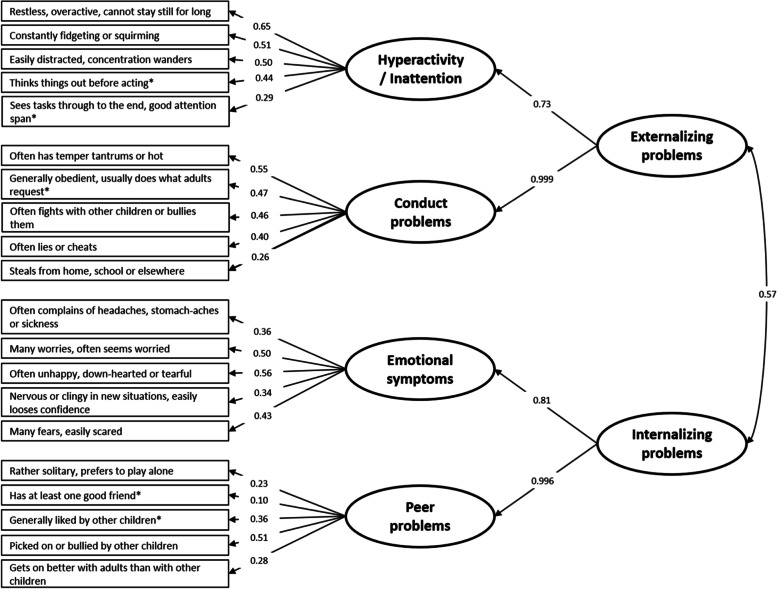
We examined 576 children from the TIMOUN mother-child cohort in Guadeloupe at 7 years of age. Concentrations of chlordecone and other environmental contaminants were measured in cord- and children's blood at age 7 years. Cognitive abilities of children were assessed with the Wechsler Intelligence Scale for Children-IV (WISC-IV), and externalizing and internalizing problem behaviors documented with the Strengths and Difficulties Questionnaire (SDQ) completed by the child's mother. We estimated covariate-adjusted associations between cord- and 7-years chlordecone concentrations and child outcomes using structural equations modeling, and tested effect modification by sex.
Geometric means of blood chlordecone concentrations were 0.13 µg/L in cord blood and 0.06 µg/L in children's blood at age 7 years. A twofold increase in cord blood concentrations was associated with 0.05 standard deviation (SD) (95% Confidence Interval [CI]: 0.0, 0.10) higher internalizing problem scores, whereas 7-years chlordecone concentrations were associated with lower Full-Scale IQ scores (FSIQ) and greater externalized behavioral problem scores. A twofold increase in 7-year chlordecone concentrations was associated with a decrease of 0.67 point (95% CI: -1.13, -0.22) on FSIQ and an increase of 0.04 SD (95% CI: 0.0, 0.07) on externalizing problems. These associations with Cognitive abilities were driven by decreases in perceptive reasoning, working memory and verbal comprehension. Associations between 7-year exposure and perceptive reasoning, working memory, and the FSIQ were stronger in boys, whereas cord blood and child blood associations with internalizing problems were stronger in girls.
These results suggests that cognitive abilities and externalizing behavior problems at school age are impaired by childhood, but not in utero, exposure to chlordecone, and that prenatal exposure is related to greater internalizing behavioral problems.
氯丹是一种高度持久的有机氯杀虫剂,曾在法属西印度群岛的香蕉田中大量使用,导致广泛污染。成人急性暴露的神经毒性已得到充分认识,经验数据表明,产前暴露会影响婴儿和儿童期的视觉和精细运动发育,男孩的易感性更高。
评估在瓜德罗普岛,儿童出生前和出生后接触氯丹与认知和行为功能之间的关联。
我们在瓜德罗普岛的 TIMOUN 母婴队列中检查了 7 岁的 576 名儿童。在 7 岁时测量脐带血和儿童血液中的氯丹和其他环境污染物浓度。使用韦氏儿童智力量表第四版(WISC-IV)评估儿童的认知能力,由儿童的母亲填写长处和困难问卷(SDQ)记录外化和内化问题行为。我们使用结构方程模型估计脐带血和 7 岁时氯丹浓度与儿童结局之间的协变量调整关联,并测试性别对效应修饰的影响。
脐带血中氯丹浓度的几何平均值为 0.13µg/L,儿童血液中为 0.06µg/L,在 7 岁时。脐带血浓度增加一倍与内部问题得分高 0.05 标准差(95%置信区间:0.0,0.10)有关,而 7 岁时氯丹浓度与全量表智商(FSIQ)较低和外化行为问题得分较高有关。7 岁时氯丹浓度增加一倍与 FSIQ 降低 0.67 点(95%置信区间:-1.13,-0.22)和外化问题增加 0.04 标准差(95%置信区间:0.0,0.07)有关。这些与认知能力的关联是由于感知推理、工作记忆和言语理解能力下降所致。7 岁时暴露与感知推理、工作记忆和 FSIQ 的关联在男孩中更强,而脐带血和儿童血液与内化问题的关联在女孩中更强。
这些结果表明,儿童时期而非宫内暴露于氯丹会损害儿童期的认知能力和外化行为问题,并且产前暴露与更大的内化行为问题有关。