School of Biological Sciences, Seoul National University, Seoul, Korea.
Interdisciplinary Program in Neuroscience, Seoul National University, Seoul, Korea.
Autophagy. 2023 Aug;19(8):2318-2337. doi: 10.1080/15548627.2023.2181614. Epub 2023 Feb 26.
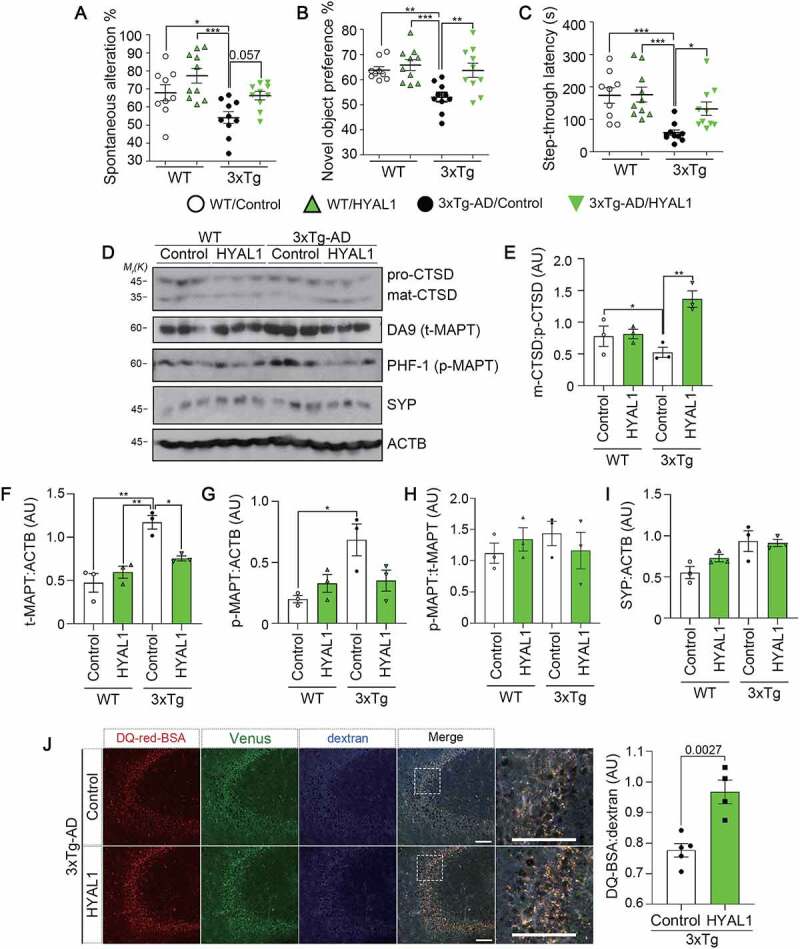
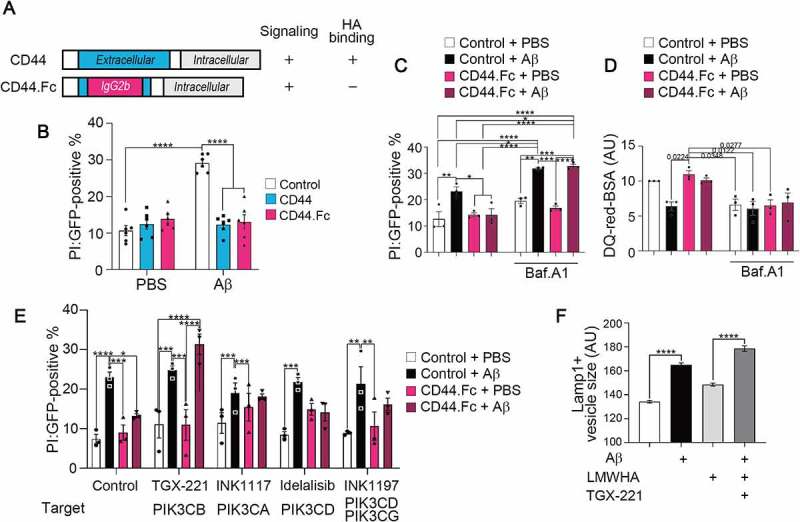
Impaired activities and abnormally enlarged structures of endolysosomes are frequently observed in Alzheimer disease (AD) brains. However, little is known about whether and how endolysosomal dysregulation is triggered and associated with AD. Here, we show that vacuolar ATPase (V-ATPase) is a hub that mediates proteopathy of oligomeric amyloid beta (Aβ) and hyperphosphorylated MAPT/Tau (p-MAPT/Tau). Endolysosomal integrity was largely destroyed in Aβ-overloaded or p-MAPT/Tau-positive neurons in culture and AD brains, which was a necessary step for triggering neurotoxicity, and treatments with acidic nanoparticles or endocytosis inhibitors rescued the endolysosomal impairment and neurotoxicity. Interestingly, we found that the lumenal ATP6V0C and cytosolic ATP6V1B2 subunits of the V-ATPase complex bound to the internalized Aβ and cytosolic PHF-1-reactive MAPT/Tau, respectively. Their interactions disrupted V-ATPase activity and accompanying endolysosomal activity and induced neurodegeneration. Using a genome-wide functional screen, we isolated a suppressor, HYAL (hyaluronidase), which reversed the endolysosomal dysfunction and proteopathy and alleviated the memory impairment in 3xTg-AD mice. Further, we found that its metabolite hyaluronic acid (HA) and HA receptor CD44 attenuated neurotoxicity in affected neurons via V-ATPase. We propose that endolysosomal V-ATPase is a bona fide proteotoxic receptor that binds to pathogenic proteins and deteriorates endolysosomal function in AD, leading to neurodegeneration in proteopathy. AAV, adeno-associated virus; Aβ, amyloid beta; AD, Alzheimer disease; APP, amyloid beta precursor protein; ATP6V0C, ATPase H+ transporting V0 subunit c; ATP6V1A, ATPase H+ transporting V1 subunit A; ATP6V1B2, ATPase H+ transporting V1 subunit B2; CD44.Fc, CD44-mouse immunoglobulin Fc fusion construct; Co-IP, co-immunoprecipitation; CTSD, cathepsin D; HA, hyaluronic acid; HMWHA, high-molecular-weight hyaluronic acid; HYAL, hyaluronidase; i.c.v, intracerebroventricular; LMWHA, low-molecular-weight hyaluronic acid; NPs, nanoparticles; p-MAPT/Tau, hyperphosphorylated microtubule associated protein tau; PI3K, phosphoinositide 3-kinase; V-ATPase, vacuolar-type H-translocating ATPase; WT, wild-type.
溶酶体功能障碍与阿尔茨海默病(AD)
在阿尔茨海默病(AD)大脑中,经常观察到内溶酶体的活性受损和结构异常增大。然而,目前尚不清楚内溶酶体的失调是如何被触发的,以及它与 AD 的关系如何。在这里,我们表明液泡型 ATP 酶(V-ATPase)是一种枢纽,介导寡聚淀粉样β(Aβ)和过度磷酸化 MAPT/Tau(p-MAPT/Tau)的蛋白病。在培养物和 AD 大脑中,Aβ过载或 p-MAPT/Tau 阳性神经元中,内溶酶体完整性被严重破坏,这是触发神经毒性的必要步骤,而用酸性纳米颗粒或内吞作用抑制剂进行治疗可挽救内溶酶体损伤和神经毒性。有趣的是,我们发现 V-ATPase 复合物的腔室 ATP6V0C 和细胞质 ATP6V1B2 亚基分别与内化的 Aβ和细胞质 PHF-1 反应性 MAPT/Tau 结合。它们的相互作用破坏了 V-ATPase 活性和伴随的内溶酶体活性,并诱导神经退行性变。使用全基因组功能筛选,我们分离出一种抑制剂 HYAL(透明质酸酶),它可以逆转内溶酶体功能障碍和蛋白病,并减轻 3xTg-AD 小鼠的记忆障碍。此外,我们发现其代谢物透明质酸(HA)和 HA 受体 CD44 通过 V-ATPase 减轻了受影响神经元的神经毒性。我们提出内溶酶体 V-ATPase 是一种真正的蛋白毒性受体,它与致病性蛋白结合并在 AD 中恶化内溶酶体功能,导致蛋白病中的神经退行性变。AAV,腺相关病毒;Aβ,淀粉样β;AD,阿尔茨海默病;APP,淀粉样β前体蛋白;ATP6V0C,ATP 酶 H+转运 V0 亚基 c;ATP6V1A,ATP 酶 H+转运 V1 亚基 A;ATP6V1B2,ATP 酶 H+转运 V1 亚基 B2;CD44.Fc,CD44-小鼠免疫球蛋白 Fc 融合构建体;Co-IP,共免疫沉淀;CTSD,组织蛋白酶 D;HA,透明质酸;HMWHA,高分子量透明质酸;HYAL,透明质酸酶;i.c.v,脑室内;LMWHA,低分子量透明质酸;纳米颗粒;p-MAPT/Tau,过度磷酸化微管相关蛋白 tau;PI3K,磷酸肌醇 3-激酶;V-ATPase,液泡型 H+转运 ATP 酶;WT,野生型。