Zhou Luojing, Hou Feixia, Wang Li, Zhang Lingyu, Wang Yalan, Yin Yanpeng, Pei Jin, Peng Cheng, Qin Xiaobo, Gao Jihai
State Key Laboratory of Southwestern Chinese Medicine Resources, Chengdu University of Traditional Chinese Medicine, Chengdu, China.
Sichuan Academy of Forestry Sciences, Chengdu, China.
Front Plant Sci. 2023 Feb 10;14:1108701. doi: 10.3389/fpls.2023.1108701. eCollection 2023.
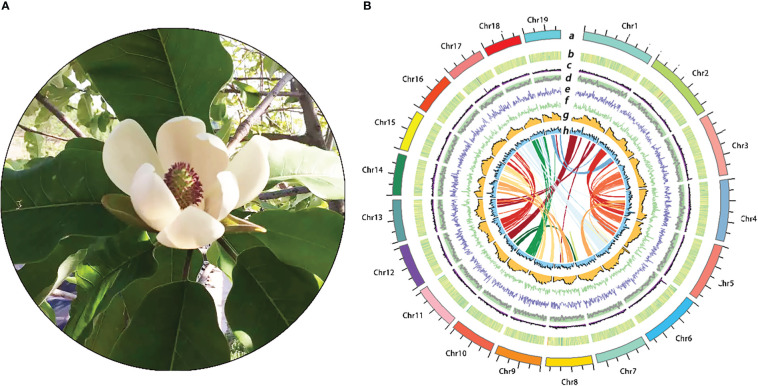
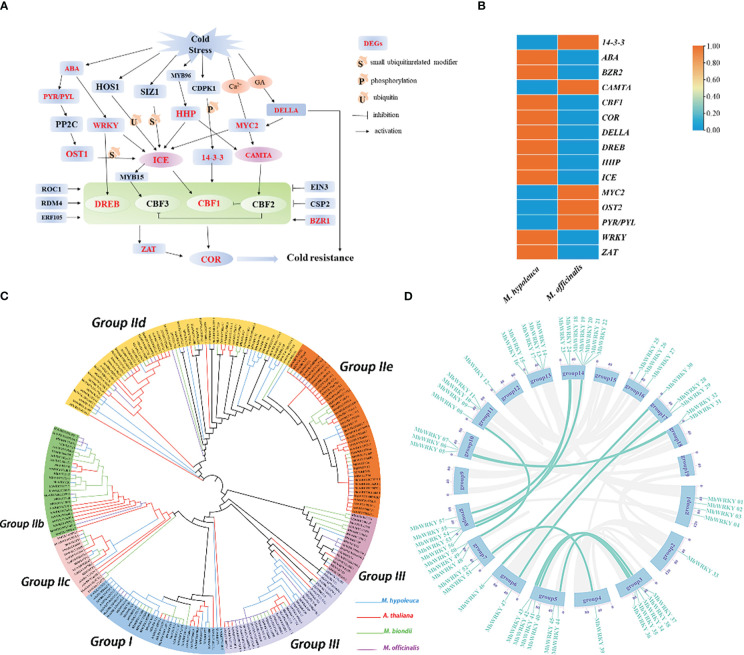
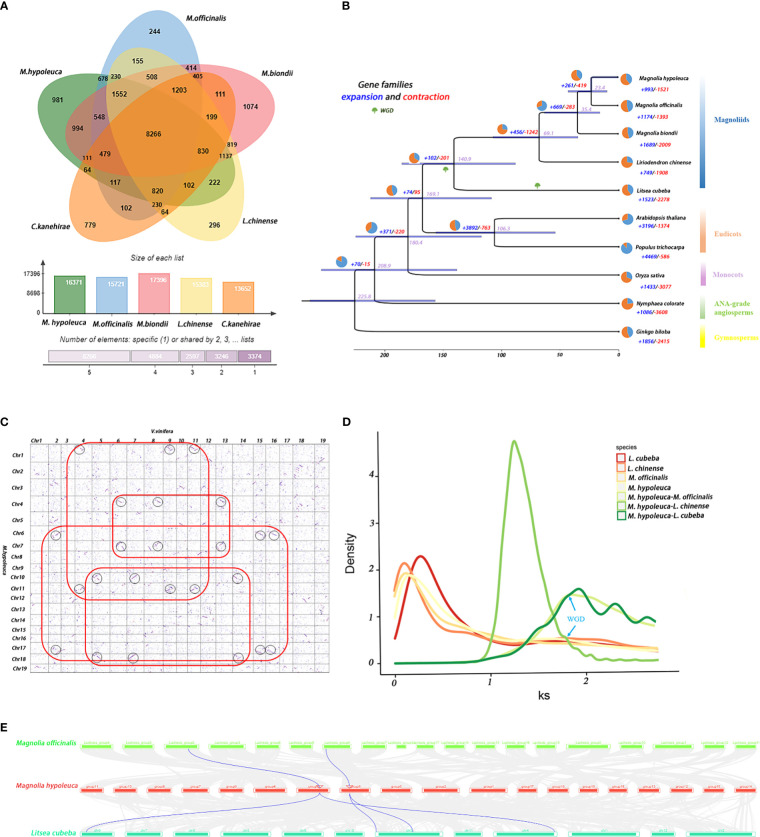
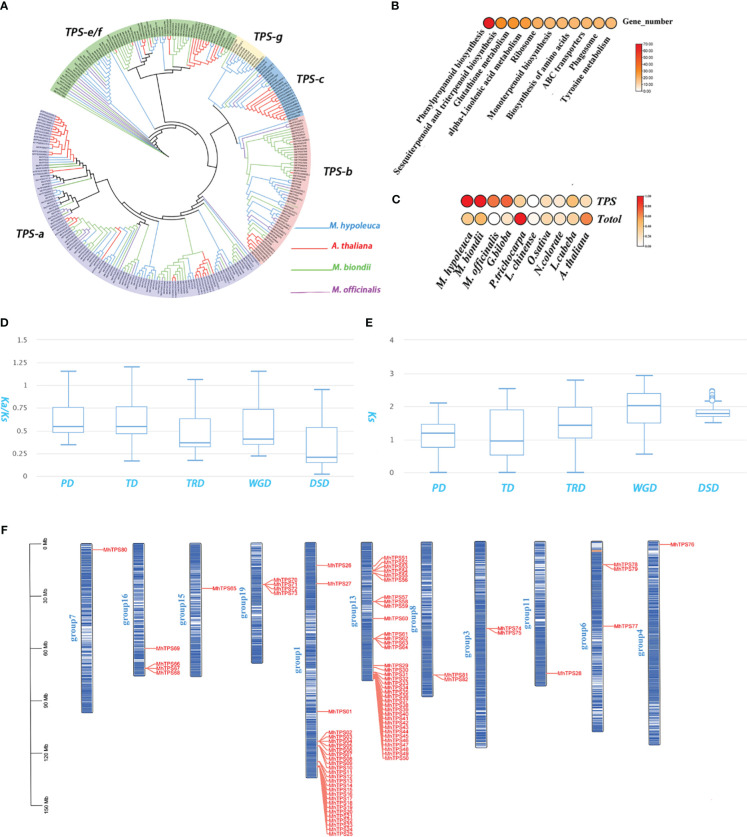
, a member of the Magnoliaceae of magnoliids, is one of the most economically valuable, phylogenetic and ornamental tree species in Eastern China. Here, the 1.64 Gb chromosome-level assembly covers 96.64% of the genome which is anchored to 19 chromosomes, with a contig N50 value of 1.71 Mb and 33,873 protein-coding genes was predicted. Phylogenetic analyses between and other 10 representative angiosperms suggested that magnoliids were placed as a sister group to the eudicots, rather than sister to monocots or both monocots and eudicots. In addition, the relative timing of the whole-genome duplication (WGD) events about 115.32 Mya for magnoliid plants. was found to have a common ancestor with approximately 23.4 MYA, and the climate change of OMT (Oligocene-Miocene transition) is the main reason for the divergence of and , which was along with the division of Japanese islands. Moreover, the gene expansion observed in might contribute to the enhancement of flower fragrance. Tandem and proximal duplicates of younger age that have been preserved have experienced more rapid sequence divergence and a more clustered distribution on chromosomes contributing to fragrance accumulation, especially phenylpropanoid, monoterpenes and sesquiterpenes and cold tolerance. The stronger selective pressure drived the evolution of tandem and proximal duplicates toward plant self-defense and adaptation. The reference genome will provide insights into the evolutionary process of and the relationships between the magnoliids with monocots and eudicots, and enable us to delve into the fragrance and cold tolerance produced by and provide more robust and deep insight of how the Magnoliales evolved and diversified.
木兰科木兰类植物之一,是中国东部最具经济价值、系统发育意义和观赏价值的树种之一。在此,1.64 Gb的染色体水平组装覆盖了96.64%的基因组,该基因组被锚定到19条染色体上,预测的重叠群N50值为1.71 Mb,共有33873个蛋白质编码基因。与其他10种代表性被子植物的系统发育分析表明,木兰类植物被定位为真双子叶植物的姐妹群,而不是单子叶植物或单子叶植物和真双子叶植物两者的姐妹群。此外,木兰类植物全基因组复制(WGD)事件的相对时间约为1.1532亿年前。发现它与大约在2340万年前有共同祖先,渐新世 - 中新世过渡(OMT)的气候变化是它与 分化的主要原因,这与日本岛屿的分裂同时发生。此外,在 中观察到的 基因扩展可能有助于花香的增强。较年轻的串联和近端重复序列得以保留,经历了更快的序列分歧,并且在染色体上分布更聚集,有助于香味积累,尤其是苯丙烷类、单萜和倍半萜以及耐寒性。更强的选择压力推动串联和近端重复序列朝着植物自我防御和适应的方向进化。该参考基因组将为 的进化过程以及木兰类植物与单子叶植物和真双子叶植物之间的关系提供见解,并使我们能够深入研究 产生的香味和耐寒性,更深入地了解木兰目是如何进化和多样化的。