Cotten Matthew, Phan My V T
Medical Research Council-University of Glasgow Centre for Virus Research, 464 Bearsden Road, Glasgow G61 1QH, Scotland, UK.
UK Medical Research Council-Uganda Virus Research Institute and London School of Hygiene and Tropical Medicine Uganda Research Unit, Plot 51- 59 Nakiwogo Road, P.O Box 49, Entebbe, Uganda, UK.
iScience. 2023 Mar 17;26(3):106230. doi: 10.1016/j.isci.2023.106230. Epub 2023 Feb 18.
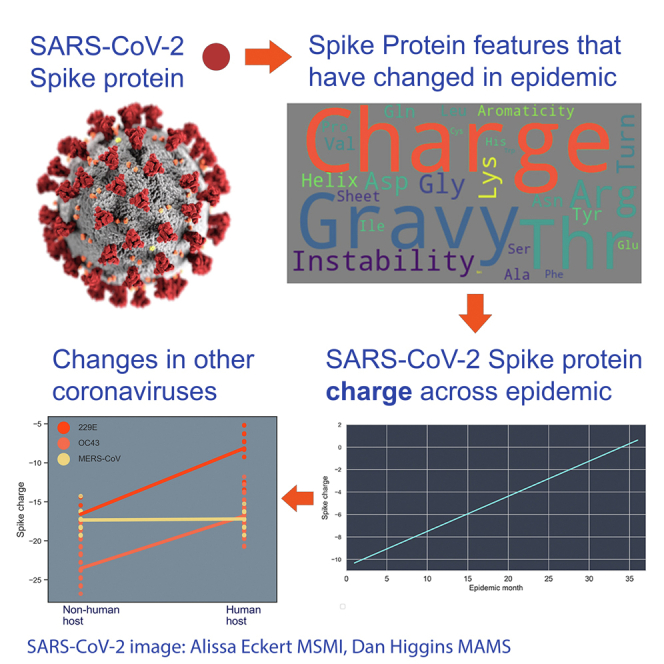
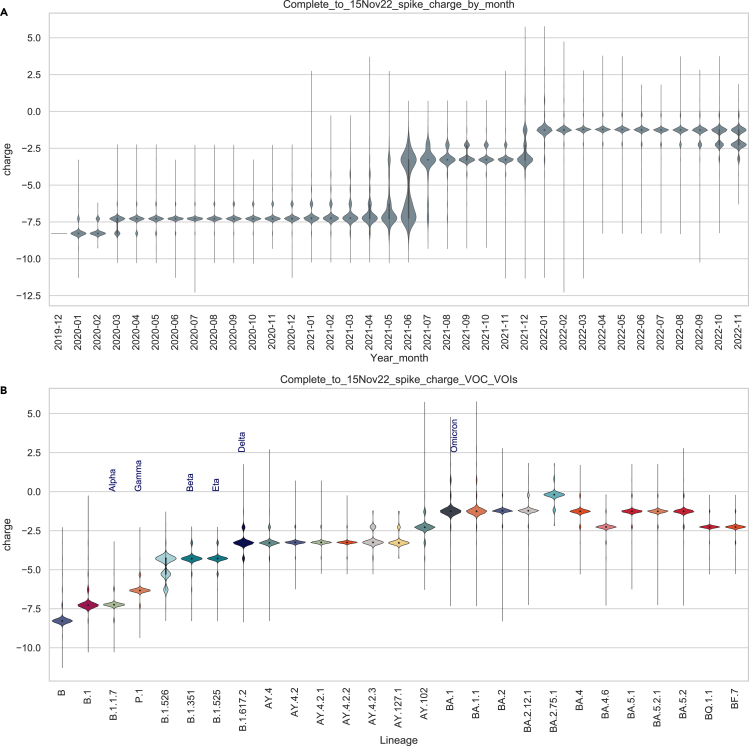
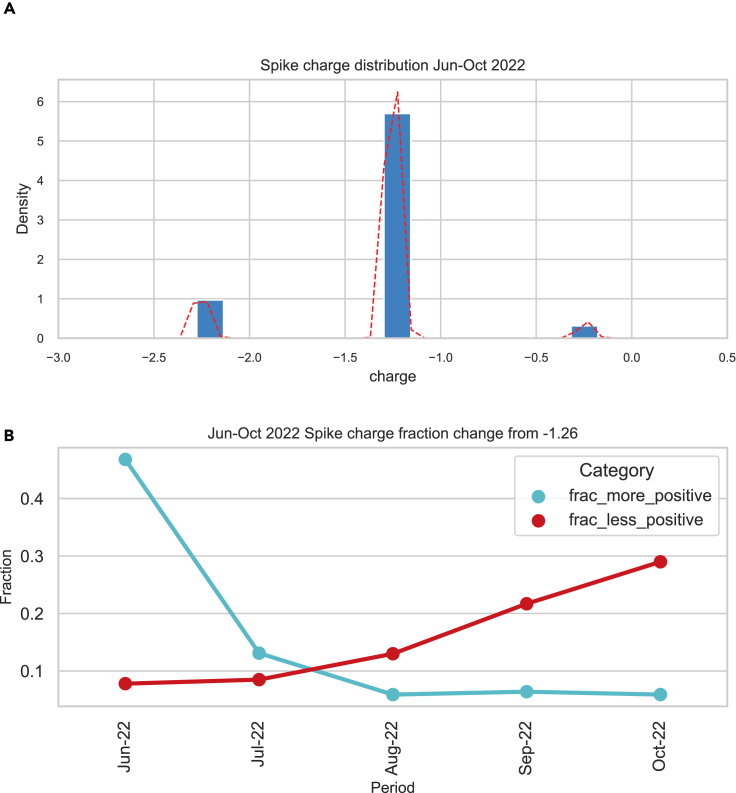
The severe acute respiratory syndrome coronavirus 2 (SARS-CoV-2) continues to evolve and infect individuals. The exterior surface of the SARS-CoV-2 virion is dominated by the spike protein, and the current work examined spike protein biochemical features that have changed during the 3 years in which SARS-CoV-2 has infected humans. Our analysis identified a striking change in spike protein charge, from -8.3 in the original Lineage A and B viruses to -1.26 in most of the current Omicron viruses. We conclude that in addition to immune selection pressure, the evolution of SARS-CoV-2 has also altered viral spike protein biochemical properties, which may influence virion survival and promote transmission. Future vaccine and therapeutic development should also exploit and target these biochemical properties.
严重急性呼吸综合征冠状病毒2(SARS-CoV-2)持续演变并感染个体。SARS-CoV-2病毒粒子的外表面以刺突蛋白为主,目前的研究考察了SARS-CoV-2感染人类的3年期间刺突蛋白发生变化的生化特征。我们的分析发现刺突蛋白电荷发生了显著变化,从最初的A和B谱系病毒中的-8.3变为目前大多数奥密克戎病毒中的-1.26。我们得出结论,除了免疫选择压力外,SARS-CoV-2的进化还改变了病毒刺突蛋白的生化特性,这可能影响病毒粒子的存活并促进传播。未来的疫苗和治疗方法研发也应利用并针对这些生化特性。